Business History
Have your opening date and ownership history ready. A new location under an existing company is not necessarily evaluated like a business with no operating record.
A new styling station earns its keep only when you have the staff, bookings, and utilities to use it. Beauty parlor equipment financing and leasing should fit that reality. Mulah helps you consider equipment funding alongside small business loans and other business financing, with room in the budget for installation and the cash your salon still needs after delivery.

A vendor’s equipment package rarely represents the full cost of opening or refreshing a salon. Shampoo bowls need plumbing. Additional dryers may require electrical work. A larger team uses more towels, backbar products, and hot water. Put those costs beside the equipment quote before deciding how much to finance.
For an operating parlor, the strongest purchase often removes a constraint you can already see. A reliable washer can prevent towel shortages. Another shampoo station can reduce waiting between color services. An extra styling chair is less useful if you don’t have a stylist to staff it or enough appointments to fill it.
Separate necessary replacements from improvements you can postpone. Then calculate how much cash will remain after deposits and upfront charges. Your project should leave the business able to buy products, meet payroll, and handle an ordinary repair without immediately needing another advance.
For hair services, plan styling chairs, mirrors, stations, mats, tool storage, dryers, and color processors around how your team works. A color-heavy salon may need more shampoo capacity and mixing space than a cut-focused shop. Avoid buying a standard package that leaves expensive pieces idle.
Nail, skin, brow, lash, and waxing services introduce different requirements. Pedicure units, treatment beds, magnifying lamps, wax warmers, and specialty devices have their own cleaning, training, and installation needs. Funding an item doesn’t establish that you’re licensed or insured to use it. Check applicable state and local requirements before ordering.
Include the less visible equipment: commercial laundry, water heating, reception furniture, checkout terminals, routers, security systems, and inventory scanners. Hardware prices don’t include every ongoing expense. Booking subscriptions, payment processing, cybersecurity, software migration, and replacement devices belong in your operating budget.
When shopping for small business loans, distinguish purchase financing from flexible cash access and sales-linked arrangements. Not every option below is a conventional loan. These are planning categories, not a statement that each product is available for your business.
| Option | Often considered for | How to think about it |
|---|---|---|
| Term Funding or Term Loans | A defined renovation or mixed project with a known budget. | A lump sum repaid over an agreed period. Read the rate or pricing method, payment schedule, security requirements, and early-payoff terms. |
| Working Capital | Payroll, supplies, rent, or a temporary cash gap around installation. | Business funding for operating expenses rather than a particular asset. Costs and payment frequency vary; it should cover a temporary need, not recurring losses. |
| Business Line of Credit | Staged purchases, smaller repairs, and uneven inventory needs. | Access to funds up to a limit, subject to draw and renewal rules. Understand charges on each draw and when repaid amounts become available again. |
| Equipment Financing or Leasing | Identifiable salon assets with a useful life that supports the commitment. | Purchase financing or contractual equipment use. Ownership, liens, deposits, maintenance, buyout rights, and return obligations differ by agreement. |
| SBA Financing | Eligible businesses planning equipment purchases, improvements, or other qualifying business expenses. | Participating lenders make SBA-backed loans under program rules. Expect underwriting and documentation; a federal guarantee protects the lender, not you from repayment. |
| Revenue-Based Financing | Businesses evaluating funding tied to sales or revenue. | Repayment or remittance mechanics vary. Check how collections work during slower periods, whether reconciliation applies, and the full cost rather than treating it as a standard installment loan. |
Two leases with similar payments can produce very different outcomes. One might offer a stated purchase option; another might require a fair-market-value buyout or return of the equipment. Get the end-of-term process in writing, including notice deadlines and any renewal provisions.
Add the deposit, scheduled payments, fees, expected buyout, and return costs to understand the full commitment. Determine who pays for repairs, insurance, damage, and removal. Ask what happens if the unit fails, the salon relocates, or you close before the term ends.
With purchase financing, pay attention to the collateral and any broader lien language. Don’t stretch a short-lived device over a long repayment period just to lower the payment. The [equipment financing and leasing guide](https://mulah.com/equipment-financing-and-leasing/) provides a broader framework. Have a qualified tax adviser explain deductions and depreciation before relying on a tax benefit.
Request quantities, dimensions, utility specifications, warranty coverage, service contacts, shipping dates, and installation responsibility. For shampoo units and pedicure chairs, placement and drain access deserve particular attention. Your contractor should know exactly what is arriving.
Used equipment needs a different inspection. Record serial numbers, condition, maintenance history, parts availability, and any transferable warranty. A discounted unit can become an expensive interruption if its pump or proprietary control board is unavailable. During an acquisition, also establish which fixtures belong to the seller, landlord, or another financing provider.
For nail services, ventilation is part of the equipment plan, not an afterthought. OSHA’s [nail salon guidance](https://www.osha.gov/nail-salons) addresses chemical exposure and workplace hazards. Use it alongside local rules and professional advice when assessing source-capture systems, product storage, and work practices.
Work from recent deposits and actual expenses. Include stylist compensation, rent, product use, laundry, utilities, processing fees, software, insurance, taxes, and owner draws. Then subtract current debt payments. The amount left is a starting point for judging affordability, not permission to borrow every available dollar.
Run a second forecast with fewer appointments, a delayed opening, or a stylist departure. For expansion, phase in new revenue while charging the full equipment payment when it becomes due. Keep a reserve for repairs and ordinary operating surprises rather than allocating every dollar to construction.
Use the [business funding calculator](https://mulah.com/business-funding-calculator/) to test illustrative payment scenarios. Its results aren’t an offer and may not represent every product’s pricing. A smaller payment spread over a longer term can cost more overall, so look at total dollars paid as well as the strain on each week’s cash.
There isn’t one approval standard for salon financing. Your business history, the equipment, and the requested structure all influence the assessment. These six areas are worth preparing.
Have your opening date and ownership history ready. A new location under an existing company is not necessarily evaluated like a business with no operating record.
Recent bank activity helps show how consistently customers pay you. Explain unusual deposits, seasonal swings, or temporary closures rather than leaving unexplained differences in the records.
Business and personal credit may be considered. There’s no universal minimum score across products. Be prepared to discuss late payments, defaults, or unresolved tax issues.
List loans, leases, advances, credit lines, and payment plans. Include payment frequency and current balances so the proposed funding isn’t assessed in isolation.
The provider may evaluate the asset’s age, condition, vendor, resale value, and useful life. Personal guarantees or liens can also be part of an agreement.
A clear budget, suitable premises, relevant licenses, and a realistic installation schedule make the request easier to assess. Unresolved lease or permit issues can complicate the purchase.
The exact request varies, but keeping these records together reduces back-and-forth. Don’t send sensitive information through an unverified channel.
Keep each use visible even if you seek one funding amount. That makes it easier to spot missing costs and avoid using payroll reserves to finish construction.
Chairs, mirrors, cabinetry, dryers, processors, manicure tables, pedicure units, and treatment beds should follow your service mix. Allow enough circulation space for clients, carts, cleaning, and accessible routes.
Plumbing, hot-water capacity, circuits, ventilation, lighting, flooring, and permits can sit outside equipment financing. Carry separate contractor estimates and a contingency for site conditions.
Washers, dryers, towel storage, disinfection equipment, and utility fixtures support the entire appointment schedule. Size them for peak demand rather than an average quiet day.
Terminals, tablets, networking equipment, printers, and security hardware often arrive with subscription and integration costs. Budget migration, training, and ongoing support alongside the physical devices.
Base orders on product use, sell-through, shelf life, and supplier minimums. Excess retail inventory ties up money you need for equipment payments. The [working capital guide](https://mulah.com/working-capital-loans/) covers operating cash needs.
Include pre-opening payroll, marketing, storage, cleanup, temporary closures, and rent during work. These expenses continue even if equipment is delayed and the new stations aren’t generating revenue.
These are planning situations, not customer results. Use the closest one to test what your own project requires.
Get a repair assessment and an installed replacement quote. Account for missed appointments and temporary arrangements. Speed matters, but a rushed agreement can outlast the emergency by years.
Tie the purchase to staffed hours and bookings you can reasonably attract. Include shampoo capacity, towel demand, and product use. Furniture alone doesn’t create service capacity.
Budget reduced appointments, after-hours contractor charges, dust control, and client communications. Phasing the work may preserve revenue while extending the construction period and labor cost.
Separate the new location’s ramp-up from the first salon’s normal cash needs. Recruiting, management coverage, and opening inventory can consume more cash than the visible equipment package.
Separate transferable equipment from goodwill, leasehold improvements, and post-closing repairs. Get an asset list, check ownership and liens, and have essential systems inspected before valuing the fixtures.
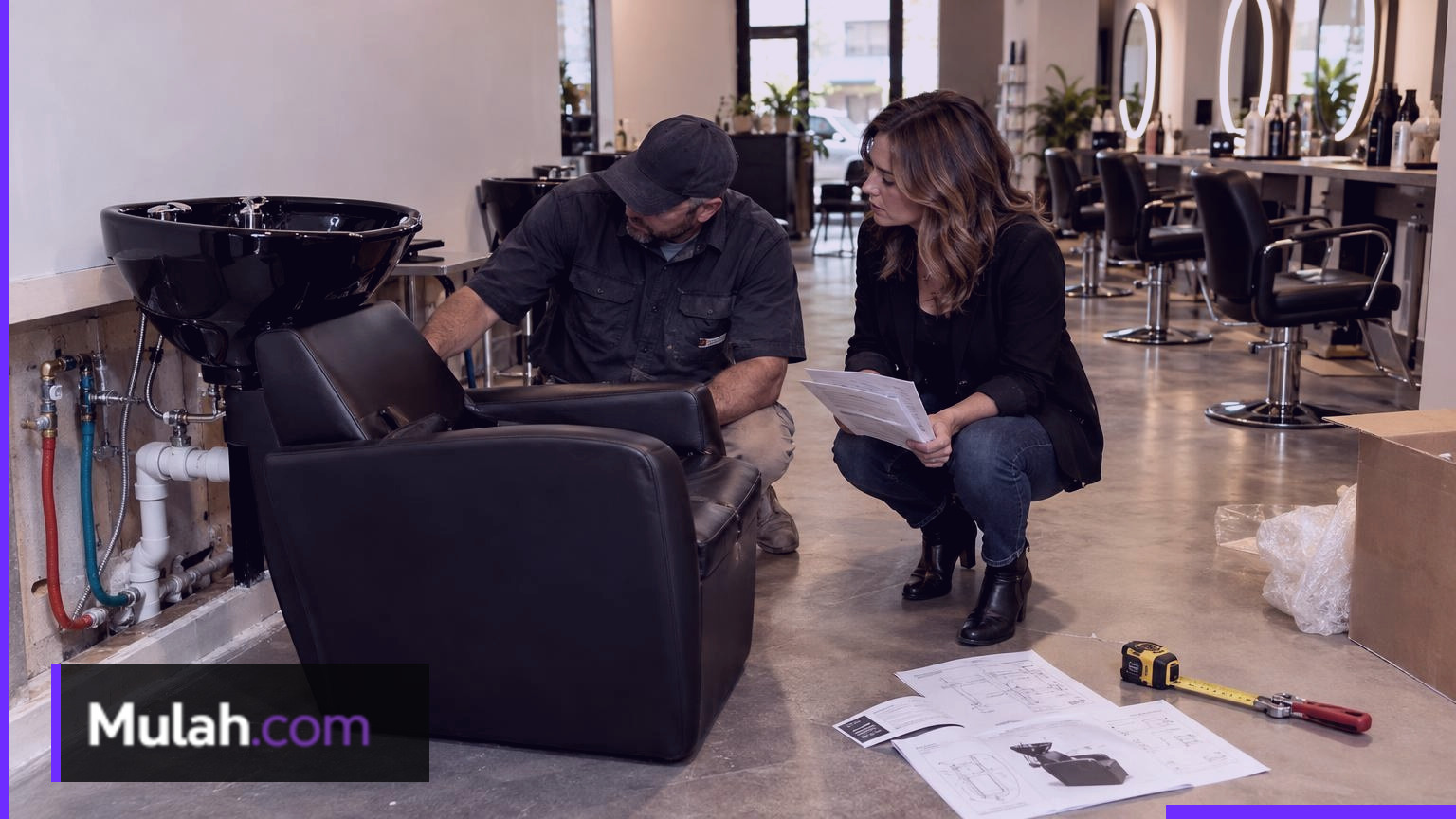
An equipment agreement usually centers on identifiable assets. Renovation labor, opening inventory, recruiting, or rent during construction may fall outside it. Get a written explanation of what the funding covers and how vendors receive payment before committing to purchases.
Mixed projects sometimes call for broader funding or separate arrangements for equipment and working cash. That can be reasonable, but two manageable-looking payments can still become an unmanageable combined obligation. Put every proposed payment next to what you already owe.
Personal borrowing and commercial financing are different decisions. This guide addresses business-purpose funding for salon owners. If you’re opening your first location rather than expanding an existing business, the [startup business funding guide](https://mulah.com/startup-business-loans/) addresses a different set of financing challenges.
The timing of cash leaving your account matters as much as the final project total. Map these five stages before agreeing to a delivery or opening date.
Custom cabinetry, upholstery, and made-to-order stations may require substantial deposits. Get cancellation terms, model numbers, finishes, and expected shipping dates in writing before money changes hands.
Drain locations, water pressure, dedicated circuits, ventilation, and accessibility can affect placement. Have your contractor check requirements against the actual equipment specifications, not a similar model in a catalog.
Freight may exclude lift-gate service, unpacking, assembly, stairs, or removal of old units. Measure doorways and elevators. Storage charges can accumulate if the site isn’t ready.
Check for leaks, electrical issues, missing parts, and software integration problems before booking a full day. Keep equipment warranties separate from the contractor’s responsibility for installation work.
Payments may begin before new stations reach useful occupancy. Budget for onboarding, extra products, slower service during training, and any closure needed to finish the work.
Choose the financial structure after you understand the purchase. A low periodic payment alone won’t tell you whether the agreement fits.
Long-lived chairs and wash units may justify a purchase-oriented agreement. For equipment you expect to replace regularly, a lease deserves consideration, provided the return or buyout terms make economic sense.
Financing can spread the cost of a renovation. It won’t fix a persistent gap between service revenue and payroll, rent, or product costs. Address that gap before adding a payment.
Daily or weekly withdrawals affect cash differently from a monthly payment. Put the proposed schedule on a calendar with payroll, rent, taxes, and your largest supplier bills.
For phased purchases, a [business line of credit](https://mulah.com/business-line-of-credit/) may be more useful than receiving the entire budget at once. Check draw fees, renewal conditions, and how payments change as you borrow.
Related Mulah resources include working capital funding, business lines of credit, equipment financing and leasing, term funding, SBA loans, revenue-based financing, startup funding, accounts receivable financing, and the business funding calculator.
Not every worthwhile investment adds appointments. Some protect the services you already sell or reduce the labor needed to deliver them.
A failing water heater can interrupt multiple services at once. Rank replacements by the appointments at risk, safety, repair history, and available backup. A cosmetic reception refresh usually belongs behind an essential utility failure.
Estimate staffed hours, realistic appointments, average ticket, and product use. Empty chairs don’t repay financing. If recruiting is the constraint, include the hiring timeline rather than assuming immediate revenue from the new station.
Faster laundry or better storage may save staff time, but include maintenance, consumables, training, and service contracts. Don’t count a vendor’s maximum savings as cash available for payments.
The amount that looks attractive on an offer is not always the amount that makes sense to take. Tie the request to a real expense, a realistic payoff period, and the cash the business can still live on if a customer pays late or a strong month comes in softer than expected.

Mulah helps business owners present equipment purchases alongside installation, renovation, inventory, and working-cash needs. That broader picture matters when one vendor invoice captures only part of what you need to spend.
You can investigate [term funding](https://mulah.com/term-loan/) for a defined project, read about [SBA financing](https://mulah.com/sba-loans-by-mulah/), or learn how [revenue-based financing](https://mulah.com/revenue-based-financing/) differs. Use those guides to prepare questions, then judge any actual offer against your budget and the cash your business needs to retain.
A useful request tells the story of the purchase without making the reviewer reconstruct it from invoices. Gather the project budget and business records before submitting your application.
Describe what you’re replacing or adding, why it matters now, and how installation affects appointments. Separate equipment, contractor work, and operating cash in your requested amount.
Use the same legal business name, ownership details, and revenue figures throughout. You can [check funding options](https://mulah.com/get-fast-business-funding-from-mulah/) or proceed to the [full application](https://mulah.com/application/) when your records are ready.
Check total dollars paid, payment frequency, fees, liens, guarantees, early-payoff treatment, and default provisions. Coordinate delivery only after you understand the funding conditions and vendor payment process.
Provide the business and financial information needed for a funding review.
Start with a shorter path when you want to discuss the business need before completing the full application.
Review official SBA information about federal small-business loan programs and lender participation.
Official guidance on financial management, cash flow, bookkeeping, and business planning.
Use the official source for current program, regulatory, or business guidance related to this topic.
Use the official source for current program, regulatory, or business guidance related to this topic.
Common assets include styling chairs, stations, shampoo units, dryers, laundry equipment, treatment furniture, and checkout hardware. Installation, freight, and taxes might be included in some agreements. Renovation, inventory, and payroll often require a broader funding arrangement.
Not necessarily. Add the upfront payment, scheduled payments, fees, buyout, and possible return costs. Then weigh that total against purchase financing or paying cash. Leasing can preserve cash, but the smallest payment isn’t automatically the lowest-cost choice.
Only if the agreement provides for ownership or you exercise its purchase option. Some contracts require a separate buyout; others require a return. Read the notice deadlines and renewal language before signing.
Some providers accept used equipment, subject to age, condition, value, and vendor requirements. Get serial numbers, service records, and parts information. An independent inspection is especially useful for pedicure systems, laundry machines, and equipment with proprietary components.
Broader business funding may cover those costs, while an asset-specific agreement might not. Separate contractor work from the equipment invoice and get written guidance on eligible expenses before paying deposits.
A startup has fewer operating records to support its request, so funding can be harder to obtain. A provider may place greater weight on owner finances, experience, investment, and the business plan. Don’t assume eligibility rules for an operating salon apply to a new venture.
There’s no single minimum that applies across equipment leases, loans, and other funding structures. Credit is one part of the assessment, alongside business cash flow, current debt, and sometimes the asset. Request product-specific criteria rather than relying on a general advertised score.
A personal guarantee may be required, and an agreement may also create a lien. Understand which assets are covered and your personal exposure if the business cannot pay. A leased asset’s ownership structure doesn’t automatically eliminate personal liability.
Eligible businesses can use certain SBA programs for equipment and other qualifying expenses. Program and lender requirements apply. The SBA’s official [7(a) loan guidance](https://www.sba.gov/funding-programs/loans/7a-loans) explains eligible uses and basic requirements.
Build the installed project budget, subtract the cash you can contribute without weakening reserves, and test the resulting payment. Include a reasonable contingency, but don’t borrow extra simply because it’s offered. More available funding is not the same as more affordable funding.
Read the payoff language. Early payment doesn’t always eliminate all remaining charges, especially under pricing that differs from a conventional interest-bearing loan. Request a written explanation of how a payoff amount would be calculated.
Your lease may restrict plumbing, electrical changes, mounting, or shared-area use. A franchise agreement may require approved vendors and specific equipment. Secure necessary permissions before ordering, and account for any restrictions on removing fixtures later.
Usually not for ordinary services that clients pay for at checkout. It becomes more relevant if your business has eligible unpaid invoices from commercial or institutional customers. Card transactions and unpaid business invoices are not interchangeable assets.
Gather itemized quotes, your installed budget, recent financial records, and a list of current payments. Decide which purchases are essential and which can wait. Then check funding options or submit the full application with a request grounded in what your salon can afford.
Start with the need, the amount, and the timing. Mulah can help you review possible business funding options before you decide whether to move forward.
Call 877-816-8524