Manufacturing Inventory Financing
Your production schedule cannot run on customer payment terms. Manufacturing inventory financing can help you plan material buys, component orders, work in process, and finished stock without overlooking the cash that keeps the plant operating.
Explore business funding options with Mulah around actual supplier commitments, inventory turnover, and the expected conversion from production to collected invoices. All options remain subject to review.
Manufacturing context first. Funding terms depend on the business and program.
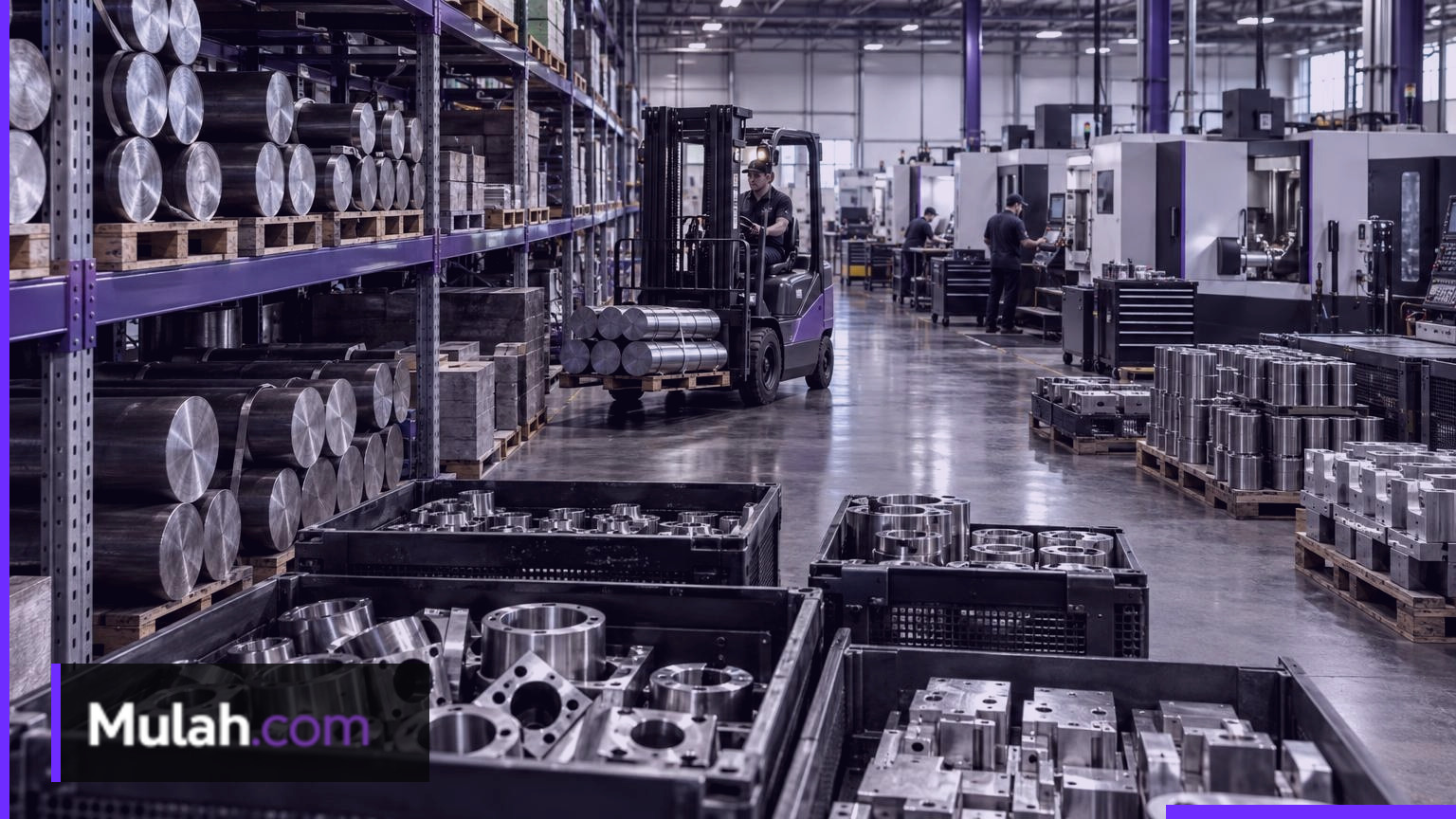
Why manufacturing inventory financing starts before the sale
A manufacturer may pay deposits for resin, steel, fabric, electronic assemblies, packaging, or specialty ingredients weeks before those inputs enter production. Labor, freight, tooling, quality control, and storage add more cost before finished goods produce revenue. If customers pay on net terms, the business can carry the entire conversion cycle on its balance sheet.
That timing mismatch becomes sharper when order volume rises. A strong purchase order may require a larger material buy, but existing cash may already be committed to payroll, utilities, maintenance, and supplier obligations. Manufacturing inventory financing is designed to help bridge that working-capital interval without pretending every inventory category has the same risk or resale value.

Finance usable inventory, not a number on a spreadsheet
Lenders and funding providers may examine how quickly inventory turns, how consistently it sells, whether it is finished or customized, and whether another buyer could use it. Commodity-like inputs and standard finished goods may be easier to value than highly engineered work in process, customer-specific packaging, perishable materials, or obsolete components.
Manufacturers can prepare by separating raw materials, work in process, and finished goods in reporting. Aging schedules, SKU-level turnover, purchase orders, customer concentration, scrap history, and gross-margin data can help explain what the inventory is worth to the business and how it is expected to convert to cash.
Manufacturing inventory financing depends on what can be manufactured, sold, and collected. Separate available materials from quarantined, obsolete, or customer-specific stock before estimating a responsible capital request.
Follow each dollar through the manufacturing cycle
Manufacturing inventory financing should connect every use of capital to a documented step in production and collection.
Procurement
Suppliers may require deposits, volume commitments, or payment before shipment. Imported components can add duties, international freight, and longer lead times. Capital at this stage supports the material position needed to schedule a production run.
Work in process
Once materials enter production, cash is tied up in labor, machine time, subcontracted processes, inspection, and scrap exposure. Work in process can be valuable operationally while remaining difficult to monetize until the product is complete.
Finished goods and receivables
Completed inventory may wait for release, shipment, acceptance, or seasonal demand. After invoicing, the manufacturer may still wait through customer terms. The right structure considers this full timeline rather than only the supplier invoice date.
Raw materials
Purchase metals, polymers, lumber, textiles, chemicals, food inputs, electronic components, fasteners, or other production materials needed for scheduled output.
Component assemblies
Cover motors, controls, circuit boards, fabricated parts, packaging systems, and supplier-built subassemblies that must arrive before final assembly can begin.
More inventory does not automatically mean more liquidity.
Manufacturing inventory financing should protect the cash required to finish and ship products, not simply maximize inventory held on the balance sheet.
Time to cash
Short-cycle, repeatable purchases may call for a revolving structure. A one-time seasonal build may be better evaluated as a defined project. Slow-moving strategic inventory deserves additional caution because financing cost can accumulate while goods remain unsold.
Quality of the asset
Practical point: financing should complement inventory discipline. It is not a substitute for cycle counts, demand planning, reorder controls, supplier diversification, or active management of slow-moving stock.
Repayment obligations
Compare total cost, payment frequency, prepayment treatment, collateral requirements, personal guarantees, reporting obligations, and default provisions. A product that is easy to access can still be a poor fit if its repayment schedule begins well before the inventory is expected to generate cash.
Operational downside
Inventory can lose value through obsolescence, spoilage, engineering changes, damage, customer cancellation, or a demand shift. Manufacturers should stress-test the repayment plan and identify who else could buy the goods if the expected customer or channel does not perform.
Supplier terms can change the amount you really need
A lower unit price can be attractive, but buying beyond realistic demand can create carrying cost and obsolescence risk. Compare the full landed cost, expected sell-through, storage needs, and financing expense before accepting a supplier’s volume tier.
When a purchase is justified, financing can preserve operating cash while the material moves through receiving, inspection, production, and sale.
Long transit windows and sole-source parts can prompt manufacturers to order earlier than usual. A planned safety-stock increase may protect production, but it should have a target level, review date, and documented rationale.
For manufacturing inventory financing, keep supplier quotes, currency exposure, duties, quality release and lead times in the same forecast as customer collections.

Use confirmed orders to test purchasing decisions
A signed order can be good news and still create a liquidity problem. Before committing, model required deposits, raw-material timing, overtime, outside processing, freight, quality documentation, acceptance conditions, and the customer’s payment terms. Include a reasonable contingency for scrap, rework, or schedule changes.
Review the purchase order, customer history, cancellation provisions, forecasts, and any dependencies that could postpone shipment or acceptance.
Confirm the new run will not consume materials or machine capacity needed for recurring customers with stronger margins or faster payment behavior.
Match funding to specific inventory events
Different materials and production stages create different financing needs. These are illustrative uses, not guaranteed product eligibility.
Safety stock
Build a measured buffer for long-lead or production-critical items where a stockout could idle labor, delay delivery, or trigger expensive expedited shipping.
Seasonal builds
Prepare goods ahead of peak retail, construction, agricultural, holiday, or institutional buying periods when production must precede customer demand.
New contracts
Support a larger bill of materials tied to a customer order, rollout, or program while preserving liquidity for the company’s established production schedule.
Supplier opportunities
Evaluate bulk-price purchases, allocation windows, and early-payment terms when the savings and inventory turnover can justify the cost of capital.
Production continuity
Inventory funding may help replace critical inputs after a supplier failure, secure a constrained part, or cover an earlier-than-planned material release. The goal should be a defined continuity plan, not indefinite stockpiling. Document which production lines or customer orders depend on the purchase.
Product launches and revisions
A launch can require first articles, packaging, regulatory labeling, tooling changes, and initial finished stock. Build a phase-out plan for superseded components so older inventory does not silently absorb the capital intended for the new version.
Manufacturing inventory financing structures to evaluate
Manufacturing inventory financing can involve different structures depending on the asset, contract, business history and cash-flow pattern. No single source is right for every production cycle.
Business line of credit
A revolving line can support repeated purchasing cycles when a manufacturer draws for inventory and pays down the balance as goods are sold and invoices are collected. Availability, cost, covenants, and renewal terms vary, so the line should be sized for normal use rather than treated as permanent equity.
Asset-based lending
An asset-based facility may calculate availability from eligible receivables and inventory. Reporting and collateral controls can be more involved, but the structure may align with manufacturers whose borrowing base grows alongside qualifying current assets. Learn more about asset-based lending.
Accounts receivable financing
Once goods have shipped and invoices are outstanding, receivables may become a separate source of liquidity. This can help release cash after production rather than fund the earliest procurement stage. Review Mulah’s accounts receivable financing resource.
Term financing
A defined lump-sum facility may fit a discrete inventory build, contract, product launch, or supplier purchase. Repayment begins on a set schedule, so management should compare payment requirements with the expected sell-through and collection timeline.
Product availability and terms depend on the business, provider, documentation, and underwriting. Mulah does not promise approval, a particular amount, rate, or funding time.
Manufacturers should also avoid funding durable machinery as if it were inventory merely because both are purchased from suppliers. Production equipment has a longer useful life and may call for a structure designed for fixed assets. For context, see Mulah’s verified page on assembly line equipment financing and leasing.
Mulah and traditional bank pathways
| Review factor | Mulah funding approach | Traditional bank process |
|---|---|---|
| Starting point | Explain the inventory use, purchase cycle and business profile to explore possible commercial structures. | Evaluate the request against the institution's product, credit and collateral policies. |
| Inventory evidence | Supplier invoices, aging, contract demand, financials and turnover may inform the review. | Financial statements, covenant analysis, borrowing-base reports and security may be required. |
| Capital structure | Revolving credit, accounts receivable or asset-based programs may be considered when available. | Conventional business lines, inventory-backed credit and government-guaranteed loans may be available. |
| Decision and cost | All terms, rates, fees, amounts and approval timing depend on underwriting. | All terms, rates, fees, amounts and approval timing depend on underwriting. |
Test inventory financing against delays and product risk
Track the financed purchase separately enough to monitor receipts, consumption, finished output, shipments, and collections. Establish escalation points for delays and avoid using all available capital simply because it is available. Preserving a liquidity cushion can matter when machinery fails, labor costs rise, or a customer pays later than planned.
No financing approval or specific pricing is promised. Borrowing cost belongs in the product's contribution-margin calculation, especially for long-lead or customer-specific materials.
Different factories, different inventory pressure
Manufacturing inventory financing considerations differ between make-to-order fabricators, make-to-stock producers and companies that buy components before a contractual release. Each needs a documented funding purpose.
Make-to-stock producers
Businesses that build standard products for forecasted demand may need materials and production capacity well before the selling season or replenishment cycle.
Make-to-order manufacturers
Custom or contract manufacturers may purchase inputs against customer specifications while carrying labor and work in process until milestones are met.
Assemblers and fabricators
Operations coordinating purchased components, fabricated parts, finishing, and final assembly may face supplier timing that differs from customer payment terms.
Food and beverage producers
Ingredients, packaging, cold storage, shelf life, certifications, and seasonal demand can shape both the amount and appropriate duration of financing.
Industrial suppliers
Manufacturers serving OEM, construction, energy, transportation, or government programs may manage long qualification cycles and detailed delivery schedules.
Consumer product makers
Brands producing through owned facilities or co-manufacturers may need deposits for components, packaging, finished goods, and freight ahead of channel receipts.
Inventory funding may help replace critical inputs after a supplier failure, secure a constrained part, or cover an earlier-than-planned material release. The goal should be a defined continuity plan, not indefinite stockpiling. Document which production lines or customer orders depend on the purchase.
A launch can require first articles, packaging, regulatory labeling, tooling changes, and initial finished stock. Build a phase-out plan for superseded components so older inventory does not silently absorb the capital intended for the new version.
Move from an inventory requirement to an informed funding decision
Define the purchase
Specify the materials or finished goods, supplier, landed cost, deposit schedule, expected delivery date, and any minimum order requirement.
Explain conversion to cash
Show how inventory moves through production, shipment, invoicing, and collection. Include confirmed orders when available without presenting forecasts as guaranteed sales.
Document and review
Be ready with bank statements, revenue history, financial statements, inventory reports, receivables aging, supplier documents, and ownership information as requested. Compare cost, payment schedule, term, collateral, guarantees, reporting duties, and prepayment provisions against the expected inventory cycle.
Get the records ready
Bank statements, inventory aging, supplier quotes, customer orders, receivables and payables, production forecasts and existing lien schedules help explain what the capital will finance and when the cash will return. There is no universal approval checklist.
Funding should fit the next production run, not just the next payment date.
Review the supplier commitment, production calendar, expected collection date and downside scenario before choosing any offer.
Check Funding OptionsEstimate repayment against the actual inventory cycle
Manufacturing inventory financing should be evaluated using realistic inventory turnover, customer payment terms and potential delays. Model the cost of capital against the expected product margin.
A calculator can help compare illustrative payment amounts and see how a proposed facility may affect cash flow. Run more than one scenario: expected turnover, a slower sell-through case, and a downside case with delayed customer payment. Include the funding cost in product or contract margin analysis rather than evaluating it separately.
The calculator provides an estimate, not an offer or approval. Actual pricing, repayment frequency, fees, and eligibility depend on the provider and underwriting.
Research the financing and the supply-chain decision
Use official guidance for working-capital context, then compare related Mulah pages for the product characteristics applicable to your manufacturing operation.
Manufacturing access to capital and 7(a) Working Capital Pilot, including programs that may support inventory and receivable-backed credit through participating lenders.
Supply-chain management guidance covering supplier mapping, sourcing, risk reduction and inventory-management practices.
Explore asset-based lending for eligible commercial receivables and inventory.
Learn about accounts receivable financing after products ship and invoices are outstanding.
Review assembly line equipment financing for productive fixed assets rather than inventory.
Business Line of Credit and Business Funding Calculator resources for comparing working-capital choices.
Manufacturing inventory financing: frequently asked questions
What is manufacturing inventory financing?
Manufacturing inventory financing is business capital used to purchase or carry raw materials, components, work in process, or finished goods. Depending on the business and provider, the structure may be a line of credit, term facility, asset-based loan, or another commercial funding product. The appropriate fit depends on inventory quality, turnover, cash flow, collateral, and the expected source of repayment.
Can financing cover raw materials before production begins?
It may, depending on underwriting and the funding product. A manufacturer should document the supplier, required deposit or payment date, delivery schedule, production plan, expected margin, and customer demand supporting the purchase. Imported or specialized inputs may require additional explanation because of longer lead times, duties, or limited resale value.
Can work-in-process inventory support financing?
Some structures may recognize eligible work in process, while others discount or exclude it because unfinished goods can be difficult to value or sell. The answer depends on the product, collateral rules, stage of completion, customization, reporting quality, and whether the goods can be completed and sold to another customer.
How is inventory financing different from equipment financing?
Inventory is expected to be converted into finished goods and sales within an operating cycle, while equipment usually supports production over several years. Inventory financing often aligns with turnover and working capital. Equipment financing is generally structured around a durable asset and its useful life. Manufacturers may need both, but the repayment periods should match the assets being financed.
What records may be requested for an inventory funding application?
Providers may request bank statements, financial statements, tax information, inventory reports, aging schedules, supplier invoices, purchase orders, customer orders, receivables and payables aging, existing debt details, and ownership information. Requirements vary. Clear records showing inventory category, turnover, landed cost, margin, and conversion to cash can make the request easier to understand.
Can inventory financing help fulfill a large customer order?
It may help fund materials and related working capital for a qualified order, but the order does not guarantee approval or repayment. Review cancellation rights, acceptance conditions, production capacity, customer credit, margin, and payment timing. The financing payment schedule should leave room for delays, ordinary operating expenses, and contingencies.
Does Mulah guarantee approval, rates, or funding speed?
No. Approval, amounts, pricing, terms, and timing depend on the business, requested use, provider, documents, and underwriting. Mulah does not guarantee a result. Review any offer carefully, including total cost, payment frequency, collateral, guarantees, reporting duties, and prepayment provisions.
How can I start exploring manufacturing inventory financing?
Use Mulah’s short funding-options inquiry to provide preliminary business and funding information, or choose the full application when you are ready to submit a more complete request. Prepare a concise inventory plan covering what you will buy, why it is needed, when it should convert to sales, and how repayment fits the company’s cash flow.
Fund the materials behind your next manufacturing milestone.
Bring your supplier plan, inventory timing and expected collections into a clear funding conversation. Mulah can help explore options based on your business profile.
877-816-8524Draft for review. Funding subject to underwriting. No approval or timing guarantee.
