The productive investment
Buy usable output, not just a machine.
Manufacturing equipment financing begins with a production problem. A machine may eliminate an overtime shift, replace unreliable equipment, bring outsourced work in-house or unlock a new customer program. The financing request should explain that change in measurable operating terms.
Assess cycle time, setup hours, scrap rates, labor requirements, available capacity and the delivery commitments the equipment will support. A lower payment is of little value if installation slips, tooling is incomplete or a machine cannot reach qualified production.
Mulah Capital Cycle Rail
Follow the entire capital cycle.
The invoice is one stage. The cash cost of a production investment stretches from vendor selection to steady output.
Prove the constraint
Document the current bottleneck, lost machine hours, capacity limit or quality requirement. Identify what happens if the purchase is delayed and which customer work supports the project.
Specify the full installation
Account for freight, rigging, electrical power, foundations, air, guarding, ventilation, controls, software, tooling, taxes and delivery milestones beyond the machine quotation.
Commission and qualify
Schedule operator training, test pieces, inspection programming, acceptance testing and production qualification. Include downtime and contingency if the supplier or integrator misses a milestone.
Fund the revenue lag
Raw materials and labor can be paid before completed goods are delivered and customer invoices collected. Protect this operating window instead of putting all available cash into the down payment.
Maintain and replace
Reserve for preventive maintenance, software support, consumables, spare components and eventual replacement. Financing should not crowd out the upkeep that preserves the asset's productive life.
Equipment that moves production
Different plants. Different machines. One disciplined business case.
The right manufacturing equipment financing structure depends on what the asset does, how transferable it is and how long it will serve the operation. Eligibility varies, especially for custom, imported or privately sold machinery.
Precision machining and fabrication
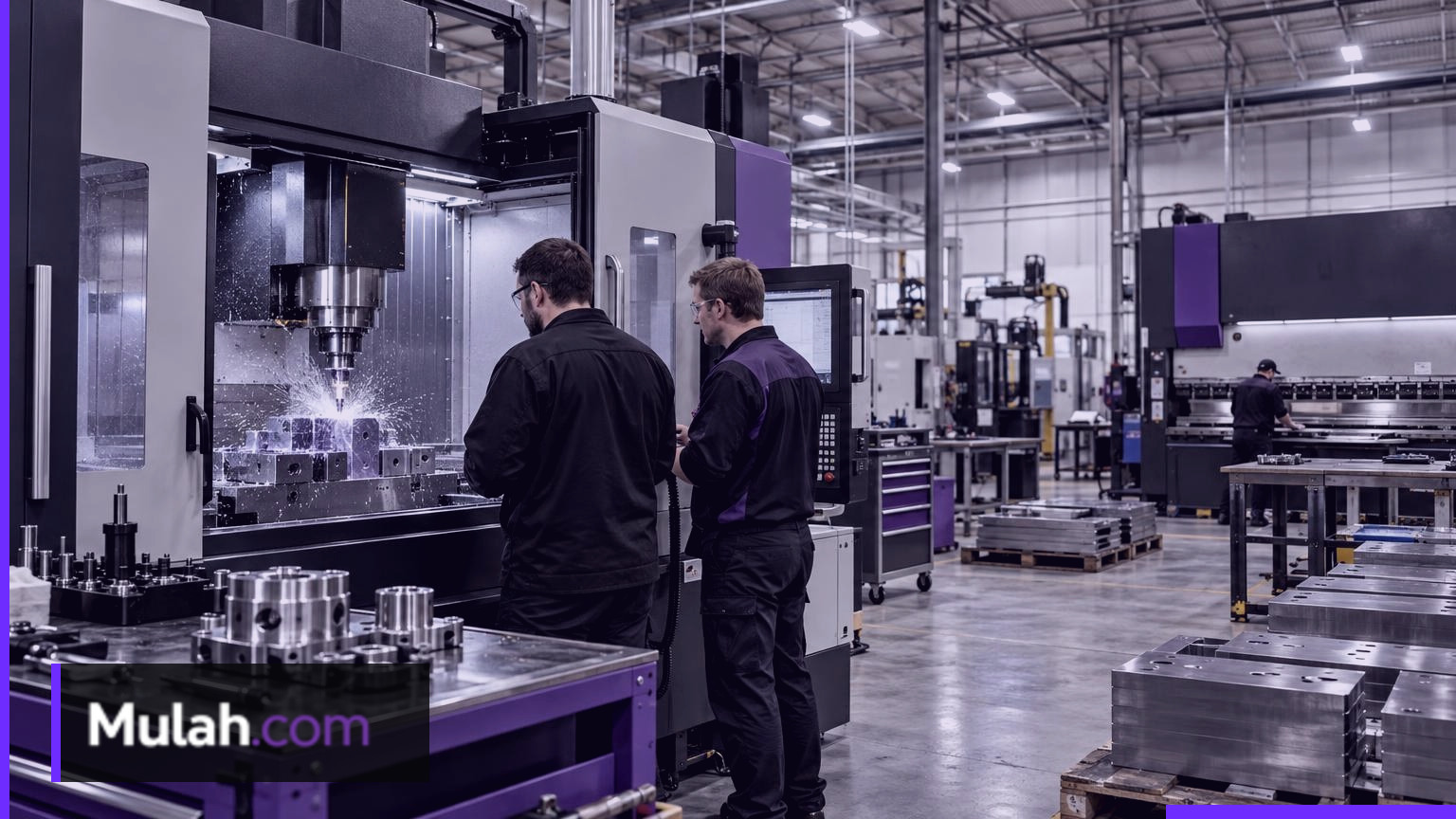
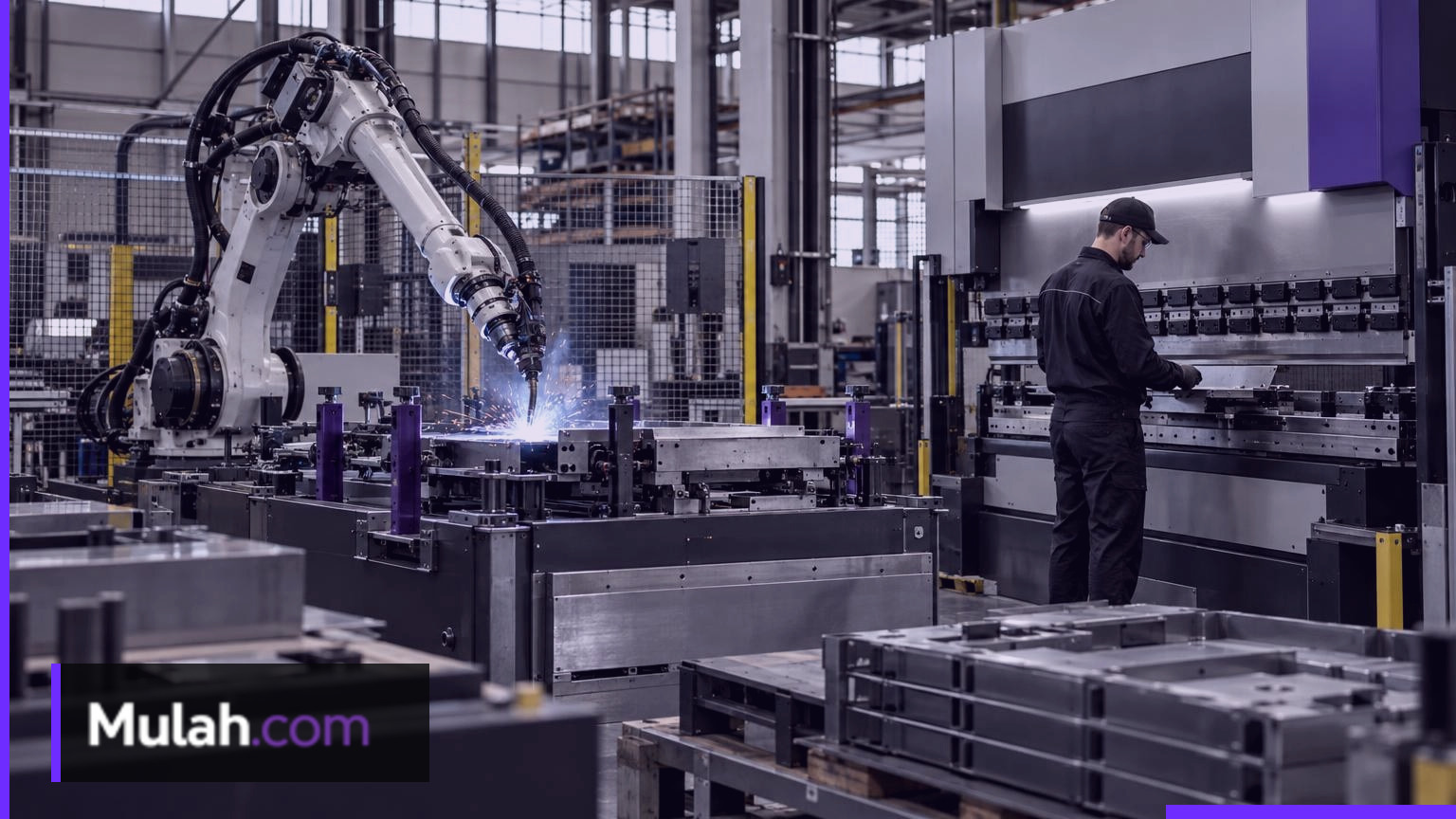
CNC mills, lathes, laser cutters, press brakes, grinders, welding systems and metrology equipment. Consider tolerances, workholding, tool packages, spindle life, machine hours, programming and the cost of qualifying customer parts.
Processing and conversion
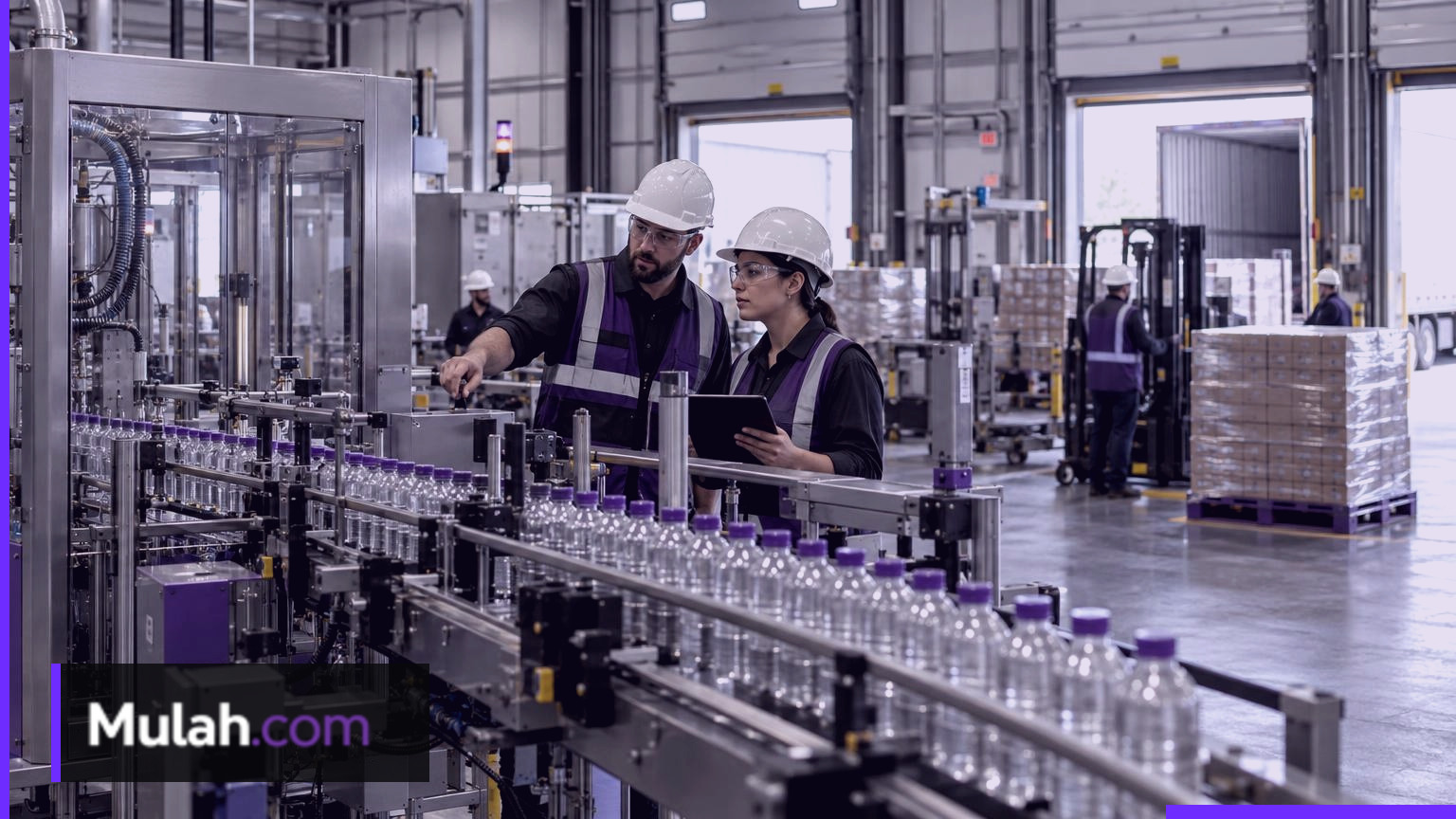
Injection molding machines, extruders, mixers, ovens, printing and packaging lines, bottling equipment, tanks and pumps. Utilities, molds, dies, sanitation requirements and environmental controls can be as important as the main machine.
Automation and inspection
Robots, cobots, assembly cells, machine-vision inspection, conveyors, sensors, controls and industrial software. Define integration ownership, safety validation and who supports the system after commissioning.
Plant infrastructure
Compressors, material handling, forklifts, dust collection, chillers, backup power and quality labs. These assets may not create a sale directly, but they often determine whether a line can operate safely and consistently.
From delivery to first good part
Installation is a financing event.
A purchased machine does not generate cash in a crate. Manufacturers may need utility upgrades, engineered foundations, rigging, production space, tooling, controls integration and a qualification period before the first saleable unit.
Separate eligible equipment costs from consumable working capital. Document supplier milestones, acceptance tests, warranty obligations and the start of required payments. Manufacturing equipment financing should be sized against the entire deployment plan, not an optimistic start date.
The Mulah Lens
Will the machine earn its place in the operation?
Financing is a capital decision, but the evidence belongs on the plant floor and in the cash-flow forecast.
Contribution, not headline revenue
Estimate additional gross profit after scrap, supplies, labor, utilities, quality costs and maintenance. Do not assume every newly available machine hour will be sold.
Productive life and flexibility
Consider whether the asset can serve multiple programs, accept upgrades and retain usable value if the original customer demand changes.
Resilience during ramp-up
Test slower qualification, customer acceptance delays and material price changes. Cash reserves matter most before the equipment reaches stable utilization.
Real contract obligations
Review collateral, guarantees, total repayment, payment frequency and early exit terms. A convenient initial payment does not describe the full financing cost.
Choose the right capital instrument
Compare funding structures against the job they must do.
Manufacturing equipment financing may be one part of a broader production project. Machinery acquisition and operating liquidity are different uses, and they should be reviewed separately before combining them.
| Funding approach | Typical planning fit | Review carefully |
|---|---|---|
| Equipment financing | Defined machinery purchase, replacement or production cell with identifiable asset value. | Vendor, asset age and condition, lien, down payment, repayment schedule and eligible soft costs. |
| Equipment leasing | Access to equipment where ownership timing or end-of-term flexibility matters. | Purchase option, residual value, maintenance responsibility, return condition and early termination. |
| Business term funding | Broader installation or expansion project when an equipment-only structure is not the full solution. | Total cost, payment timing, repayment capacity, permitted uses and potential security requirements. |
| Business line of credit | Repeat materials purchases, payroll and temporary operating gaps around production. | Draw terms, availability, fees, renewals and repayment under slower customer collections. |
| Receivables or asset-based financing | Eligible invoices or business assets that may support cash conversion during growth. | Eligibility, concentration limits, reporting, collateral, customer payment patterns and costs. |
These descriptions are educational, not funding offers. Available programs, pricing and approval depend on the business and completed review.
The decision model
Forecast the first twelve months, not only the payment.
A sound investment model compares manufacturing equipment financing obligations with the plant's real capacity to produce, bill and collect.
Begin with a total project budget: purchase, accessories, inbound freight, rigging, utilities, integration, safety work, training and validation. Next, estimate incremental contribution after direct labor, material, setup, maintenance, scrap, utilities and quality-control expenses. Add a contingency for delayed acceptance and customer orders that ramp more slowly than promised.
Run a base case and a downside case. In the downside case, push production qualification back, lower equipment utilization and extend receivables collection. A manufacturer with strong purchase orders can still strain cash when materials and payroll are due weeks before goods are accepted and invoices are paid.
Compare the projected payment frequency and total repayment against cash actually available after existing debt, taxes, core payroll, critical repairs and supplier deposits. A payment that appears manageable on a profit statement may still collide with monthly cash obligations. Mulah's business funding calculator can help frame scenarios, but its outputs are estimates rather than financing terms.
Factory-floor scenarios
Make the financing case specific to the production model.
A CNC job shop adds capacity
A precision shop considering another machining center should calculate booked spindle hours, programming and inspection capacity, tooling packages and whether skilled operators are available. It should also forecast the order mix if one major customer changes volume.
A food packer automates a line
Packaging upgrades may require conveyors, filling machinery, washdown capability, electrical work and food-safety validation. The project budget should cover changeovers, initial packaging stock and the time needed to meet quality requirements.
An injection molder expands a cell
New press capacity may depend on molds, dryers, chillers, robotics and material handling. Manufacturing equipment financing can address the machine while separate liquidity planning protects resin purchases and staffing during setup.
A contract manufacturer opens a second shift
Production equipment can raise theoretical capacity, but hiring, maintenance coverage, calibration and quality staffing determine whether the new shift performs. Model overtime avoided and genuine incremental orders separately.
Before the financing offer
Make an equipment request easy to understand and audit.
The strongest application explains what is being purchased, why it is needed, when it becomes productive and how the business will carry the obligation.
Business profile. Prepare ownership details, operating history, requested bank or financial records, current debts, debt-service obligations and an explanation of unusual recent results.
Supplier and asset record. Include the signed quote or proposal, serial and condition information for used assets, vendor location, purchase terms, delivery date, warranty and service arrangements.
Installed-cost statement. Show itemized freight, rigging, electrical changes, foundations, tooling, controls, software, training, testing and any expenses paid separately.
Operating proof. Provide throughput data, capacity constraints, outsourcing expense, expected labor impact, customer demand and a conservative production timeline with a downside case.
Mulah Application Path
From production need to informed funding decision.
Manufacturing equipment financing starts with a usable quote and ends with a careful review of the obligations, not a generic promise of fast approval.
Define the project
Identify the machine, supplier, full installed budget, timing and reason the equipment matters to production.
Submit business information
Complete the secure application, supply requested statements and provide equipment documents or operating details for review.
Compare and confirm
Evaluate available pricing, payment frequency, total repayment, liens, guarantees and use restrictions before accepting any offer.
A better decision at signing
Read the equipment quote and financing agreement together.
Confirm which costs the financing covers, when the supplier is paid and what happens if delivery, acceptance or commissioning is delayed. Make sure warranties, insurance and site obligations fit the factory's responsibilities. For a used press or specialized cell, confirm condition, removal and reinstallation requirements before relying on a resale estimate.
Compare the full repayment amount, fees, payment frequency, security interests, guarantees, prepayment terms and defaults. Leases may also require careful review of renewal, return, wear and purchase provisions. Ask qualified legal and tax advisers to assess material obligations rather than assuming that a low initial payment makes the structure favorable.
Safety is part of investment readiness. Machine guarding, lockout procedures, ventilation and staff training must be addressed within the installation plan. The OSHA machine guarding resource offers a starting point for reviewing guarding obligations; it does not replace a site-specific safety assessment.
Resource Ledger
Useful references for manufacturers considering capital investment.
Official guidance and focused Mulah resources should help strengthen the decision, not substitute for the actual financing agreement.
SBA 7(a) loan program
SBA describes eligible uses of proceeds, including the purchase and installation of qualifying machinery and equipment. Program terms and eligibility are lender-specific.
Read SBA 7(a) loan programNIST Manufacturing Extension Partnership
NIST MEP connects U.S. manufacturers to operational improvement and technical assistance resources, including support for growth and modernization.
Read NIST Manufacturing Extension PartnershipOSHA machine guarding guidance
OSHA explains guarding considerations for machinery and points of operation; safety planning should inform installation and commissioning.
Read OSHA machine guarding guidanceEquipment Financing and Leasing
Review the broader financing category for revenue-producing equipment and how an equipment request differs from working capital.
Read Equipment Financing and LeasingAsset-Based Lending
Learn how eligible business assets can support certain financing structures for established manufacturing operations.
Read Asset-Based LendingAccounts Receivable Financing
Explore invoice-based liquidity when suppliers and payroll are due before customers settle eligible receivables.
Read Accounts Receivable FinancingBusiness Funding Calculator
Stress-test financing amounts and proposed repayment obligations before reviewing an actual offer.
Read Business Funding CalculatorFAQ Ledger
Manufacturing equipment financing questions
What types of manufacturing equipment can be financed?
Potentially eligible assets include CNC machining centers, fabrication tools, injection molding and extrusion machinery, robotics, packaging lines, inspection systems, conveyors, compressors, and other productive equipment. Eligibility depends on the specific asset, vendor, transaction, useful life, and business review.
Can a manufacturer finance used or refurbished machinery?
Used and refurbished equipment may be considered. Lenders may request serial numbers, age and operating hours, maintenance history, an inspection, seller information, and an estimate of remaining useful life. Installation and transport costs should be shown separately.
Can financing include freight, installation, tooling, and software?
Some structures can accommodate certain associated costs; others are limited mainly to the equipment purchase. List freight, rigging, controls integration, tooling, training, software, site preparation, and taxes separately so each expense can be reviewed for eligibility.
Does manufacturing equipment financing require a down payment?
Requirements depend on the lender, asset, transaction, collateral, and applicant profile. Even when an upfront contribution is modest, manufacturers should retain operating cash for materials, payroll, training, initial scrap, repairs, and customer payment delays.
How is equipment financing different from a business line of credit?
Manufacturing equipment financing generally addresses the acquisition of a specified productive asset. A business line of credit may provide revolving access for repeat short-term uses such as raw materials, payroll, or temporary receivables gaps, subject to facility terms.
What documents help support a machinery financing application?
A complete equipment quote, supplier details, ownership information, financial or bank records when requested, current debt schedule, project timeline, installation budget, and a clear explanation of expected operational benefit can help reviewers understand the request.
Can a startup manufacturer apply for equipment funding?
A younger manufacturing business may have options, but shorter operating history can affect underwriting. The review may consider the owners' experience, available equity, financial strength, supplier proposal, customer demand, and realistic startup or commissioning projections. Approval is never guaranteed.
How long does funding and installation usually take?
Financing review and equipment commissioning follow different timelines. Vendor lead times, title or lien work, imported machinery, site preparation, installation, safety review, and acceptance testing can all affect the schedule. No single turnaround applies to every request.
