Operating history
How long your business has operated affects the records available and the options you can pursue. A newly purchased store may require both seller records and your own projections.
When washers go down, revenue disappears while rent and utility bills keep coming. But replacing machines isn't the same funding decision as buying a laundromat or covering a tight month. If you're looking for small business loans for your Alabama laundromat, match the financing to the expense, then test the payments against what your store actually keeps after operating costs.
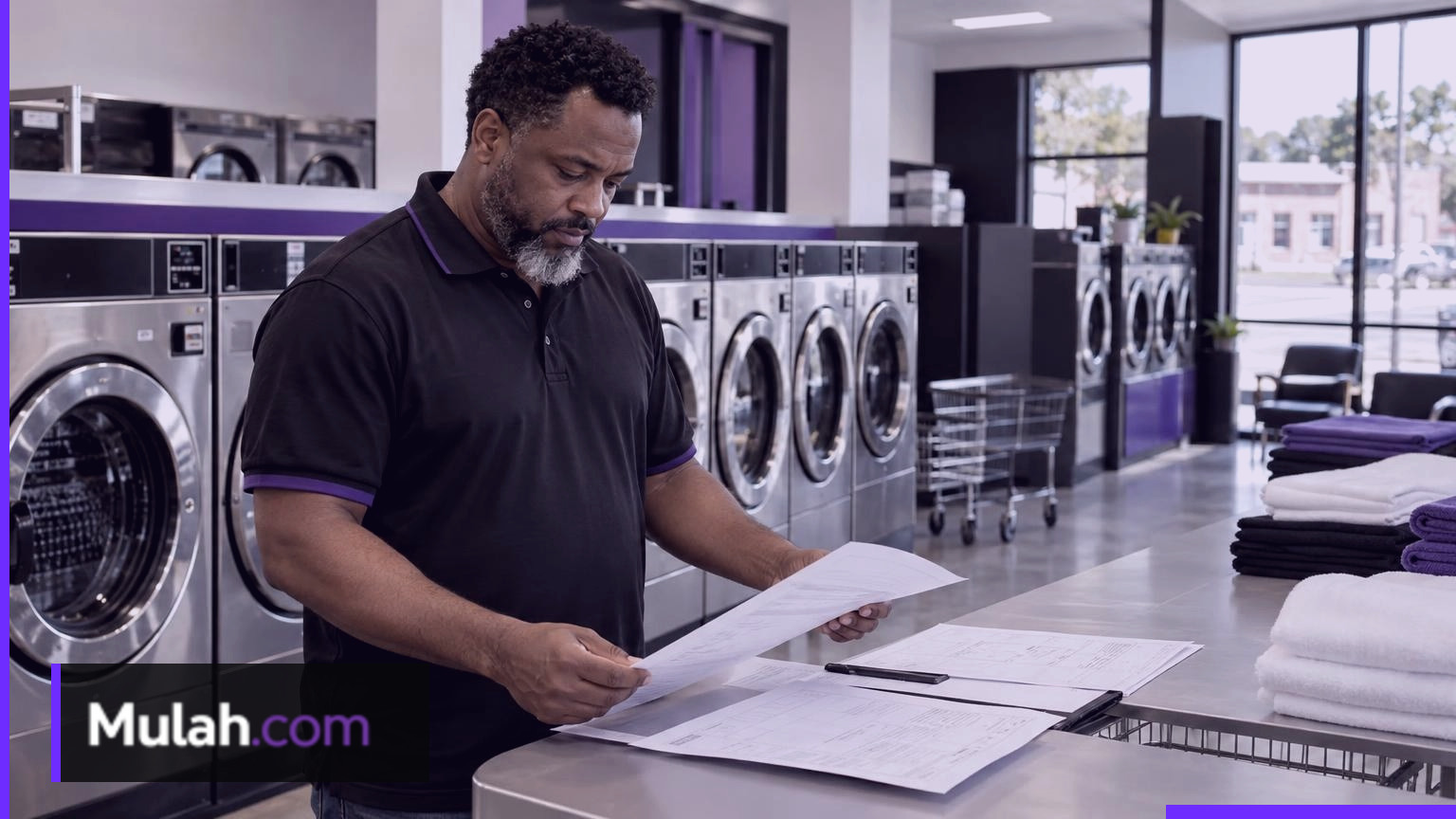
Your laundromat may collect money every day, but daily collections don't tell you how much debt it can carry. Water, sewer, gas, electricity, rent, maintenance, and payroll all compete for the same dollars. Before requesting funding, calculate what remains after those bills and a reasonable allowance for repairs.
The right financing also depends on what you're changing. Replacing an unreliable machine protects existing revenue. Adding larger-capacity washers is a bet on customer demand. Buying another location introduces a separate set of records, lease terms, and equipment conditions. Treat those as different decisions, even if the requested amounts are similar.
This guide connects those decisions to financing structures, costs, and paperwork. Mulah helps you understand funding options and prepare a clearer request. Your next step should be based on what your business can afford, not simply the largest amount available.
A self-service laundry, an attended laundromat, and a store with wash-and-fold service can produce very different margins. More service revenue can also mean more labor, supplies, and scheduling pressure. Separate those revenue streams so you don't mistake higher sales for more cash available to make payments.
In Alabama, use the rates and requirements that apply to your actual address. Obtain utility information from your providers and ask the relevant local offices about proposed construction or changes in use. Don't budget from another store's bills without accounting for equipment, customer volume, and the utility rate schedule.
Your premises matter almost as much as your machines. A long-lived equipment purchase is harder to justify if your lease expires soon. Check renewal options, assignment rights if you're buying the business, and responsibility for drains, utility connections, and building repairs before committing to financing.
Small business loans are one option, not a catchall name for every funding product. A lease or revenue-based arrangement can work differently from a loan. Use this comparison to narrow your choices, then read the actual agreement for costs, payment rules, and security requirements.
| Option | Often considered for | How to think about it |
|---|---|---|
| Term loans | A defined renovation, acquisition, or other expense with a measurable budget. | A lump sum repaid over an agreed term. Ask about interest, fees, collateral, guarantees, and early-payoff terms. See term loan options. |
| Working capital | A temporary operating gap, such as overlapping repair bills and utility payments. | Working capital describes what the money supports, not one universal contract. Payment frequency and cost depend on the product. Read about working capital funding. |
| Business line of credit | Recurring but uneven expenses when you want access without taking the full amount upfront. | Draw funds within an approved limit. Interest and fees depend on usage and terms; access may be subject to renewal or other conditions. See business lines of credit. |
| Equipment financing or leasing | Commercial washers, dryers, and eligible related equipment. | The equipment commonly secures financing. A lease may have purchase, return, or renewal requirements. Check equipment financing and leasing. |
| SBA financing | Eligible acquisitions, equipment purchases, improvements, or working capital where the program fits. | Participating lenders make loans with an SBA guarantee. Eligibility, use of proceeds, documentation, and lender underwriting apply. Learn about SBA loans. |
| Revenue-based financing | An established business evaluating funding tied to revenue rather than a conventional installment loan. | Contracts vary and may involve purchasing future receivables. Understand withdrawals, reconciliation rights, and total cost. Read about revenue-based financing. |
Get an itemized quote showing model numbers, capacity, warranty, freight, removal, installation, and payment-system compatibility. Ask who handles plumbing, electrical work, venting, and required permits. If different contractors handle those tasks, make sure their estimates don't leave gaps or charge twice for the same work.
For used equipment, document age, condition, service history, and parts availability. A lower purchase price can be outweighed by downtime and repairs. Financing availability may also depend on the equipment's age and seller. Don't assume the remaining useful life comfortably exceeds the financing term.
With a lease, read the end-of-term language before focusing on the payment. Ownership may require an additional purchase payment, or the agreement may call for return or renewal. Ask what happens if the machine fails, the supplier delays installation, or you need to move the equipment.
If you're buying a laundromat, reconcile the seller's collections with bank deposits, tax returns, machine reports, and utility records. Utility use can support your investigation, but it doesn't prove revenue by itself. Have an accountant examine adjustments to earnings, especially claims about cash that never reached the bank.
SBA financing can fit certain business acquisitions and improvement projects, subject to program and lender requirements. It's not a direct grant or automatic approval. Expect questions about your experience, investment in the project, ownership structure, credit, and the business's ability to make payments.
Build the project budget around the purchase agreement, equipment condition, lease, closing costs, and cash needed after closing. A store that looks affordable at the purchase price may need immediate machine replacements. Address those costs before signing commitments that assume financing will cover every dollar.
A credit line can suit expenses that recur unevenly, such as repairs or supply purchases. Draw only what you need and connect repayment to normal collections. If the balance never falls, check whether the line is supporting a temporary gap or covering a persistent shortfall.
Revenue-based financing requires a different reading of the contract. If payments are represented as a percentage of revenue, ask how withdrawals change when sales fall and how reconciliation works. Don't assume payments automatically adjust. Get a clear explanation of required notices, supporting records, and contractual limits.
Before accepting any frequent-payment product, run the withdrawals through your bank calendar. Cash collected over a busy weekend may not be deposited before Monday's debit. Use the business funding calculator for planning, then replace estimates with the offer's actual schedule and charges.
Requirements differ by provider and product. Your job is to make the business's cash flow and the reason for the request easy to verify.
How long your business has operated affects the records available and the options you can pursue. A newly purchased store may require both seller records and your own projections.
Providers often examine bank activity and financial statements. For coin-heavy stores, consistent collection logs and deposits help explain revenue that card reports alone won't show.
Disclose loans, leases, advances, and other required payments. Funding against the same cash flow without accounting for existing withdrawals can create an unaffordable schedule.
Business and personal credit may be considered. Explain material issues honestly and have supporting records ready. There isn't one credit-score threshold that applies to every product.
Providers may ask about equipment ownership, existing liens, your remaining lease term, and landlord permissions. These details can affect collateral and installation decisions.
Show what the funds will buy and how payments fit your cash flow. For expansion, support your forecast with capacity, pricing, staffing, and location-specific assumptions.
The exact request varies. Gather these records early, and keep dates and business names consistent across documents.
The useful question isn't just what you can finance. It's what the expense changes for your customers and your cash flow.
Document downtime, service costs, and lost availability. Equipment financing may fit when replacement is more sensible than continued repairs.
Use customer requests and machine utilization to support the decision. Check floor space, utilities, and installation requirements before ordering.
Budget for hardware, software, processing fees, and staff training. Keep a workable payment option available while customers learn the new system.
A utility bill and emergency repair can arrive together. Working capital is more defensible when you can show how normal collections will cover repayment.
Include labor, supplies, storage, insurance, and customer acquisition in the budget. Gross service sales aren't the same as money available for debt payments.
Price deferred maintenance and improvements alongside the purchase or construction cost. Protect enough cash to operate while the location gets up to speed.
These are illustrative situations, not customer results or financing offers. Use the reasoning to test your own request.
You have repair invoices and records of machines being unavailable. Get both repair and replacement estimates. If replacement wins, seek equipment terms based on the installed cost, while keeping cash available for unrelated repairs.
Suppose an upgrade is expected to produce $2,400 more each month after added operating expenses, before financing payments. A $2,000 payment leaves only $400 of projected cushion. Test a weaker result before treating the project as affordable.
Don't size an acquisition loan around earnings you can't substantiate. Request collection records and reconcile deposits, tax filings, and expenses. If the evidence remains weak, reconsider the price or the transaction rather than borrowing against the seller's assurance.
If ordinary collections replenish the account later in the month, an available credit line may fit. If this happens every month, investigate the underlying shortfall. Repeated borrowing isn't a substitute for correcting pricing or expenses.
Separate the second location's budget from your current store's cash needs. Include management coverage and overlapping expenses. If the first store must fund both locations' payments, expansion may be premature even when financing is available.
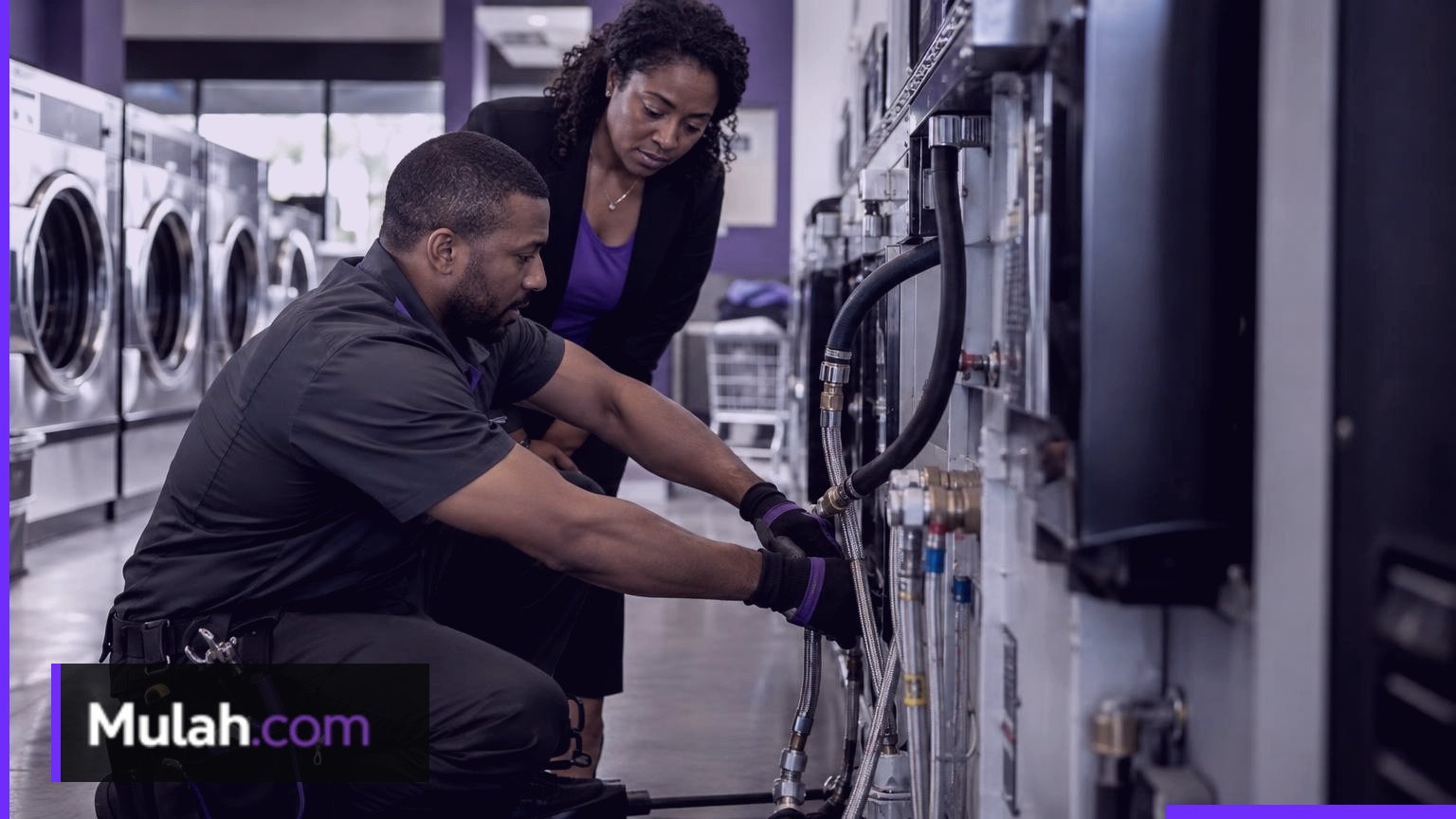
An equipment quote can make a project look fully funded when it isn't. You may still need money for installation, temporary closures, deposits, signage, or customer refunds. Ask which costs the equipment financing covers, then build a separate budget for everything it excludes.
Avoid using every available dollar as a down payment. New machines won't prevent an unrelated drain problem or an unusually high utility bill. Decide how much cash must remain in the business after closing, including enough to cover expenses while installation disrupts service.
Also separate permanent needs from temporary gaps. If the store consistently spends more than it collects, another advance doesn't fix the underlying problem. Pricing, operating hours, staffing, or the equipment mix may need attention before additional financing makes sense.
Follow the money from the initial quote through the first months of payments. These checkpoints expose costs that are easy to miss.
List machines, construction, fees, and operating cash separately. For an acquisition, distinguish the business purchase from any real estate purchase.
A supplier may require money before delivery. Ask when financing proceeds become available and who receives them so you don't promise a deposit you can't cover.
Estimate lost collections during installation. Keep popular machine sizes available where practical, and account for the cost of extra staff or cleanup.
Weekly or daily withdrawals can strain an account even when a monthly projection looks comfortable. Put actual payment dates beside rent, payroll, and utility drafts.
Track collections, utility usage, service calls, and refunds. If the project doesn't produce the expected benefit, address the cause before adding another payment.
Two offers for the same amount can leave you with very different cash positions. Put these four items side by side.
Subtract withheld fees and any required payoff of existing financing. An approval amount isn't necessarily the amount available for your project.
Use a slower month from your own records. After ordinary bills and the proposed payment, your account should still have room for an unexpected repair.
Ask for the full repayment amount, applicable APR, and an early-payoff quote method. A factor rate isn't an interest rate and doesn't show annualized cost by itself.
Check liens, personal guarantees, additional-debt restrictions, and equipment disposal rules. These terms can matter when you refinance, replace machines, or sell the business.
Related Mulah resources include working capital funding, business lines of credit, equipment financing and leasing, term funding, SBA loans, revenue-based financing, startup funding, accounts receivable financing, and the business funding calculator.
You don't need an elaborate forecast, but you do need assumptions you can explain.
Use actual collections less operating costs, taxes, current debt payments, and necessary owner compensation. Don't count the same cash twice.
Separate preserved revenue from new revenue. Replacing a broken washer restores capacity; it doesn't necessarily create additional customer demand.
Test lower collections and higher expenses together. If one bad month forces another financing request, the proposed payment is probably too aggressive.
The amount that looks attractive on an offer is not always the amount that makes sense to take. Tie the request to a real expense, a realistic payoff period, and the cash the business can still live on if a customer pays late or a strong month comes in softer than expected.
Mulah is a marketplace, not a promise that every product will be available to your laundromat. You can use its business funding resources to understand the categories and prepare a request that explains your purpose, timing, and financial position.
When you receive an option, ask who provides the funding, what information is still required, and which terms could change before closing. Keep your project budget beside the offer. A useful option should fit the expense and leave your business with workable cash flow.
Ready to seek funding? A focused request is easier to evaluate than a round number with no supporting budget.
Add documented project costs, subtract cash you can safely contribute, and decide what must remain in your account. Don't use your entire operating cushion to reduce the request.
Use the Mulah application to begin your request. Have your records ready and explain unusual deposits, recent ownership changes, or temporary closures.
Check net proceeds, total cost, payment dates, guarantees, and payoff terms. Ask questions before signing, and don't commit to supplier deadlines based on funding that hasn't been finalized.
Provide the business and financial information needed for a funding review.
Start with a shorter path when you want to discuss the business need before completing the full application.
Review official SBA information about federal small-business loan programs and lender participation.
Official guidance on financial management, cash flow, bookkeeping, and business planning.
Use the official source for current program, regulatory, or business guidance related to this topic.
Use the official source for current program, regulatory, or business guidance related to this topic.
Potentially. Your options depend on the business, documentation, credit, and product requirements. Coin collections need a reliable paper trail. Consistent collection logs and bank deposits make your revenue easier to assess.
Equipment financing is worth considering because the purchase is tied to a specific asset. Compare the installed cost, payment term, warranty, and ownership terms with any loan or lease alternatives.
Some arrangements can include eligible installation or project costs, but don't assume they do. Give the provider itemized quotes and ask which expenses are covered and how contractors will be paid.
Some providers finance used equipment. Age, condition, seller, useful life, and resale value can affect eligibility and terms. Obtain service records and an inspection where practical before committing.
An eligible acquisition may qualify, subject to SBA program rules and lender underwriting. Expect scrutiny of the purchase price, financial records, ownership, lease, and your ability to make payments.
Startup financing is possible in some circumstances, but you won't have operating history to support the request. A detailed buildout budget, credible projections, relevant experience, and your own investment become especially important.
A line often fits recurring, uneven cash needs. A term loan may fit a defined purchase with a longer payoff period. The better choice depends on cost, access rules, and how you'll repay it.
Keep dated machine collection logs, deposit records, and any meter or payment-system reports available. Reconcile them regularly. Don't present estimates as verified revenue or alter records to support a request.
You may. Requirements vary by provider and product. A personal guarantee can make you personally responsible for business debt, so understand its scope before signing.
No. Adjustment rights and procedures depend on the agreement. Ask how reconciliation works, what records you must provide, and whether withdrawals continue while an adjustment request is being considered.
Usually that isn't a natural fit because customers commonly pay when they use the service. It may be relevant if a commercial laundry service has eligible unpaid business invoices, subject to provider requirements.
The remaining term, renewal rights, landlord permissions, and assignment provisions can matter. Providers may be concerned if equipment will stay useful long after your right to occupy the location ends.
Possibly, but savings depend on the contract. Some products have prepayment charges or costs that don't fall with early payoff. Request the payoff calculation in writing rather than assuming all future charges disappear.
Use documented costs and a payment your business can support. Include legitimate project expenses, but avoid borrowing extra simply because it's offered. Leave room for repairs and slower collections.
Start with the need, the amount, and the timing. Mulah can help you review possible business funding options before you decide whether to move forward.
Call 877-816-8524