Revenue and collections
Show how much your business collects, how regularly customers pay and whether recent deposits reflect normal operations or a temporary spike.
A new cleaning contract can require a floor scrubber, extra vacuums and a service van before your first invoice gets paid. Janitorial equipment financing and leasing let you spread eligible acquisition costs over time. But equipment agreements and small business loans solve different problems. The right choice accounts for the machine’s useful life, your contract margins and the cash you need to keep crews working.
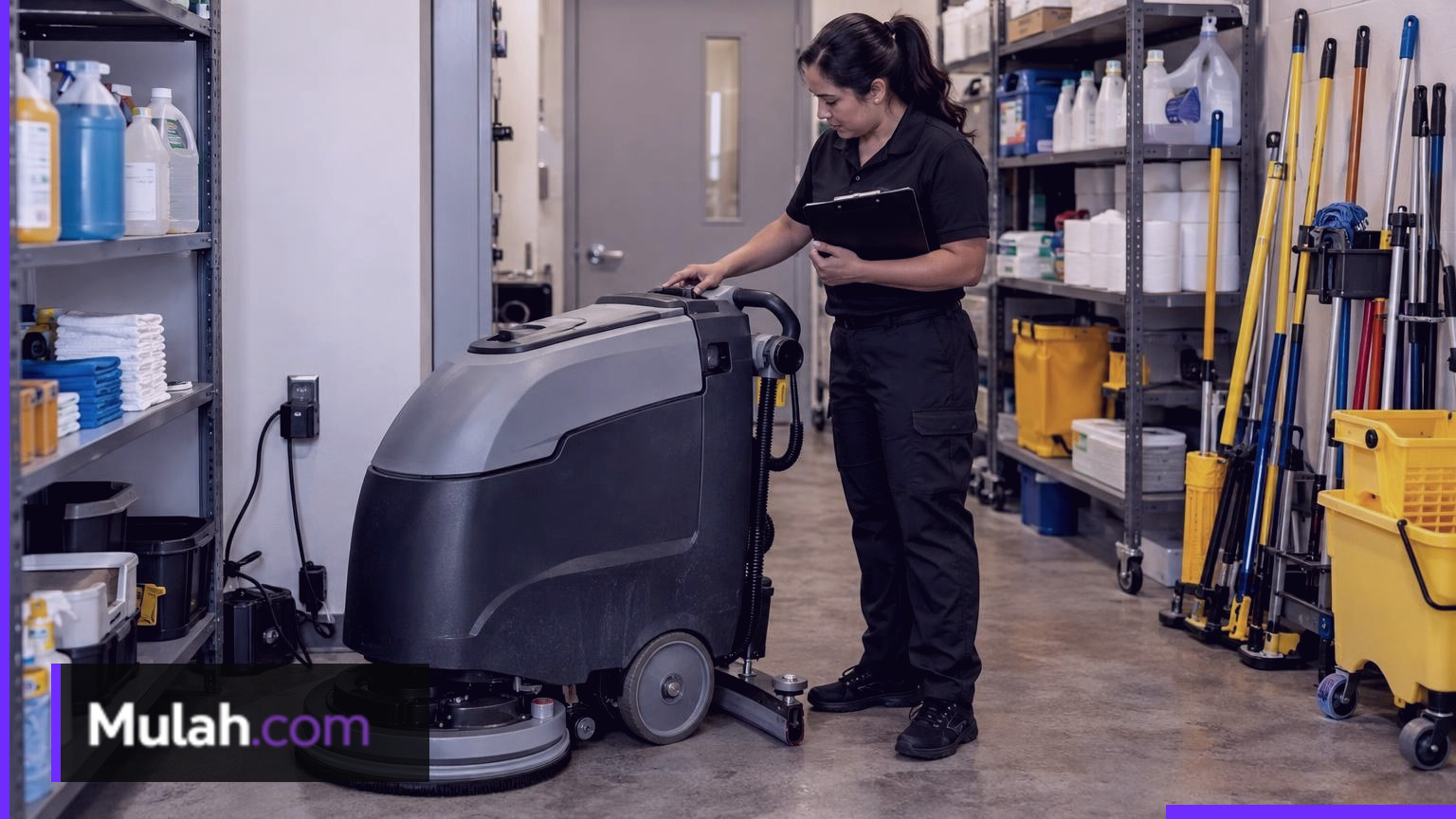
The strongest equipment purchase solves a specific operating problem. A larger recovery tank might cut repeated trips to a utility sink. A compact scrubber might let one employee finish a retail floor within the available service window. Write down the improvement you expect before choosing a machine or discussing monthly payments.
Your work mix determines the equipment list. Office routes often need portable vacuums, carts and quiet machines. Warehouses can justify ride-on scrubbers or sweepers. Carpet care calls for extractors, spotting tools and air movers. Exterior work adds pressure washers, recovery equipment, tanks and trailers. Healthcare and controlled environments require tools selected around facility protocols, not a financing provider’s equipment catalog.
Mulah gives you a place to present the equipment request alongside the broader business need. Available products, eligible costs and terms vary with your business, the asset and the provider’s underwriting. An inquiry is not an approval, and an offer still needs to make sense within your operating budget.
A ride-on scrubber may look economical on a large floor plan but prove impractical around narrow aisles, elevators or occupied work areas. A quieter, smaller machine could finish more useful work during the hours your customer allows. Take site measurements and arrange a demonstration when practical.
Battery runtime needs the same scrutiny. Your crew’s shift length, floor conditions, attachments and charging routine all affect usable runtime. Find out what replacement batteries cost, whether the charger is included and how a battery failure would affect the route. A cheap used machine with a tired battery pack can become an expensive purchase quickly.
Vehicles and portable equipment also need to work as a system. Check payload, loading clearance, ramps, tank capacity and chemical storage. Loading time can erase gains made inside the building. For multi-site routes, consider how crews will separate equipment and materials used in different environments.
When researching small business loans, distinguish money tied to an asset from money available for broader expenses. The six structures below address different needs; not every option is a conventional loan. Mulah’s business funding overview provides a broader starting point.
| Option | Often considered for | How to think about it |
|---|---|---|
| Term funding or term loans | A defined project budget with a reasonably predictable payback period. | You receive a set amount and repay it on an agreed schedule. Check payment frequency, fees and early-payoff terms. See term funding. |
| Working capital | Payroll, supplies, fuel and other eligible costs while a new account gets underway. | An operating-purpose category rather than one standard contract. Get the actual product type, total repayment and payment schedule in writing. |
| Business line of credit | Recurring timing gaps, smaller replacements and unexpected repair bills. | Borrow within an approved limit under the agreement’s draw and repayment rules. Check fees and renewal conditions. Read about a business line of credit. |
| Equipment financing or leasing | An identified scrubber, extractor, system or eligible service vehicle. | Funding is tied to specified assets. Ownership, collateral and end-of-term duties differ by agreement. See equipment financing and leasing. |
| SBA financing | Eligible borrowers pursuing equipment or a larger, documented business investment. | Participating lenders make loans under SBA program rules. Documentation, eligible uses and timing vary. Read about SBA financing. |
| Revenue-based financing | Businesses considering funding tied to revenue, with enough margin to support the collection schedule. | Some arrangements are purchases of future receivables rather than loans. Examine remittance terms, reconciliation rights and total cost. See revenue-based financing. |
For a lease, locate the purchase option and any deadline for exercising it. Find out how a fair-market-value purchase amount would be determined, if that structure applies. If you plan to return the machine, understand acceptable condition, return location and who pays freight.
Early termination deserves particular attention when equipment serves one customer. Losing the cleaning contract generally doesn't erase your equipment obligation. Don't assume you can return the asset and stop paying, or that paying early automatically removes all remaining charges.
For a financed purchase, obtain the payment schedule and lien-release process. Read insurance requirements, default provisions, security interests and any personal guarantee. Tax and accounting treatment require advice specific to the agreement and your business; a salesperson’s description isn't enough.
Inspect operating hours, battery condition, motors, pumps, tanks, controls and frames. On floor machines, examine brushes and squeegee assemblies. On extractors and pressure-washing systems, look for leaks, corrosion and inconsistent pressure. Verify charger compatibility and included attachments.
Request serial numbers, service records and proof that the seller can transfer clear ownership. Separate the manufacturer’s warranty from any dealer warranty, including exclusions and responsibility for labor or transportation. For an expensive machine or vehicle-mounted system, an independent inspection can be worth the cost.
Don't assume financing eligibility because a seller accepts your offer. Give the provider the exact asset description, age, condition and seller details before paying a nonrefundable deposit. Keep a written list of everything included so the delivery paperwork matches what you agreed to buy.
Assign responsibility for daily inspections, charging and preventive maintenance. Keep service records and photos of damage. Insurance should reflect the agreement’s requirements and where the equipment travels or stays, including customer locations.
At dedicated sites, settle storage, access and charging arrangements with the customer. Decide who is authorized to use the machine and how damage will be reported. Maintain a backup rental or dealer-service plan for equipment whose failure would interrupt the contract.
Chemical handling and training belong in the operating plan too. OSHA’s Hazard Communication guidance addresses workplace chemical information and training requirements. New dispensing systems or sanitation equipment should fit your safety procedures and the facility’s protocols.
There isn't one approval standard for every janitorial equipment request. These six areas usually do more to explain the proposal than an equipment list alone.
Show how much your business collects, how regularly customers pay and whether recent deposits reflect normal operations or a temporary spike.
Explain how long you've been cleaning commercially and any changes in ownership or service mix. A new business has less history to support its forecast.
Business and owner credit can affect available options. Be ready to explain significant problems accurately rather than assuming a new contract overrides them.
List loans, leases, credit lines and other financing payments. Include payment frequency so the provider can see the demands on your bank account.
Supply a complete quote and condition details. Useful life, resale value, documentation and vendor eligibility can influence an asset-focused offer.
Show how much revenue comes from your largest accounts. A signed contract adds context, but cancellation rights and renewal dates still matter.
Requirements vary by product. Gather what you have, flag missing items and keep the equipment budget consistent with the amount requested.
These are common planning categories, not a promise that one agreement covers all of them. Put each cost under the funding product that actually permits it.
Scrubbers, sweepers, burnishers, buffers and orbital machines, plus approved chargers, pads and attachments needed for the scheduled work.
Portable extractors, truck-mounted systems, commercial vacuums, air movers and spotting equipment for recurring service or separately priced projects.
Pressure washers, recovery systems, tanks, hoses, HEPA filtration and high-reach tools. Access equipment and containment requirements need their own site assessment.
Eligible cargo vans, trailers, shelving, ramps and secure storage. Vehicle and installation costs need to appear clearly in the project quote.
Eligible funding for uniforms, initial chemicals, training, insurance deposits and payroll before customer collections begin. These aren't automatically equipment-financing expenses.
Replacement batteries, major repairs, backup rentals and aging machines. A planned replacement calendar reduces the pressure to accept financing during a breakdown.
These are planning situations, not customer results. Use the one closest to your request to decide what to calculate next.
Budget the machine alongside site setup and the first payroll cycles. Test affordability against the contract’s cancellation terms, not just its headline value. Have a redeployment plan if the account ends.
Get repair and replacement estimates, then price a temporary rental. Restoring service quickly doesn't always require buying immediately, especially if a major repair would extend the existing machine’s useful life.
Check actual customer demand, training, insurance and water-recovery requirements before ordering a complete trailer setup. Occasional jobs may justify renting until the work supports ownership.
Add likely battery and wear-part replacements to the price. Then weigh warranty coverage and local service support. The discount matters only if the machine remains productive.
If completed work is waiting on customer payment, accounts-receivable financing could be relevant. Examine fees, recourse, customer notification and concentration rules. It addresses collection timing, not whether another machine is needed.
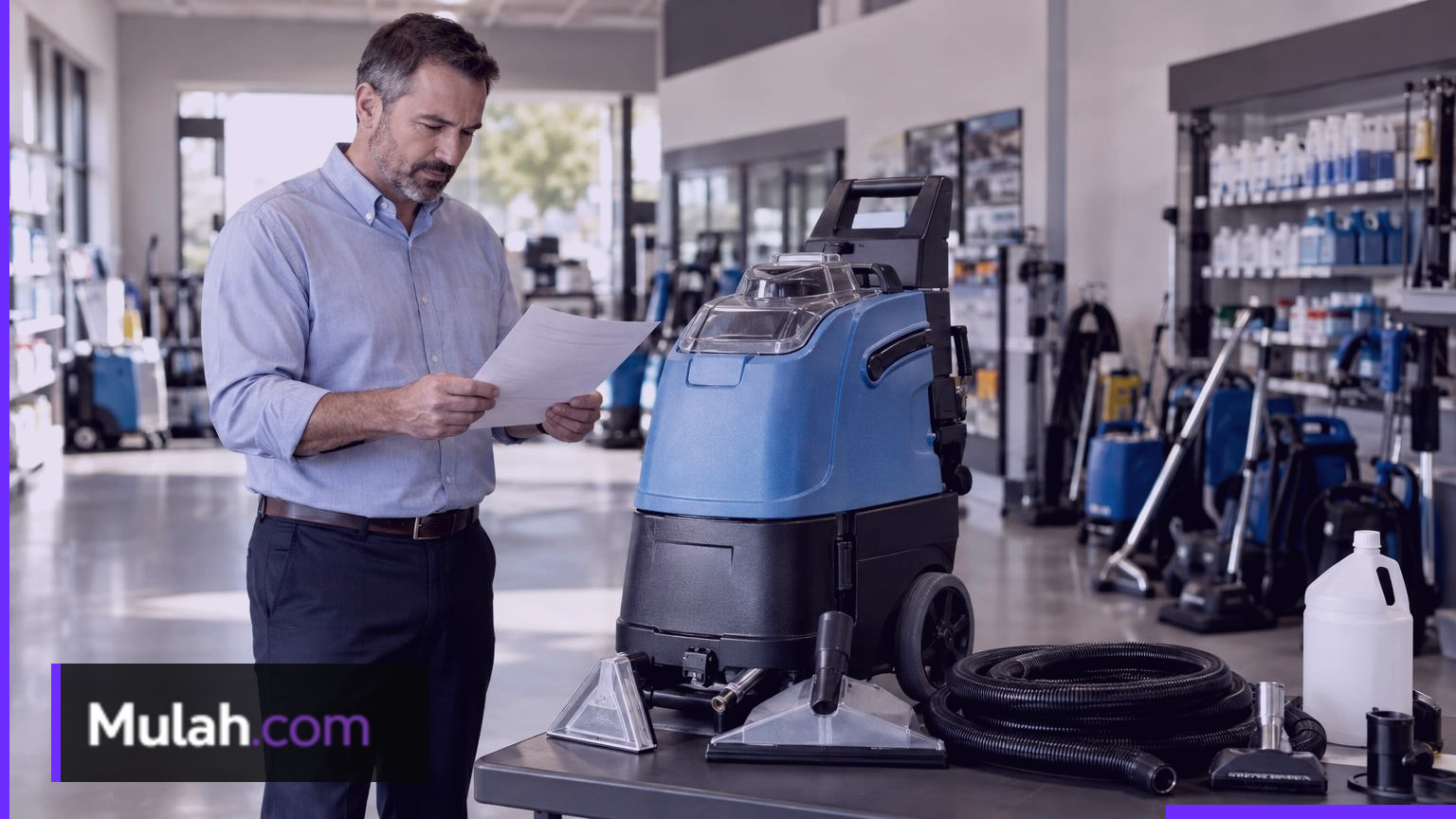
A machine and the cash to operate it are different needs. An equipment agreement might cover a scrubber and approved accessories while leaving payroll, chemicals and insurance deposits to your business. Put those amounts on separate lines so you don't mistake an approved purchase for a fully funded contract launch.
The timing gap can be substantial even without a large equipment order. Your employees need to be paid on schedule, while customer collections follow invoice terms, approval procedures and occasional disputes. Use the customer’s actual payment history when estimating the cash required through the first billing cycle.
For those operating expenses, working-capital funding may be more relevant than an asset-only agreement. Keep the two requests connected in your plan, but don't call a general working-capital product an equipment loan. The costs, security and repayment schedule may be quite different.
The financing term is only one part of the timeline. Follow the asset from delivery through replacement to spot costs that a dealer quote won't capture.
Measure doorways, ramps and storage space. Check charging access and any electrical work. For truck-mounted systems, account for plumbing, ventilation, weight distribution and secure mounting before scheduling installation.
Build operator instruction and delivery acceptance into the launch schedule. A new machine won't deliver its expected labor savings immediately if crews are still learning controls, chemical settings and daily care.
Set aside money for pads, brushes, squeegees, filters and batteries. Local technician availability and parts lead times can matter more than a modest difference in purchase price.
A machine dedicated to one building creates exposure if that account ends. Know where you could redeploy it and what transportation, storage or modifications that move would require.
Track the remaining balance, final purchase amount or return requirements alongside the maintenance history. You don't want to discover that an exhausted machine still carries a substantial financial obligation.
Ownership preference, expected usage and service support should shape the deal. A low periodic payment doesn't settle those questions.
A purchase-financing arrangement can suit durable machines you expect to keep for years. Establish when ownership transfers, what secures the agreement and how any lien is released after payment.
Leasing can fit an equipment refresh plan, but it isn't automatically a short-term commitment. Read the purchase option, return standards, notice deadlines and renewal language. The label alone doesn't tell you the economics.
A lower purchase price can preserve cash if condition and service support hold up. Obtain a written condition report, maintenance history and battery details. Provider rules may restrict asset age, seller type or private-party purchases.
Rental can be sensible for a short project or an untested specialty service. The daily cost may be higher, but it avoids committing to years of payments before you know how often customers will buy the work.
Related Mulah resources include working capital funding, business lines of credit, equipment financing and leasing, term funding, SBA loans, revenue-based financing, startup funding, accounts receivable financing, and the business funding calculator.
Translate equipment claims into your own contract economics. Manufacturer productivity figures aren't a substitute for the conditions your crew faces.
Include loading, setup, refilling, dumping and cleanup time. If a machine saves an hour but doesn't reduce paid hours or free capacity for other work, the benefit may be service quality rather than immediate cash savings.
Contract revenue isn't available in full for equipment payments. Deduct wages, payroll taxes, supplies, transportation and the account’s share of overhead before judging what you can afford.
Run the numbers with fewer specialty jobs, a delayed customer payment or a lost account. Keep room for repairs. The business funding calculator is a planning aid, not a quote; actual offers may use different payment structures.
The amount that looks attractive on an offer is not always the amount that makes sense to take. Tie the request to a real expense, a realistic payoff period, and the cash the business can still live on if a customer pays late or a strong month comes in softer than expected.
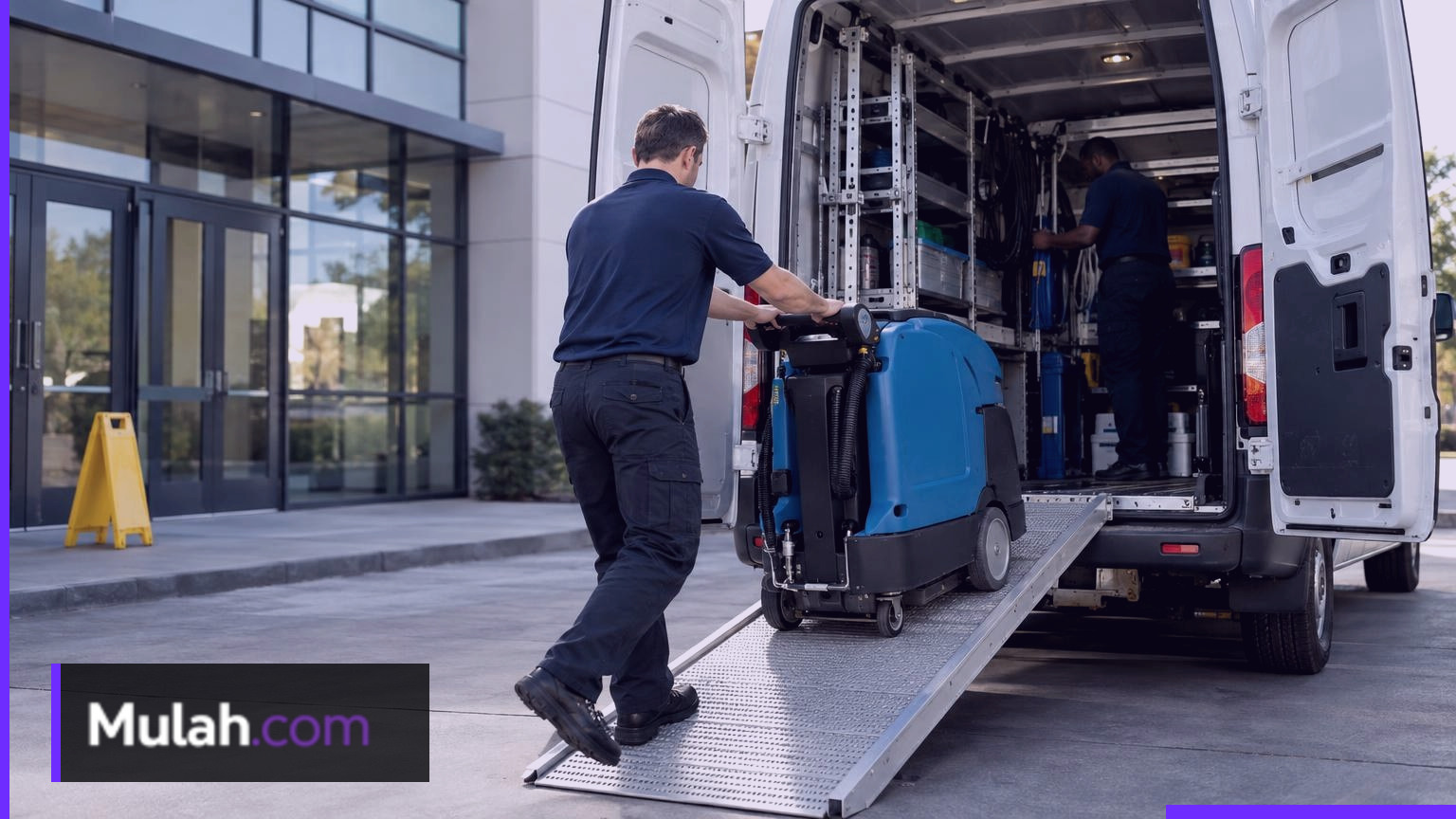
An equipment quote tells Mulah what you want to buy. The contract, route plan and cash-flow budget explain why it belongs in your business. Include the amount needed for the asset, the operating cash required around it and what you already owe.
Use that context to assess any available offers on the same basis: total cost, payment timing, security, ownership and exit obligations. You remain responsible for deciding what you can afford. A funding offer is useful only if it supports the work without crowding out wages, maintenance or taxes.
Before applying, settle the equipment scope and total budget. Then use the written offer, rather than a verbal payment estimate, to make your decision.
Collect the vendor quote, deployment costs and a conservative collection forecast. Separate essential equipment from optional upgrades.
Use Check Your Funding Options or start the full application. Provide accurate information and explain unusual revenue changes.
Check payment amount and frequency, total cost, fees, collateral, guarantees and end-of-term duties. Resolve unclear terms before accepting or authorizing delivery.
Provide the business and financial information needed for a funding review.
Start with a shorter path when you want to discuss the business need before completing the full application.
Review official SBA information about federal small-business loan programs and lender participation.
Official guidance on financial management, cash flow, bookkeeping, and business planning.
Use the official source for current program, regulatory, or business guidance related to this topic.
Use the official source for current program, regulatory, or business guidance related to this topic.
Common assets include scrubbers, sweepers, burnishers, extractors, commercial vacuums and pressure washers. Some programs also consider sanitation systems, specialty filtration, trailers and service vehicles. Give the provider an itemized quote so you know exactly which assets and accessories are eligible.
Not automatically. Purchase financing can fit equipment you intend to keep for a long time. A lease requires closer attention to purchase options, return conditions and renewal provisions. Judge the full agreement against your expected usage, not just the periodic payment.
Some providers accept it, subject to age, condition, seller and documentation requirements. Obtain service records and inspect expensive wear items before committing. A refurbishment label doesn't explain what was replaced or what warranty protection you receive.
Those costs can be eligible under some structures when included in the approved quote. Have the provider specify covered items in writing. Keep money available for anything excluded, including site preparation or initial consumables.
Those are operating expenses, not automatically part of an equipment agreement. Working-capital funding or another broader product might address them. Separate the amounts so your request shows both the purchase and the cash needed to put it to work.
A contract helps explain expected revenue, but it isn't approval by itself. Providers also evaluate your financial history, current payments and other factors. Include payment terms, cancellation provisions and the cost of serving the account.
A startup has less operating history, which can narrow its options. Owner credit, available cash and the proposed equipment may receive more attention. Keep the initial purchase proportionate to committed work rather than equipping for every service you hope to sell.
Either can be required. Upfront cash, collateral and guarantees vary by offer and structure. Read those provisions before evaluating affordability; an attractive payment can still come with significant owner exposure.
Eligible businesses can use certain SBA-backed programs for equipment and other approved business purposes. These loans come through participating lenders and require underwriting. The SBA’s official 7(a) program information explains the federal framework; a lender determines the terms of a specific offer.
Use collected revenue after wages, supplies, overhead and existing financing payments. Add the new machine’s maintenance and insurance costs. Then test a slower month or delayed collection. The amount a provider offers isn't necessarily the amount your cash flow can comfortably support.
Your equipment obligation generally continues. Before signing, determine whether another site can use the machine, what storage would cost and what the agreement permits if you sell or relocate it. Customer concentration makes this planning especially important.
Read the actual payoff or termination language. Some agreements provide savings from early payment; others retain charges or use a different calculation. Request a written explanation rather than assuming the remaining balance works like a standard installment loan.
Timing varies with the product, documentation, asset and seller. Inspections, title questions or incomplete quotes can delay a transaction. Don't commit to a customer deployment date based solely on an initial funding conversation.
Verify the equipment list, amount financed, payment frequency, total cost and all fees. Read security interests, guarantees, insurance duties and default provisions. For a lease, add purchase, return and renewal terms. Keep a complete copy with your asset records.
Start with the need, the amount, and the timing. Mulah can help you review possible business funding options before you decide whether to move forward.
Call 877-816-8524