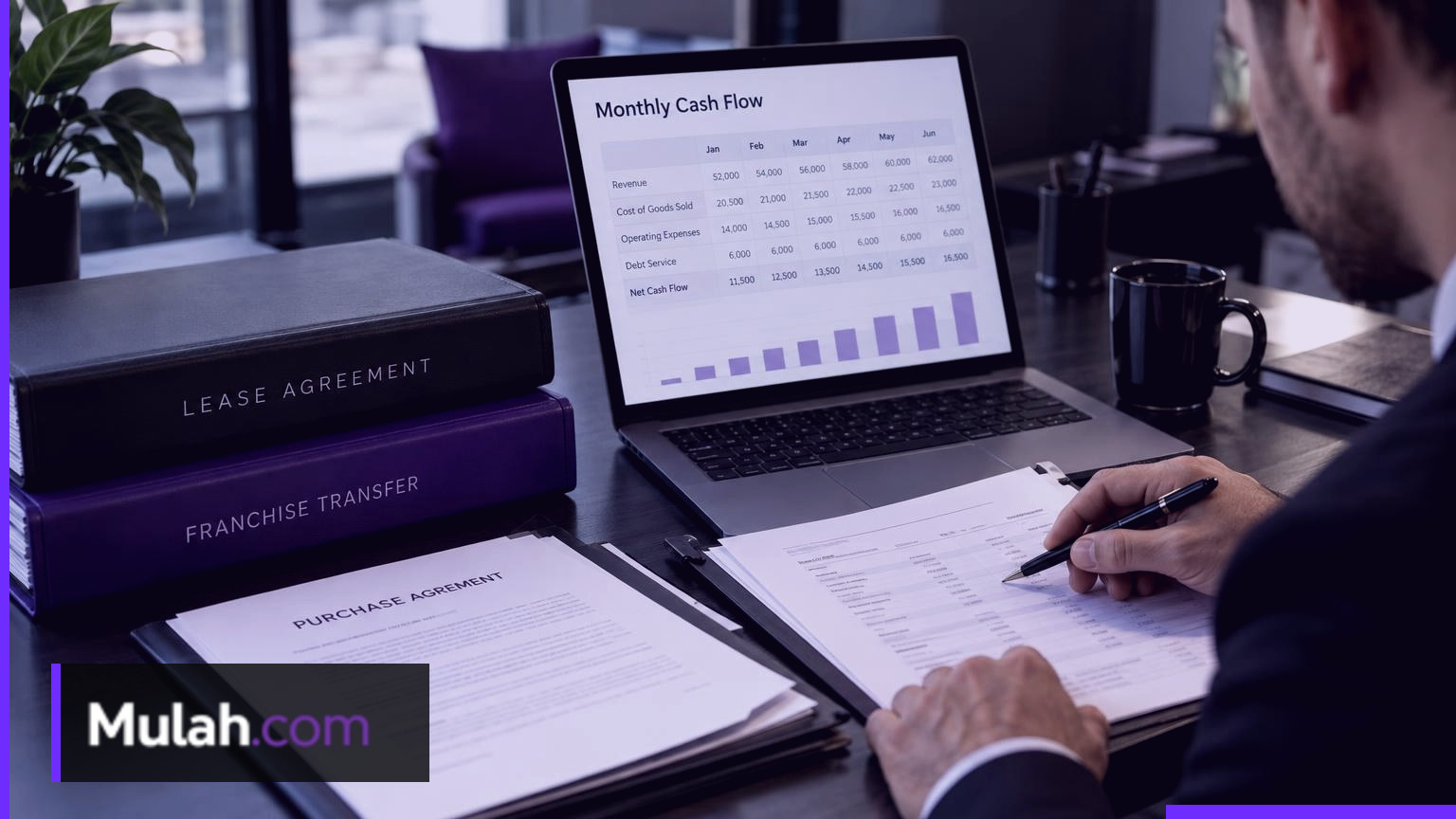
An existing franchise comes with operating history, but that history does not automatically make the purchase financeable. Franchise resale financing must cover a defensible purchase price, satisfy the lender and franchisor, and leave enough cash to run the location after closing. The strongest deals connect verified earnings with realistic debt payments and a clear ownership-transfer plan.
Repayment sourceVerified operating cash flowHistorical earnings matter only after adjusting for buyer compensation, recurring expenses, and the debt payments the acquisition will create.
Cash at closingMore than the down paymentBudget for transfer costs, professional fees, deposits, inventory adjustments, and a reserve for the first payroll and vendor cycle.
Transfer dependenciesLender, franchisor, and landlordEach party has separate requirements. A purchase agreement alone does not secure franchise approval, occupancy rights, or financing.
Price disciplineValue must support the debtAn ambitious asking price can create an equity gap when lender underwriting or an independent valuation supports a lower figure.
What business owners should know
What franchise resale financing actually funds
Franchise resale financing pays for the acquisition of an existing franchised business or location. Unlike a new-unit opening, the transaction usually includes operating assets, goodwill, an existing customer base, and some form of ongoing lease arrangement. Inventory may be included or priced separately at closing. The buyer must also obtain the franchisor’s approval and the required rights to operate under the brand. The financing structure depends on what is being purchased, how the business performs, and how much cash the buyer contributes.
The purchase price is only one part of the project cost. A transfer fee, mandatory training, equipment replacement, signage updates, and a landlord’s security deposit can all require additional funds. Some costs may be eligible for inclusion in a particular loan; others must be paid from buyer cash. Build a sources-and-uses schedule that assigns a funding source to every expense. Keep the opening operating reserve visible rather than treating it as whatever remains after the seller gets paid.
An operating location offers evidence that a startup cannot: tax returns, sales reports, payroll records, and actual occupancy costs. That evidence also exposes problems. A profitable store may depend on the seller working unpaid evenings, an unusually favorable lease, or equipment nearing replacement. Financing should reflect the economics under the new owner. If the buyer plans to hire a manager, change hours, or operate several locations, those decisions belong in the cash flow forecast before a loan amount is selected.
What this means in practice
Where the acquisition, franchise agreement, and lease meet
Three separate approvals often shape the closing. The lender evaluates repayment and transaction risk. The franchisor evaluates the proposed operator and transfer conditions. The landlord decides whether to consent to an assignment or enter a new lease. Progress on one track does not guarantee progress on the others. The purchase agreement should address financing, required consents, access to records, and the consequences if conditions are not met. An acquisition attorney should handle those protections, including deadlines and any deposit-refund rights.
Ask the franchisor what changes ownership will trigger. The buyer might need to sign the current franchise agreement rather than inherit every term of the seller’s agreement. Royalty obligations, advertising contributions, required technology, territory provisions, and refurbishment requirements deserve attention. A location that looks affordable before a mandated remodel may become a very different project afterward. Obtain written requirements and usable cost estimates early enough to incorporate them into the financing request. Do not assume the seller’s understanding is the franchisor’s final position.
The lease deserves equal scrutiny. Remaining term, renewal options, rent increases, assignment provisions, and responsibility for repairs affect both value and debt capacity. A lender may require lease coverage consistent with its financing requirements, which can mean securing an extension before closing. Mulah can organize the funding discussion around these dependencies, but the landlord, franchisor, and financing provider make their own decisions. Give each party the same transaction facts so a late change in ownership structure or purchase price does not force unnecessary rework.
Where timing matters
Build the financing around the transaction calendar
The useful question is not simply when money will arrive. It is what must happen before funds can be committed and released. A franchise resale has several points where new information can change the price, required equity, or closing conditions. Manage those points deliberately.
Price and scope
Define exactly what changes hands
Document the assets, locations, inventory treatment, assumed obligations, and any excluded property. Distinguish an asset purchase from an ownership-interest purchase with legal and tax advisers, because the structure affects liabilities and financing. Ask how gift cards, customer deposits, prepaid memberships, or service obligations will be handled. A headline price is not enough when the buyer could inherit the cost of fulfilling sales collected by the seller.
Financial diligence
Reconcile earnings before relying on them
Connect tax returns and financial statements to bank deposits, point-of-sale reports, royalty reports, and payroll records. Investigate differences rather than automatically accepting an adjusted earnings schedule. Add-backs need evidence and a reason they will not recur under your ownership. Separate a genuine one-time legal expense from routine repairs. When sales have declined, use the recent run rate as well as annual totals, and determine whether discounting or reduced staffing is masking the problem.
Capital structure
Set buyer equity and debt together
Decide how much cash you can contribute without exhausting household reserves or the business’s operating cushion. Then test the proposed acquisition debt against normalized cash flow. If seller financing is part of the plan, disclose its payment schedule and security position to the primary lender. A seller note does not automatically count as buyer equity. Its treatment depends on the financing program, current requirements, and the lender’s acceptance of the structure.
Closing readiness
Resolve conditions before scheduling handover
Track outstanding items such as the business valuation, insurance, franchise consent, lease documents, lien releases, training, and final equity verification. Existing liens may need to be paid and released through closing. Have advisers coordinate the purchase documents with lender requirements so the legal structure matches the approved transaction. Avoid committing to an irreversible handover date while essential conditions remain open. Funding timing depends on the completed file and the parties involved.
Operating transition
Protect the first cash cycle
Map the first several weeks of payroll, rent, royalties, supplier payments, and debt service. Payment-processor changes or new vendor terms can interrupt the timing of cash receipts even when sales stay steady. Agree on the seller’s transition support in writing, including hours, responsibilities, and duration. Retain access to essential records and arrange control of systems through authorized channels. The acquisition is not financially complete until the new owner can collect revenue and pay obligations reliably.
Compare your options
Financing structures used in franchise resales
No single product fits every transfer. The right structure depends on documented cash flow, buyer resources, transaction size, collateral, and program eligibility. Separate financing for the purchase from funding for later operating needs, and disclose every proposed debt obligation.
SBA financing for an eligible acquisition
An SBA 7(a) loan may finance an eligible change of ownership, including qualifying acquisition costs and working capital. The loan is made by a participating lender, not directly by the SBA. The lender evaluates the buyer, business, franchise arrangement, and repayment capacity under applicable requirements. Expect documentation of the equity source, relevant experience, transaction terms, and business value. Guarantees and collateral requirements apply according to the deal and program rules. An SBA guarantee protects the lender in part; it does not relieve the borrower of repayment. Read about SBA financing before treating it as the default choice.
Conventional acquisition or term financing
A conventional lender may finance an established franchise purchase when the business and buyer meet its underwriting standards. Strong recurring cash flow, a credible operator, and a sensible price matter. Available terms and equity requirements vary by provider and transaction. A business term loan provides a defined repayment schedule, but not every term-loan product permits acquisition proceeds. Ask about permitted uses, fees, guarantees, collateral, and prepayment provisions. Match the repayment schedule to business cash generation rather than choosing solely by the advertised payment or the largest available amount.
Seller financing as part of the purchase
A seller may accept a note for part of the price instead of receiving all cash at closing. This can bridge a negotiated funding gap, but it creates another debt obligation and requires careful documentation. Address interest, maturity, payment timing, subordination, security, and any balloon payment. The primary lender must accept the arrangement. If payments are deferred, model what happens when they begin. Seller financing is not proof that the price is fair, and a balloon obligation can become a refinancing problem if future earnings or credit conditions weaken.
Equipment financing and post-close operating capital
Equipment financing may suit eligible replacement equipment or separately documented equipment purchases, subject to the provider’s rules. It generally is not a substitute for financing goodwill or the entire acquisition. A business line of credit can address approved recurring cash gaps after closing, while working capital financing may support a defined operating need. A new owner should not assume either will be immediately available based solely on the seller’s history. Ownership changes, additional liens, and existing acquisition debt can affect eligibility and lender consent.
A lender’s approval is not a substitute for your own investment judgment. The business must produce enough cash to pay debt, compensate the operator, maintain the location, and absorb ordinary setbacks. Test the economics without relying on immediate growth.
Replace optimistic earnings with usable cash flow
Seller’s discretionary earnings and EBITDA are useful reference points, but neither automatically equals cash available for acquisition debt. Account for the role the owner performs, ongoing equipment needs, franchise fees, and realistic payroll. A seller’s compensation add-back is not fully available for debt service if you need an equivalent salary or must hire a replacement. Ask the lender how it calculates debt service coverage and which obligations it includes. Run a separate buyer budget that includes your compensation and cash taxes, with professional tax guidance where needed.
Stress the weak month, not just the annual average
Annual profitability can hide seasonal cash shortages. Use monthly sales and expenses to find the period when cash is tightest, then layer in the proposed payments. Test a sales decline, higher wages, or a temporary equipment outage without assuming every cost falls at the same rate as revenue. The business funding calculator can illustrate payment scenarios, but a calculation is not a financing offer. Use actual proposed terms when available and include fees or payment frequency that a basic estimate may not capture.
Treat future improvements as upside, not repayment support
A buyer may see opportunities in catering, longer opening hours, or better local marketing. Those ideas still require execution, staffing, and sometimes franchisor permission. Base the acquisition on supportable current performance, then budget improvements separately. Be especially cautious when the asking price assumes the buyer will fix a problem the seller has not resolved. If the deal works only after an immediate sales increase, consider negotiating the price, contributing more equity without draining reserves, or declining the purchase. Borrowing more does not repair an overpriced business.
Before you borrow
Make the funding fit the business, not the other way around.
The amount that looks attractive on an offer is not always the amount that makes sense to take. Tie the request to a real expense, a realistic payoff period, and the cash the business can still live on if a customer pays late or a strong month comes in softer than expected.
Application path
From a real business need to a funding request you can evaluate.
A useful financing request tells one consistent story: who is buying, what is being acquired, how the price was reached, and how repayment will work. Mulah helps owners prepare that request and understand relevant funding paths as a business-funding marketplace. The financing provider determines eligibility and terms. Organize the acquisition file before submitting sensitive documents, and use the designated secure process for financial information.
01
Prepare a transaction summary and document file
Include the purchase agreement or current letter of intent, sources-and-uses schedule, seller financial statements and tax returns, recent interim results, and available franchise and lease documents. Add a buyer résumé describing operating or management experience. Providers may request personal financial information from owners or guarantors as part of business underwriting. List missing items and expected delivery dates instead of leaving unexplained gaps. Keep an updated version of the price, ownership structure, and requested financing amount.
02
Explain the equity source and transition plan
Show where the buyer contribution comes from and retain the records needed to verify it. Disclose borrowed funds and seller debt rather than presenting them as unencumbered cash. Describe who will manage the location, when training occurs, and how payroll and vendors will be handled during the transfer. If a remodel is required, provide its budget, schedule, and likely effect on trading hours. A practical transition plan connects the financial forecast to the work needed on site.
03
Submit the request and evaluate the complete terms
Use the business funding application to submit a request. When proposed terms arrive, assess the total repayment obligation, payment frequency, fees, guarantees, collateral, and any closing conditions. Ask how changes in purchase price or seller financing would affect the proposal. Keep advisers involved through final documents. Do not assume a preliminary indication is a binding commitment, and do not spend the operating reserve simply because the purchase financing is progressing.
Useful resources
Sources worth checking before you make a funding decision.
Official guidance on financial management, cash flow, bookkeeping, and business planning.
Common questions
Franchise Resale Financing FAQs
Ready when you are
See what funding could fit your business.
Start with the need, the amount, and the timing. Mulah can help you review possible business funding options before you decide whether to move forward.
Same-day funding may be available in select states for advances up to $100,000. Applications completed and approved before 10:30 a.m. ET, Monday through Friday (excluding bank holidays), are typically funded by 5 p.m. local time the same day. Applications finalized after 10:30 a.m. ET, or on weekends/holidays, generally provide capital within 2–3 business days.
Certain industries are ineligible for capital programs (see restricted industry list). Other underwriting criteria may apply.
If you choose to repay a Mulah.com advance early, you may still be responsible for a portion of the agreed-upon cost of capital, as outlined in your funding agreement. The applicable amount will be disclosed in advance.
Only the strongest applicants, those with excellent credit profiles, consistent cash flow, and a solid history of repayment, will qualify for the most competitive rates. Average annualized rates for term-based funding are approximately 56.4%, and average rates for lines of capital are approximately 56.6%, based on advances originated during the six months ending June 30, 2025.
In some cases, a minimum initial draw of $1,000 may be required at origination. Returning customers who renew a funding agreement may be eligible for reduced or waived origination fees, depending on renewal history and terms.
All capital programs are subject to provider approval. Depending on your business’s state of operation and specific funding attributes, your agreement may be issued by Mulah.com or one of its partner institutions. Capital advances above $250,000 are reserved for applicants with strong financials and verified monthly revenues.