Unplanned downtime
A disabled truck, van, shuttle, or service vehicle can interrupt a route, delay a job, or require an expensive rental. The direct repair invoice may be smaller than the lost productive hours and customer disruption surrounding it.
Capital planning for commercial vehicles
Replace aging business vehicles without forcing every purchase into one budget cycle. Mulah helps established companies explore funding structures for planned fleet refreshes, urgent unit replacements, and phased modernization programs.
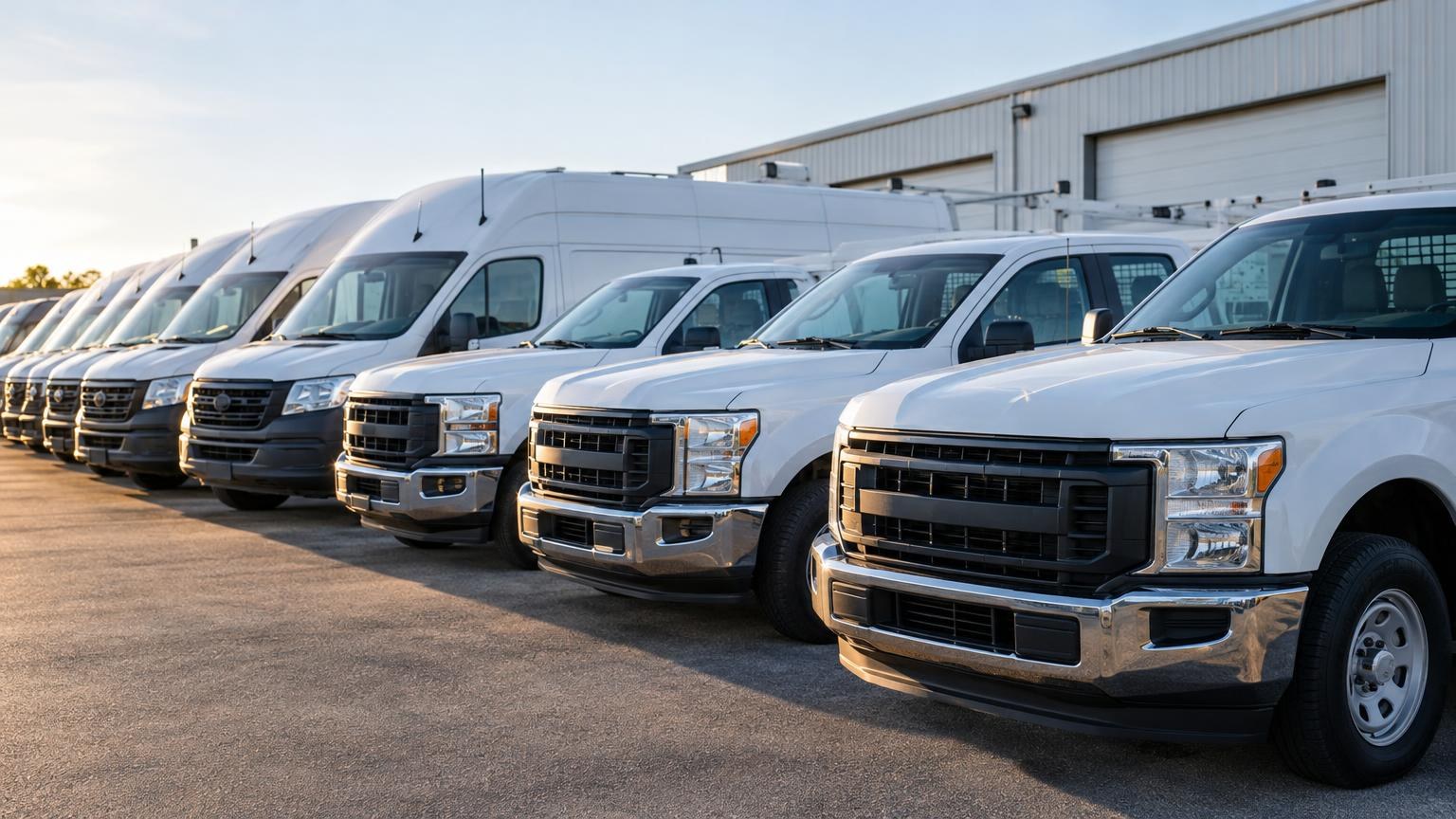
Page guide
Use this guide to connect vehicle condition, route obligations, cash flow, and the right type of business financing. A replacement decision is strongest when it is based on operating data rather than the age of a unit alone.
Operational risk
A disabled truck, van, shuttle, or service vehicle can interrupt a route, delay a job, or require an expensive rental. The direct repair invoice may be smaller than the lost productive hours and customer disruption surrounding it.
Older units often move from predictable preventive service to irregular component failures. That makes monthly cash planning difficult and can consume the reserve intended for hiring, inventory, or seasonal demand.
A fleet that is technically running may still be mismatched to current work. Payload limits, route range, refrigeration capacity, lift equipment, or passenger configuration can prevent the business from accepting profitable contracts.

Fleet assessment
Start with each vehicle's maintenance history, utilization, mileage or engine hours, safety record, fuel use, resale outlook, and role in revenue production. A high-mileage backup unit may be less urgent than a lower-mileage vehicle that anchors a critical daily route.
Separate the fleet into replace now, monitor, and retain groups. Then document what a replacement must accomplish. The best successor may not be a direct copy: a larger body, specialized upfit, alternative powertrain, or more efficient route profile can change the economics.
Purchase scope
The invoice price is only one line in a replacement budget. A sound financing request reflects the vehicle as it will actually enter service.
Include the chassis or base vehicle, body, shelving, racks, liftgates, refrigeration, telematics, safety cameras, wraps, and trade-specific equipment. Confirm which components are installed by the dealer and which require a separate vendor.
Registration, taxes, delivery, driver onboarding, permits, inspections, and temporary rental coverage can sit outside a vendor quote. Naming those costs helps prevent a shortfall between purchase approval and operational launch.
Some businesses carry both the old and new unit briefly while an upfit is completed or routes are transferred. A limited working-capital cushion can protect payroll, fuel purchases, and customer service during the handoff.
Vehicles and equipment
Replacement needs differ by operating model. Contractors may prioritize service-body trucks and cargo vans; distributors may need box trucks, tractors, or refrigerated units; passenger operators may focus on shuttles, wheelchair-accessible vans, or buses. Field-service businesses often pair the vehicle with mounted tools, compressors, tanks, generators, or diagnostic systems.
Timing strategy
A full-fleet swap can simplify standardization, but it also concentrates cost, delivery risk, and training. A phased plan spreads procurement over several windows and lets the business validate fuel economy, driver fit, maintenance support, and upfit performance before committing the entire fleet.
Lead times deserve special attention. Factory orders, specialty bodies, and dealer-installed equipment may arrive on different schedules. Businesses can map financing milestones to deposits, delivery, acceptance, and deployment rather than treating every dollar as due on the same date. When a breakdown accelerates the timetable, the priority is restoring essential capacity without abandoning the broader replacement plan.
Funding paths
Asset-focused financing may align a longer-lived vehicle with scheduled payments. The vehicle commonly supports the transaction, subject to the lender's documentation, valuation, and eligibility requirements.
A business term structure can address a defined replacement project, including related deployment expenses when permitted. It may suit a company seeking a predictable repayment schedule for a known capital need.
A revolving line can help with eligible short-term gaps such as deposits, repairs, rentals, fuel, or payroll during rollout. It is generally better suited to reusable working-capital needs than to automatically financing every long-lived asset.
Available products, terms, documentation, and uses depend on the business and provider. Financing is not guaranteed.
Ownership decision
Purchasing can support long holding periods, custom upfits, and eventual resale value. It may fit vehicles that are expected to remain productive well beyond the financing term. Leasing can offer a planned turnover cycle and may reduce exposure to resale risk, but mileage, wear, modification, and return conditions deserve close review.
The comparison should include expected years in service, annual mileage, customization, tax treatment discussed with a qualified adviser, maintenance responsibility, end-of-term options, and the operational cost of changing vehicles. The lowest monthly payment is not automatically the lowest total operating cost.
Phased modernization
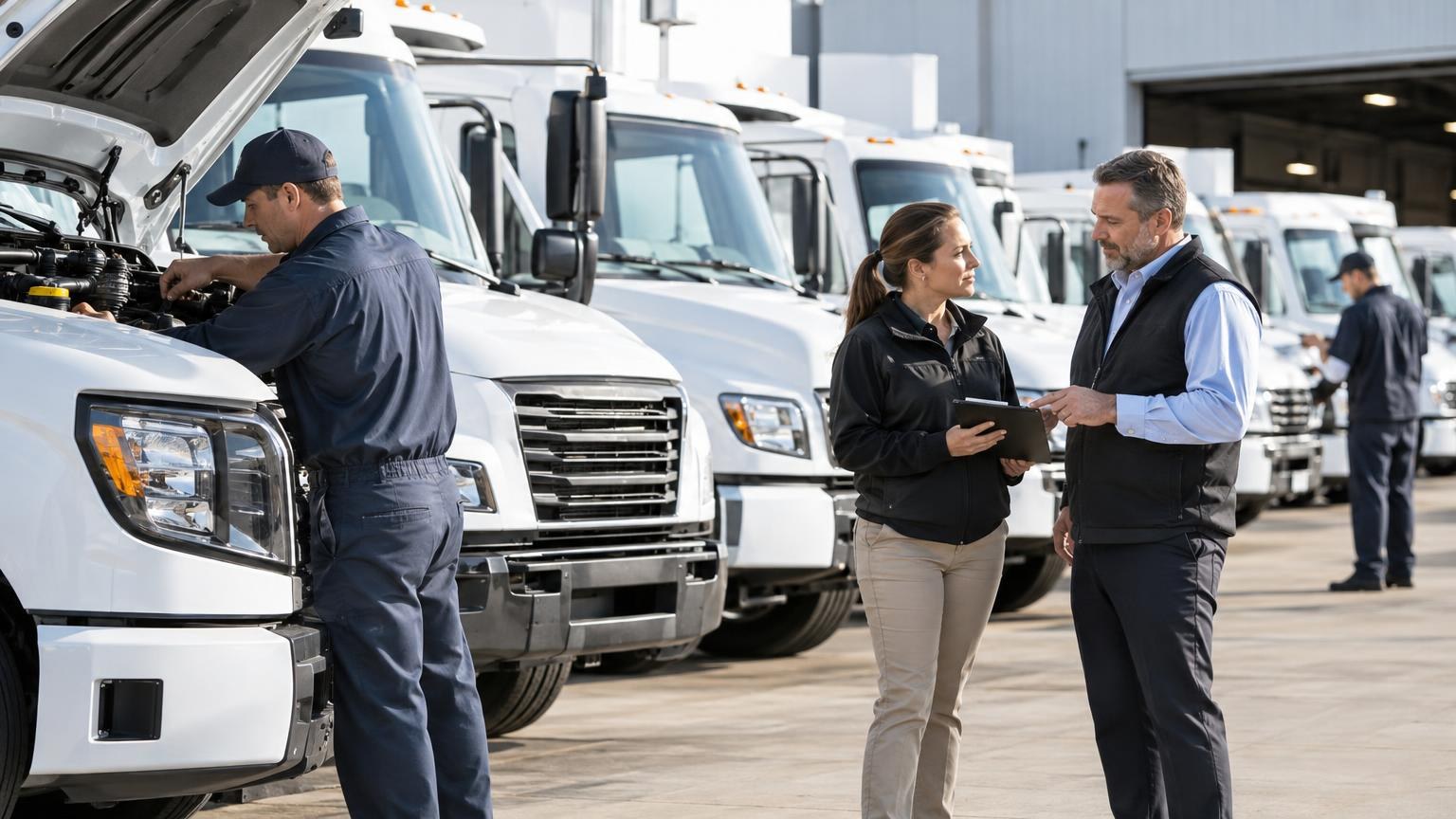
Replace units whose failure would stop revenue-producing work, violate a contract requirement, or create a safety concern. Confirm temporary backup capacity until delivery.
Group compatible vehicles, parts, and upfits to simplify driver training and maintenance. Avoid forced standardization when different jobs genuinely require different specifications.
Track downtime, fuel, maintenance, utilization, and route performance. Use actual results to refine later orders and the timing of the next financing request.
Replacement economics
Maintenance history is useful only when the business counts the full cost of keeping a unit. Add scheduled service, unscheduled repairs, towing, rentals, overtime, missed routes, supervisor time, and the productivity lost when crews wait for a vehicle. Then compare that amount with the expected payment, operating cost, warranty coverage, and productive capacity of a replacement.
Resale value also changes the timing question. Waiting may avoid a purchase today, but the older unit can lose trade value while requiring another major repair. Replacing too early has a cost as well: the business may give up useful service life or take on payments before contract volume supports them. A documented threshold, such as annual maintenance cost, downtime hours, or cost per mile, gives managers a repeatable decision rule.
Preparation
Organized records help explain both the business and the replacement project. Providers may request business bank statements, tax returns or financial statements, identification, formation records, debt schedules, vehicle quotes, dealer information, and details about the units being acquired.
A fleet schedule can be especially useful. List each vehicle's year, make, model, mileage or hours, ownership or lien status, current payment, estimated value, maintenance cost, and operational role. Add the proposed disposition and replacement timing. This turns a broad request into a defined capital plan.
Provider comparison
| Consideration | Mulah funding marketplace | Traditional bank process |
|---|---|---|
| Starting point | One business funding request can help identify potentially relevant options. | The applicant may begin with a specific bank product and its fixed criteria. |
| Project type | Can consider vehicle acquisition alongside eligible working-capital needs. | Asset purchase and operating needs may require separate facilities. |
| Documentation | Requirements vary by provider and structure. | Often follows the bank's established underwriting package and review steps. |
| Best fit | Businesses comparing routes to fund a defined replacement plan. | Businesses whose timeline, credit profile, collateral, and relationship fit bank policy. |
Why Mulah
Frame the request around the vehicles, upfits, deployment schedule, and operational purpose instead of reducing the need to a single purchase price.
Explore potentially relevant business funding products without assuming every replacement belongs in the same structure.
Start with the short funding-options form, or move directly to the full application when the business is ready to provide a complete package.
Process
Identify the units, purchase or lease preference, vendor, upfit, estimated cost, trade-ins, and desired delivery sequence.
Submit the requested company, ownership, revenue, banking, and project details so potential options can be evaluated.
Compare cost, payment frequency, term, security interests, fees, prepayment provisions, and funding-use limitations before accepting anything.
Use cases
Replacement planning applies anywhere vehicles are essential to delivering the product or service. The vehicle mix and funding logic should reflect the work rather than a generic definition of “fleet.”
Distributors, couriers, wholesalers, food-service suppliers, laundry routes, waste operators, and last-mile businesses may replace units to protect delivery capacity and contract performance.
HVAC, plumbing, electrical, landscaping, restoration, construction, and maintenance companies may require vans or trucks equipped as mobile workshops.
Shuttle, non-emergency medical transportation, tour, childcare, and senior-service operators often weigh accessibility, seating, safety equipment, and route reliability.
Refrigerated, utility, towing, vacuum, crane, mobile medical, and other specialized units require attention to both the base vehicle and the revenue-producing body or equipment.
Take the next step and share the business funding need with Mulah.
Detailed funding uses
New or used commercial vehicles, specialty bodies, eligible trailers, dealer-installed options, and approved related equipment can form the core of the request.
Depending on the product, a project may include eligible racks, refrigeration, lift equipment, telematics, graphics, delivery, and installation needed to place the unit into service.
A separate or complementary working-capital option may help cover eligible payroll, fuel, insurance, rental, repair, or route-transition expenses while new vehicles are deployed.
Do not assume every cost can be financed together. Ask which expenses qualify, when funds are disbursed, whether invoices are paid directly, and what documentation is required for each use.
Planning tool
Use Mulah's Business Funding Calculator to model a funding amount, term, and estimated payment. Run several scenarios: an urgent one-unit replacement, the first phase of a multi-unit refresh, and the complete project. Compare the result with current maintenance, rental, and downtime costs.
Calculator outputs are estimates for planning, not an approval, offer, or guarantee. Actual terms depend on the provider and the business's qualifications.
Verified resources
These published Mulah resources can help refine the project around vehicle type, broader transportation needs, or the operating cash required during deployment.
Decision discipline
Model the project under ordinary conditions and a weaker month. Consider the effect of a route loss, delayed customer payment, higher insurance, fuel changes, unexpected repairs elsewhere in the fleet, and a slower vehicle delivery. The goal is not to predict every event. It is to avoid a payment plan that depends on perfect utilization from day one.
Review personal guarantees, liens, insurance requirements, default provisions, fees, and prepayment language. Confirm that vehicle specifications match licensing and operational requirements. Financial, tax, and legal professionals can help evaluate consequences that fall outside a funding provider's role.
Frequently asked questions
Fleet replacement financing is business-purpose capital used to replace commercial vehicles that are aging, unreliable, inefficient, or no longer suited to the work. Depending on the structure and provider, the project may involve vehicle acquisition, leasing, approved upfits, or related business costs.
Yes. A phased plan can prioritize the vehicles with the highest downtime, maintenance burden, safety exposure, or revenue importance. Funding availability and terms depend on the business, provider, assets, and requested structure.
Some providers consider eligible used commercial vehicles. Age, mileage, condition, valuation, seller information, vehicle type, and expected useful life can influence the review. A detailed quote and inspection or valuation information may be requested.
Potentially. Service bodies, refrigeration, liftgates, shelving, telematics, accessibility equipment, and other upfits may be considered when they are documented and eligible under the selected product. Ask whether vendors are paid directly and whether separate invoices are required.
Neither choice is universally better. Purchasing may fit long holding periods and highly customized units, while leasing may support a regular turnover cycle. Compare total cost, mileage limits, wear rules, modification rights, maintenance responsibility, and end-of-term options.
Requirements vary, but businesses may be asked for bank statements, tax returns or financial statements, ownership information, formation documents, debt details, vehicle schedules, dealer quotes, equipment invoices, and an explanation of how the replacement supports operations.
A vehicle-focused facility may not cover every operating expense. A separate business working-capital product or line of credit may help with eligible payroll, fuel, rentals, repairs, or other short-term needs during deployment. Confirm permitted uses before accepting terms.
Rank units by downtime, repair volatility, safety concerns, route importance, lost revenue, fuel performance, remaining value, and suitability for current contracts. Replace the vehicles whose failure or limitations create the greatest operational cost, not simply the oldest units.
Build the next fleet deliberately
Bring Mulah the vehicle list, vendor estimates, timing, and operational reason for the project. Start with the short funding-options form or proceed to the complete application.