Collected revenue
Providers may examine deposits, financial statements, and collection reports. Explain unusual transfers or one-time receipts rather than presenting them as recurring patient revenue.
Your schedule can be full while your bank balance feels tight. Insurance payments arrive after treatment, payroll comes due on schedule, and a broken chair doesn’t wait for collections to catch up. Dental Practices Business Funding in Colorado looks at how to finance those pressures, along with equipment, acquisitions, and expansion, without committing your practice to payments it can’t comfortably carry.
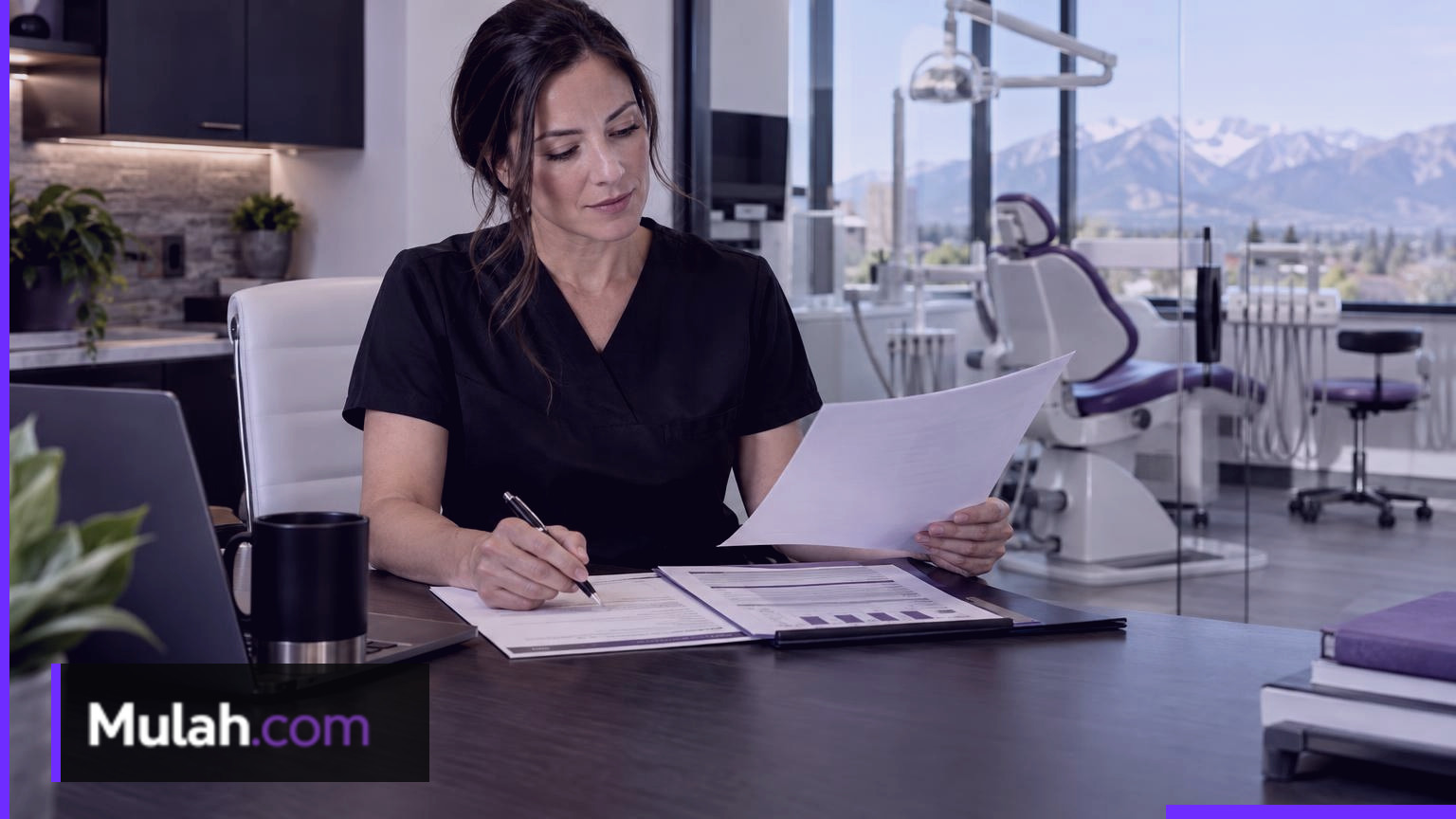
A replacement compressor, a practice acquisition, and a slow month of insurance collections are not the same financing problem. The compressor has a useful life you can estimate. An acquisition needs support from the practice’s earnings and purchase terms. A collections gap needs a credible path back to cash. Treating all three as a general request for money makes the decision harder.
Write down the amount you need, the date you need it, and the source of repayment. For a purchase, use a written quote. For working capital, build a short weekly cash forecast. For expansion, include the period after opening when rent and staffing costs are running but collections are still developing.
Mulah is a business-funding marketplace, not your practice’s financial decision-maker. It helps you understand available funding structures and prepare a request around your business needs. This guide explains the tradeoffs so you can approach that process with a clear budget rather than simply asking for the largest amount available.
Your location affects the budget through actual lease terms, employee compensation, referral patterns, and patient demand. Use those facts rather than a broad claim about the Colorado market. A practice adding space in an expensive building faces a different decision from one replacing equipment in an existing operatory.
Patient mix matters just as much. Insurance participation, patient-paid services, and third-party patient financing can produce different collection patterns. Before taking on debt, look at how long your own claims take to pay, what gets denied, and how much of your receivables is realistically collectible.
Construction and acquisition projects also involve requirements that financing alone won’t resolve. Check applicable professional licensing, facility, imaging, building, and ownership requirements with the appropriate authorities and advisors. Your funding schedule should follow the actual project schedule, including approvals and inspections where required.
When evaluating small business loans, distinguish a loan’s fixed repayment obligation from revolving credit, leasing, or a revenue-based arrangement. Product names alone don’t tell you the cost or payment burden. Ask for the actual agreement and a complete payment schedule.
| Option | Often considered for | How to think about it |
|---|---|---|
| Term loan or term funding | A defined purchase, acquisition expense, or project with a known budget. | You receive an agreed amount and repay it over a set period. Term financing should fit the project’s cash generation and useful life. |
| Working capital financing | A measurable short-term operating gap, such as payroll before expected collections arrive. | Working capital financing describes a use of money, not one universal contract. Payment frequency, pricing, and term depend on the offer. |
| Business line of credit | Recurring but temporary cash-flow fluctuations. | A business line of credit lets you draw within an approved limit. Access, fees, repayment, and replenishment depend on the agreement. |
| Equipment financing or leasing | Chairs, imaging systems, sterilization equipment, and other identifiable assets. | Equipment financing or leasing ties the transaction to equipment. Ownership, collateral, and end-of-term obligations differ between contracts. |
| SBA financing | Eligible acquisitions, expansion, equipment, and other qualifying business purposes. | SBA financing comes through participating lenders with a government guarantee. Program rules, documentation, and lender underwriting apply. |
| Revenue-based financing | A defined business need supported by consistent receipts and adequate margins. | Revenue-based financing may be structured as a purchase of future receivables rather than a conventional loan. Examine remittance calculations and adjustment rights. |
A scanner, imaging system, or operatory package may require software, networking, site preparation, and staff training. Ask the vendor for an itemized installed price and a separate list of recurring costs. Find out which expenses the financing covers and which you must pay from cash.
Next, estimate the practical benefit. Replacement equipment may protect existing production rather than create new revenue. New technology may save outside lab costs or support additional procedures, but those gains depend on training, utilization, and patient demand. Don’t count the same benefit twice in your forecast.
For a lease, read the purchase option, return conditions, renewal language, and responsibility for maintenance. For financing, check the down payment, lien, and payoff terms. The lowest monthly payment can come with a longer commitment or a meaningful amount due at the end.
If you’re buying a practice, examine collected revenue, adjusted earnings, payer participation, staffing, and the lease. Ask your accountant to test any seller adjustments to earnings. Money described as discretionary may still represent an expense you’ll incur after the seller leaves.
Build a separate transition budget for payroll, supplies, deposits, professional fees, and potential collection interruptions. Patient retention and staff continuity matter, but neither is guaranteed. The purchase should still leave enough liquidity to handle normal uncertainty without immediately adding expensive short-term debt.
SBA financing may be worth discussing for an eligible acquisition or expansion. A government guarantee protects the lender in specified circumstances; it doesn’t eliminate your repayment obligation. Discuss eligibility, required equity, guarantees, collateral, and transaction structure with the lender before committing to a closing deadline.
A line can be useful when a predictable expense arrives before collectible receivables turn into deposits. Estimate the gap by week, draw only what you need, and assign expected collections to repayment. Available credit is a buffer, not additional revenue.
Pay attention to how each draw is repaid. Some facilities require fixed installments, charge draw fees, or have renewal conditions. Others may restrict availability if the practice’s finances weaken. Don’t assume unused credit will remain available indefinitely.
If the balance never declines, investigate why. Fees, underpriced services, excessive overhead, or collection problems may be consuming cash faster than the practice earns it. More credit can delay the necessary correction while increasing the amount your future collections must cover.
No single credit score tells the whole story. Requirements vary, but these factors usually explain why a request moves forward, needs more support, or should be resized.
Providers may examine deposits, financial statements, and collection reports. Explain unusual transfers or one-time receipts rather than presenting them as recurring patient revenue.
Show what remains after payroll, rent, supplies, taxes, and current debt payments. Include realistic owner compensation when deciding what you can afford.
An established practice has a record to evaluate. A new practice or newly acquired business requires different evidence, assumptions, and possibly additional owner investment.
Credit history can affect eligibility and terms. Be prepared to explain material delinquencies and ask when a credit inquiry occurs and what type it will be.
List balances, payments, collateral, and lien positions. An existing lender’s agreement may limit additional borrowing or require consent.
A vendor quote, purchase agreement, or cash forecast gives the request substance. For expansion, explain the staffing and patient demand behind your projections.
Requirements depend on the product and provider. Keep records current and consistent, and use secure submission methods. Patient-level clinical records generally don’t belong in a routine financing package.
A clear use of money makes it easier to choose a structure and decide whether the expense justifies borrowing.
A failed compressor or sterilizer can interrupt care. Weigh repair costs, replacement lead times, warranties, and the cash you need to preserve while the equipment is unavailable.
Include the chair, delivery system, utilities, instruments, and staff coverage. An empty room doesn’t create collections unless patient demand and clinical capacity support using it.
Use a documented receivables pattern and weekly cash forecast. If old balances are unlikely to be collected, don’t treat them as the source for repaying new financing.
Budget for construction, deposits, overlapping rent, moving costs, and downtime. Keep a contingency outside the contractor’s base estimate.
Consider purchase financing alongside working capital, transition expenses, and any equipment that needs replacement soon after closing.
Training, equipment, supplies, and scheduling changes may precede additional collections. Test demand before borrowing against a full schedule of procedures you don’t yet perform.
These are planning examples, not customer stories or promised outcomes.
Get a replacement quote and an installation timeline. Equipment financing may preserve operating cash, but paying cash could cost less if reserves remain adequate. Include any interruption to appointments in the decision, not just the equipment price.
Determine whether claims are collectible and when payment is reasonably expected. A line draw may fit a short timing gap. If denials or billing errors caused the delay, assign someone to fix them and avoid assuming every outstanding claim will pay.
Your familiarity is valuable, but it doesn’t replace independent financial diligence. Have advisors examine the purchase price, lease, earnings adjustments, and transition terms. Discuss acquisition financing before making commitments that depend on a particular loan structure.
Separate the existing office’s finances from the new location’s forecast. Include management time, duplicated overhead, and slower-than-planned hiring. Decide how much support the first practice can provide without weakening its payroll and reserve position.
Urgency doesn’t make a costly payment affordable. Put the proposed withdrawals into a conservative cash forecast. If the money only covers recurring losses and leaves the cause unchanged, reducing expenses or negotiating existing obligations may be the better next step.

A lender may examine your personal credit and request a personal guarantee, particularly when your practice is closely held. That doesn’t turn the transaction into a personal loan. The request should be based on a legitimate business purpose and the practice’s ability to make payments.
Keep your practice’s finances separate from household spending. If distributions support your household, include a realistic allowance for them in your cash-flow planning. A payment that works only when you stop taking necessary income isn’t a comfortable payment.
Also account for what you already owe. Equipment notes, acquisition debt, and business credit cards all draw from the same collections. A new offer can look manageable on its own while leaving too little cash for lab bills, payroll, or taxes.
A busy schedule is useful, but it doesn’t pay a financing bill by itself. These five checkpoints show where cash gets delayed and where borrowing could address the wrong problem.
Cancellations, treatment acceptance, and benefit limits can change expected revenue. Don’t size a payment around a full schedule unless your actual collections support it.
Clear financial arrangements reduce avoidable balances. If front-desk collection procedures are inconsistent, borrowing may temporarily hide a problem that keeps draining your cash.
Track rejected claims and missing information separately from claims awaiting ordinary payment. Capital won’t repair a billing backlog unless someone has time and responsibility to resolve it.
Payroll, rent, and financing payments may cluster in one week. A weekly forecast can reveal a timing issue even when your monthly results look healthy.
Don’t treat every strong deposit week as surplus. Set aside upcoming taxes, lab charges, supplies, and debt payments before deciding how much you can distribute or reinvest.
Use the answers to shape your request before you spend time collecting offers.
A short collections gap and a ten-year equipment investment need different repayment thinking. Avoid a short, demanding payment schedule for an asset that produces benefits gradually.
A fixed purchase price is easier to match with term financing. An occasional operating shortfall may fit a line, provided you can pay down draws between uses.
Test slower hiring, delayed installation, and weaker treatment acceptance. If one ordinary setback makes payments unaffordable, reduce the project or add more cash before borrowing.
An equipment lien, broader business lien, and personal guarantee create different exposures. Understand each before accepting a payment that initially looks attractive.
Related Mulah resources include working capital funding, business lines of credit, equipment financing and leasing, term funding, SBA loans, revenue-based financing, startup funding, accounts receivable financing, and the business funding calculator.
An attractive headline rate doesn’t tell you everything you’ll pay or when the money leaves your account.
Subtract withheld fees from the stated funding amount. Then total the required payments and other charges. A factor rate is a repayment multiplier, not an annual percentage rate.
Daily or weekly withdrawals affect cash differently from monthly payments. Use the business funding calculator for planning, then replace estimates with the actual offer terms.
Some agreements reduce future interest; others provide little savings or impose conditions. Get the payoff calculation in writing, along with any restrictions on taking additional financing.
The amount that looks attractive on an offer is not always the amount that makes sense to take. Tie the request to a real expense, a realistic payoff period, and the cash the business can still live on if a customer pays late or a strong month comes in softer than expected.

Mulah helps you understand funding options and prepare a business request for its marketplace process. Explain the expense, timing, collected revenue, and what you already owe. Those details make the discussion more useful than a request based only on a desired dollar amount.
Use Mulah’s small business funding guide to get familiar with the broader choices. Any offer still deserves careful attention to cost, payment frequency, security, and contract terms. Your accountant or attorney can address questions about affordability, taxes, and legal obligations.
Your next step is to turn the financing need into a specific, supportable request. Don’t apply for more than your budget justifies simply because a larger amount might be available.
Write a short explanation of what you’re funding, the full cost, your cash contribution, and how the practice will make payments. Include a downside case.
Bring bank statements, financial reports, debt details, and project documents together. Resolve discrepancies between reported revenue and bank deposits before they create confusion.
Use the Mulah application when you’re ready. Ask about net proceeds, total repayment, guarantees, liens, and payment timing before accepting any agreement.
Provide the business and financial information needed for a funding review.
Start with a shorter path when you want to discuss the business need before completing the full application.
Review official SBA information about federal small-business loan programs and lender participation.
Official guidance on financial management, cash flow, bookkeeping, and business planning.
Use the official source for current program, regulatory, or business guidance related to this topic.
Use the official source for current program, regulatory, or business guidance related to this topic.
The best fit depends on the expense and your cash flow. Equipment financing suits identifiable assets, a line can address temporary gaps, and term or SBA financing may fit larger projects. There isn’t one product that is best for every practice.
Potentially, but a startup has no operating history to support the request. Providers may place more weight on your experience, credit, cash contribution, projections, and project budget. Don’t assume financing designed for established practices will accept a startup.
Some providers finance used equipment, subject to its age, condition, value, and expected useful life. Get the model details, service history, warranty information, and installation estimate. The equipment’s remaining life should make sense relative to the financing term.
An eligible practice acquisition may qualify, depending on program rules and lender underwriting. The purchase structure, valuation, ownership, cash contribution, and ability to make payments matter. Begin lender discussions before agreeing to financing-dependent closing terms.
For common SBA business loan programs such as 7(a), participating lenders make the loans with an SBA guarantee. You still owe the debt. The guarantee doesn’t mean approval is automatic or that guarantees and collateral requirements disappear.
Many business financing arrangements require one, though requirements vary. A personal guarantee can make you personally responsible if the business doesn’t pay. Read its scope and ask an attorney about any language you don’t understand.
There is no single minimum across all products and providers. Credit is considered alongside revenue, operating history, debt, collateral, and other factors. Ask about a provider’s requirements rather than assuming a score alone determines the result.
Use the documented project cost or cash-flow gap, subtract your planned contribution, and include a reasonable contingency where appropriate. Then test the payment against conservative collections. An amount you qualify for may still exceed what you should borrow.
Working capital financing may cover those business expenses, subject to the agreement. It makes the most sense when you can explain the gap and the repayment source. Repeated borrowing for ordinary bills can signal a margin or collection problem.
Specialized arrangements exist, but healthcare receivables can involve payer, assignment, privacy, and collection restrictions. Don’t assume your claims are eligible collateral. A provider would need to assess the receivables and applicable requirements before offering that structure.
Not necessarily. Some arrangements purchase future receivables rather than create a conventional loan. Read how remittances are calculated, whether they adjust with receipts, and what reconciliation requires. The product label alone doesn’t explain your obligations.
Possibly, but existing payments affect what you can afford. Liens and contract restrictions may also limit another transaction. Provide a complete debt schedule and check whether your current lender requires consent before adding financing.
Timing depends on the product, provider, completeness of your records, and transaction complexity. An acquisition or construction project can require additional diligence. Don’t schedule an installation or closing around an assumed funding date.
Get a written payoff quote first. Early payment may save interest under some agreements but produce limited savings under others. Weigh the savings against the operating cash you would give up and any near-term expenses.
Start with the need, the amount, and the timing. Mulah can help you review possible business funding options before you decide whether to move forward.
Call 877-816-8524