Revenue quality
Bank deposits, processor reports, and bookkeeping should support your stated sales. Explain transfers and unusual deposits rather than presenting them as customer revenue.
Your wash can have steady traffic and still run short of cash when a pump fails, a replacement part takes time to arrive, or a major equipment payment comes due. This guide to Car Washes Business Funding in Hawaii explains how small business loans and other financing structures fit those needs, and how to judge a payment before you commit.
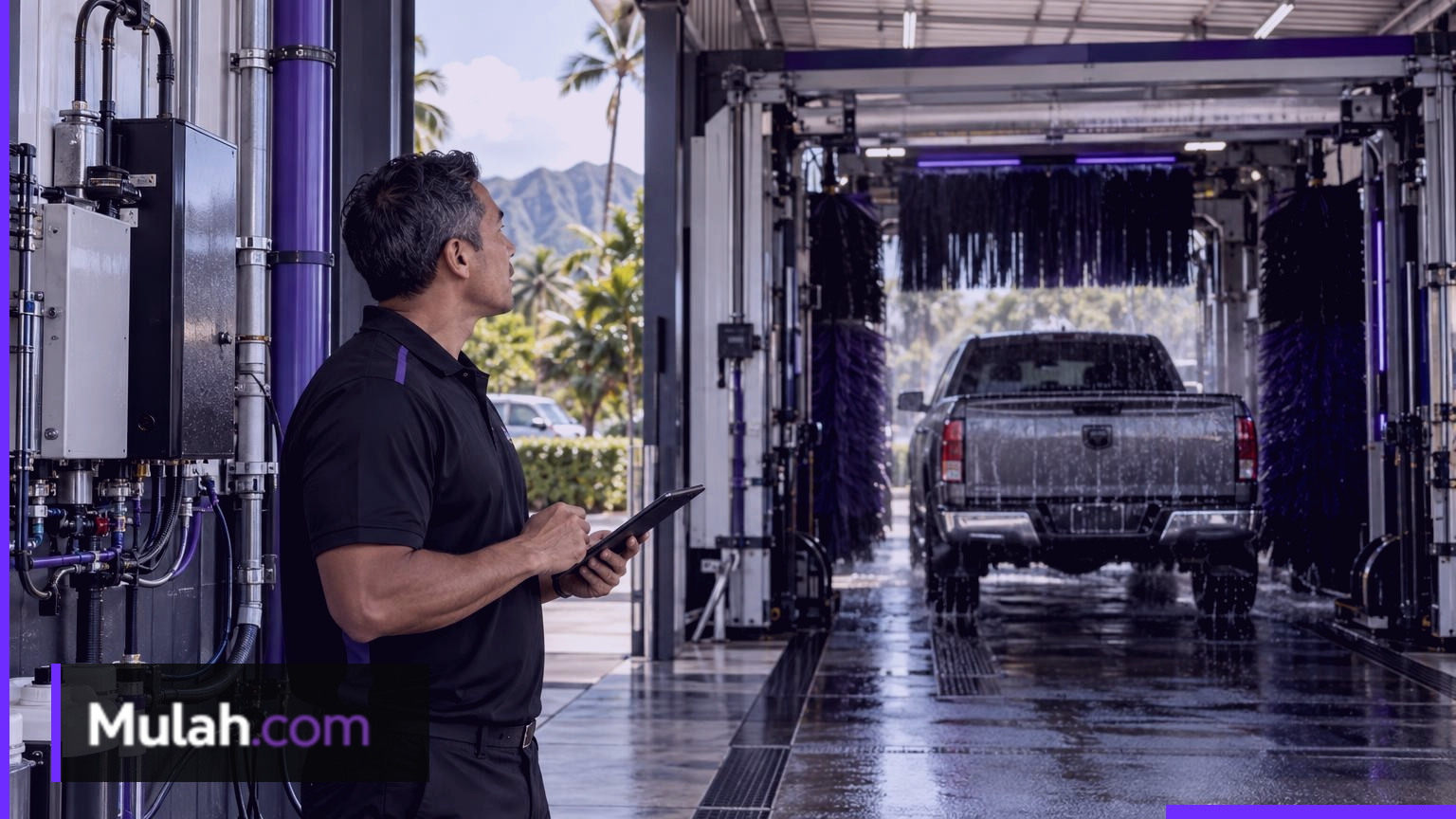
Separate the immediate problem from the larger investment. Replacing a failed motor is different from converting a self-service bay or adding a new wash system. The first may require a manageable repair budget. The second needs equipment quotes, installation planning, and a realistic estimate of how much additional business your site can handle.
Your wash format changes the funding decision. A staffed hand wash carries labor costs that continue through slow periods. A self-service wash depends heavily on reliable payment systems and working bays. An express or in-bay automatic wash can concentrate a substantial investment in a few critical machines. Your financing should reflect where your cash goes and what happens when something stops working.
Mulah is a business-funding marketplace, not a promise of a particular loan. You can use its business funding resource to understand the broader choices before submitting a request. The useful question isn't simply how much you might qualify for. It's which structure leaves your wash with enough cash after payments.
For a Hawaii car wash, a mainland equipment quote may not represent the delivered, installed cost. Ask the supplier to specify the destination, shipping responsibility, unloading arrangements, and any inter-island movement involved. If a contractor must travel to install or service the system, get that expense in writing as well.
Your maintenance plan matters as much as the purchase. Ask where critical parts are stocked and whether a local technician can diagnose problems. A less expensive system may become costly if a small component keeps a bay closed while you wait for a replacement. Consider a modest critical-parts inventory when preparing the project budget.
Site conditions deserve individual attention. Depending on your location and equipment exposure, ask vendors about corrosion protection and warranty exclusions. For water use, wastewater handling, drainage, and construction, verify the requirements that apply to your actual parcel with the relevant authorities. Don't assume another wash's setup establishes what your site is allowed to do.
Small business loans aren't interchangeable, and some funding agreements aren't loans at all. Use this comparison to narrow the choices, then read the actual terms. Product names alone don't tell you the total cost or how much flexibility you'll have.
| Option | Often considered for | How to think about it |
|---|---|---|
| Term loans | A defined renovation, acquisition, or larger improvement with a clear budget. | You receive a lump sum and repay it over an agreed period. Term loan payments and security requirements depend on the agreement. |
| Working capital | Payroll, supplies, or a temporary operating gap during repairs or installation. | Working capital financing describes the purpose of the funds, not one standard contract. Check repayment frequency and total cost. |
| Business line of credit | Recurring, short-lived cash gaps and smaller repairs. | An approved business line of credit lets you draw within its limit. Access, fees, renewal, and repayment rules vary. |
| Equipment financing or leasing | Wash systems, dryers, pumps, vacuums, and other eligible equipment. | Equipment financing and leasing tie the agreement to specific assets. Ownership, down payments, and end-of-term obligations differ. |
| SBA financing | Eligible acquisitions, substantial improvements, or other qualifying business needs. | SBA financing involves participating lenders and program rules. Expect detailed documentation; a government guarantee doesn't guarantee your approval. |
| Revenue-based financing | An established wash with sufficient receipts to support the proposed remittances. | Revenue-based financing may be structured as a purchase of future receivables rather than a loan. Read how remittances and adjustments work. |
Before financing an automatic wash, pump assembly, or dryer package, ask the vendor what must change at your site. Electrical service, plumbing, foundations, controls, and payment integration can materially affect the budget. Find out which of those costs the financing provider will include and which you'll need to pay separately.
Check that the financing term makes sense for the asset's expected useful life and your right to occupy the site. A long agreement can lower scheduled payments but leave you paying for equipment after a lease ends or a major component needs replacement. Used equipment deserves extra scrutiny around condition, service records, warranty coverage, and parts availability.
With a lease, ask who owns the equipment during the term and what happens at the end. There may be a purchase option, return requirements, or other obligations. With a loan, ask about liens and insurance. In either case, get written answers about delivery delays, vendor disputes, and when your payment obligation begins.
If you're buying an existing wash, making substantial improvements, or purchasing eligible business property, SBA financing may be worth discussing with a participating lender. Different programs serve different purposes. Ask which program fits your project before spending time assembling a request around an assumption.
For an acquisition, the lender will look beyond the seller's asking price. Expect questions about historical earnings, the purchase agreement, your contribution, and your experience managing the business. Reconcile claimed cash sales with records you can verify. Membership counts and traffic estimates shouldn't substitute for documented revenue.
For a site project, prepare a sources-and-uses budget showing where the money comes from and what it pays for. Include your cash contribution and a realistic contingency. SBA eligibility, collateral requirements, guarantees, and documentation depend on the program and transaction. Leave time for lender due diligence rather than promising a vendor a closing date you don't control.
A line of credit can give you a way to handle a repair or supply purchase without financing a new lump sum each time. The discipline is knowing what will repay the draw. If normal wash receipts will cover it after a brief disruption, the structure may fit. If every month requires another draw, the problem is larger than timing.
Membership receipts can make cash flow more predictable, but don't assume every payment represents cash available for debt. You still owe those customers service. Track cancellations, failed payments, and wash usage alongside receipts. Keep your forecast grounded in what remains after labor, chemicals, utilities, and other costs.
Revenue-based agreements require a different reading. Ask whether remittances are fixed or tied to actual receipts, how any reconciliation works, and what triggers default. Don't assume payments automatically fall when sales fall. Test the proposed schedule against a quiet stretch and calculate the cash remaining after every withdrawal.
There isn't one qualification standard for every product. Your request is stronger when the numbers tell a consistent story and you can explain the risks without minimizing them.
Bank deposits, processor reports, and bookkeeping should support your stated sales. Explain transfers and unusual deposits rather than presenting them as customer revenue.
An established wash has operating history to evaluate. A new site depends more heavily on projections, your experience, and the cash you bring.
Business and personal credit may matter, depending on the product. Be ready to discuss late payments, tax issues, or other significant problems accurately.
List what you already owe, including equipment agreements and other funding. Providers need to see the combined payment burden, not just the new request.
Your lease, ownership rights, equipment condition, and existing liens affect what can be financed and what security a provider may require.
Some transactions require money from you. Even when they don't, keeping a reserve protects your ability to handle repairs and weaker receipts after closing.
Requirements vary, but gathering these items can prevent avoidable back-and-forth. Send complete, readable records through the requested secure process, and keep estimates clearly separate from actual results.
Tie the request to a measurable operating need. The proposed benefit should survive a conservative forecast, not depend on every day being busy.
Finance a durable replacement when repeated repairs and downtime justify it. Get a diagnosis first so you aren't borrowing for equipment that doesn't solve the underlying problem.
Evaluate installation costs, maintenance, and expected water savings using your site's actual usage and rates. Verify applicable requirements rather than treating equipment claims as guaranteed savings.
Include hardware, software fees, integration, and staff training. A better payment experience has value, but forecast membership growth conservatively.
A new bay or additional vacuums should address documented customer demand. Check space, circulation, staffing, and site permissions before counting the added revenue.
Set aside enough for essential bills while installation interrupts sales. Size the request around a realistic closure period and a backup plan for delays.
Separate the business price, equipment value, property, and immediate repair needs. Don't spend your entire available cash on the purchase and leave nothing for the first months.
These are planning examples, not customer stories or approval predictions. Each shows how the operating problem should shape the financing choice.
Your technician recommends replacement, and the affected bay produces meaningful revenue. Obtain the installed price and delivery estimate first. Equipment financing may fit the durable asset; an available credit line might cover a smaller expense. Either way, budget for the sales interruption.
A vendor offers an attractive delivery slot, but electrical work remains uncertain. Don't let the equipment schedule dictate the whole project. Resolve the site work and payment-start date before signing, or you could owe payments while the system sits unused.
Your wash stays busy, yet chemicals, labor, and existing payments consume the receipts. Another working-capital agreement could postpone rather than solve the problem. Rebuild the operating budget and examine pricing, staffing, and debt payments before taking on more financing.
You're considering an acquisition, but some claimed revenue isn't supported by records. Base your financing plan on verifiable earnings. Ask your accountant to assess the books, and don't rely on undocumented sales to make the proposed debt payment affordable.
The first wash performs well, but the new site needs its own forecast. Separate opening costs from ongoing expenses and protect the original location's cash. A profitable first site doesn't prove the second can support its rent, staffing, and financing.
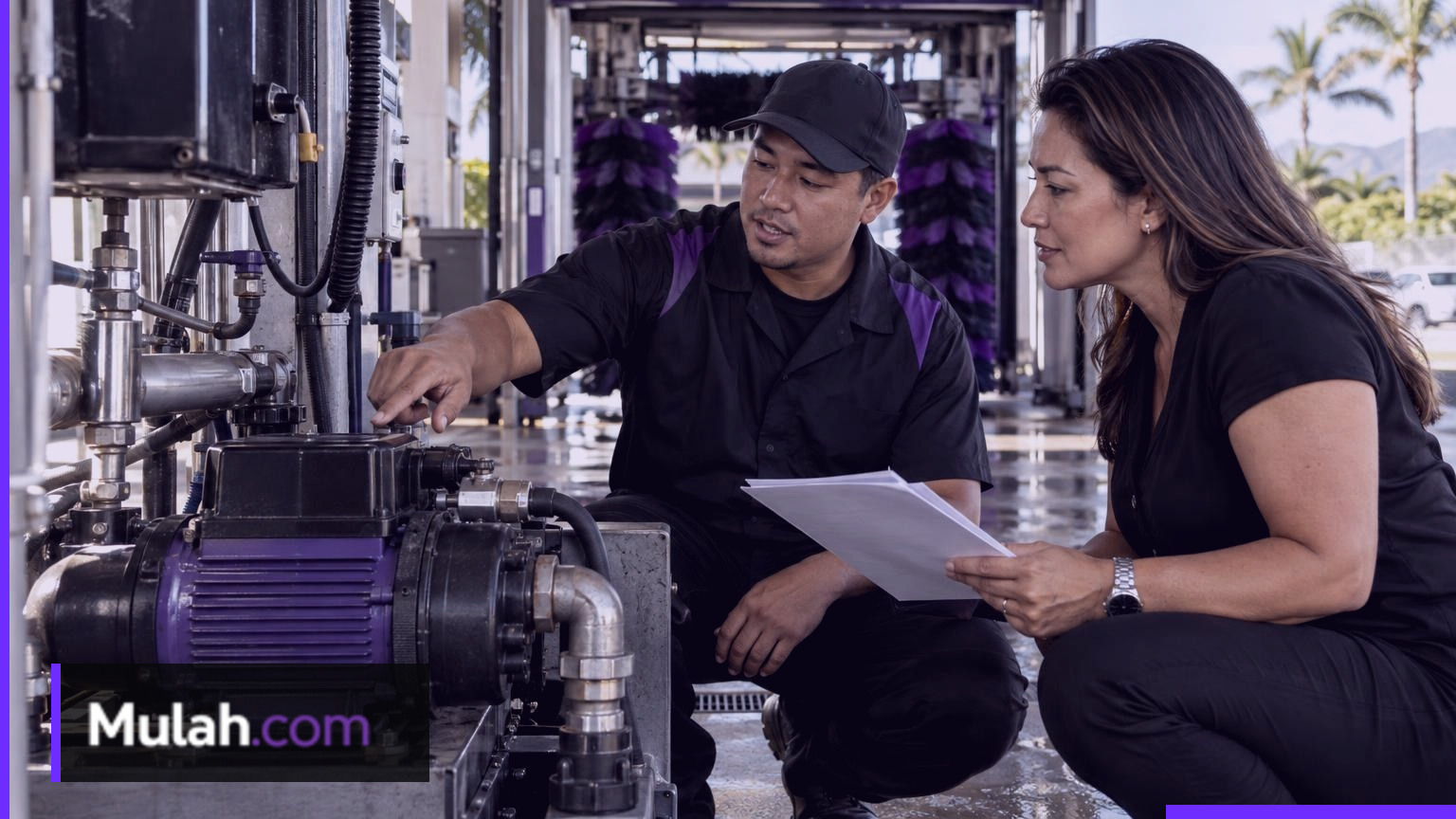
A replacement system can be affordable on paper while the installation leaves your checking account thin. You may need to pay deposits, maintain payroll during a closure, and replenish supplies before the upgraded wash produces revenue. Those costs deserve their own budget rather than a vague allowance at the bottom of a vendor quote.
Avoid paying for the same expense twice through overlapping financing. If equipment financing covers a vendor invoice, don't include that full invoice again in a working-capital request. Explain which source pays for the machine and which pays for the interruption. Clear uses of funds make the request easier to assess and keep your own plan honest.
Also consider what you already owe. Adding a daily or weekly payment to an existing equipment note can create pressure even when both agreements look reasonable separately. Build one calendar showing every required payment, including rent, taxes, insurance, and debt. That is the schedule your cash flow must support.
Your financing timeline should follow the actual project. Use these five checkpoints before signing an agreement or scheduling a shutdown.
Get an itemized quote that distinguishes equipment, shipping, installation, electrical work, plumbing, and testing. Ask which costs remain estimates and who pays if the job changes.
Check your lease, landlord permissions, and applicable site requirements before making a nonrefundable commitment. Financing approval doesn't replace permission to install or operate equipment.
Ask when the vendor requires deposits and when financing payments begin. If equipment must be shipped to your island, build the delivery schedule around a written quote rather than an assumption.
Estimate the revenue you could lose while a bay or the full site is closed. Include staff costs that continue and the cash required to reopen.
Track wash counts, average customer spending, downtime, and actual operating costs. Use those figures to decide whether the investment is delivering before taking on another project.
Before you look at offers, decide what problem the money must solve. A clear answer prevents a convenient funding product from becoming an expensive mismatch.
Durable wash machinery usually calls for financing that spreads costs over time. Avoid assuming a short repayment period is better simply because you'll finish sooner; the required payment still has to fit.
A recurring gap between bills and customer receipts may suit a revolving line. A one-time project with a known cost may be easier to manage with a fixed repayment schedule.
Larger site projects may justify detailed underwriting. If you need an immediate repair, ask what documentation and closing steps are required before relying on any estimated timeline.
Borrowing to repair a productive bay differs from borrowing repeatedly because prices don't cover costs. If your wash loses money before debt payments, address that problem before adding another payment.
Related Mulah resources include working capital funding, business lines of credit, equipment financing and leasing, term funding, SBA loans, revenue-based financing, startup funding, accounts receivable financing, and the business funding calculator.
The amount deposited into your account is only part of the deal. Read the payment schedule alongside your operating budget.
Subtract funding payments from a conservative cash forecast. Leave room for maintenance and taxes. Don't treat every dollar above payroll and rent as available for debt.
Ask for total repayment, fees, payment frequency, and any early-payoff terms. A factor rate is a multiplier used to calculate repayment, not an annual interest rate.
Read lien, guarantee, insurance, and additional-borrowing provisions. An agreement can affect your ability to finance another machine or sell equipment later, even if the payment seems manageable.
The amount that looks attractive on an offer is not always the amount that makes sense to take. Tie the request to a real expense, a realistic payoff period, and the cash the business can still live on if a customer pays late or a strong month comes in softer than expected.
Mulah helps business owners work through funding options and prepare a request through its marketplace. Bring a specific use of funds, realistic budget, and current financial records. That gives the process a better foundation than asking for the largest amount available and deciding how to spend it later.
Before moving forward, use the business funding calculator to test payment assumptions. A calculator is a planning tool, not an offer. Check the actual agreement for fees, payment frequency, guarantees, and other terms, and get accounting or legal advice where the transaction warrants it.
Your next step is to turn the need into a clear funding request. Keep the amount tied to the project, include the operating cushion you genuinely need, and know what payment your quieter months can support.
State what you're buying or paying for, the total cost, your cash contribution, and the timing. Note any unresolved delivery, installation, lease, or approval issues.
Use actual receipts and expenses, then allow for weaker sales or a delay. Keep existing debt payments in the calculation so the new agreement doesn't look affordable in isolation.
When you're ready, submit your business funding application. Provide accurate records and ask about terms you don't understand before accepting an offer. Approval and available terms depend on the provider's assessment.
Provide the business and financial information needed for a funding review.
Start with a shorter path when you want to discuss the business need before completing the full application.
Review official SBA information about federal small-business loan programs and lender participation.
Official guidance on financial management, cash flow, bookkeeping, and business planning.
Use the official source for current program, regulatory, or business guidance related to this topic.
Use the official source for current program, regulatory, or business guidance related to this topic.
Potentially. Your remaining lease term, renewal rights, landlord permissions, and planned improvements matter. A provider may be reluctant to finance a long-lived installation if your right to use the site ends much sooner.
Some agreements include eligible related costs, while others cover only the equipment. Ask for a written breakdown before accepting an offer. You'll need another source of cash for anything excluded.
Startup financing is possible in some circumstances, but it differs from financing an established wash. Expect close attention to your experience, personal finances, cash contribution, site plan, and projections. Don't assume projected revenue qualifies like documented sales.
A line can suit smaller, recurring needs if you can pay down the balance. A larger replacement with years of useful life may fit equipment financing or a term loan. The repair amount and repayment schedule matter more than the label.
Some providers finance used equipment. Age, condition, resale value, and vendor documentation can affect eligibility. Have a qualified technician assess the system and verify parts availability before committing.
Many business financing agreements require one, but requirements vary. A personal guarantee makes you personally responsible under its terms if your business doesn't pay. Read the guarantee separately from the payment summary.
No. The guarantee supports the participating lender, subject to program rules. Your business and transaction still must meet applicable eligibility and underwriting requirements.
Certain working-capital arrangements can cover eligible operating expenses. Include the expected closure period and a reasonable delay allowance in your budget. Ask about use restrictions before relying on the funds.
Provide actual membership receipts, cancellation trends, failed-payment information, and the cost of serving members. Gross recurring revenue alone doesn't show how much cash remains available for financing payments.
Usually not for ordinary retail wash sales because customers generally pay at the time of service. It may be relevant if you have qualifying unpaid invoices from commercial fleet customers, subject to the provider's requirements.
Show the pattern using historical records and test payments against weaker periods. Ask exactly how payments work. A product marketed around revenue doesn't necessarily reduce withdrawals automatically when your sales decline.
That depends on the agreement. Ask for the payoff calculation and any prepayment charge. Paying early doesn't always eliminate all remaining financing costs, especially under certain nonloan structures.
Get a technician's assessment, then weigh repair costs, expected downtime, remaining useful life, and the installed replacement price. A new machine isn't automatically the better financial choice, even if financing is available.
You can discuss funding while planning, but unresolved site or installation requirements can affect underwriting and closing. Tell the provider what's outstanding. Financing approval doesn't authorize construction, wastewater discharge, or a change in site use.
Start with the need, the amount, and the timing. Mulah can help you review possible business funding options before you decide whether to move forward.
Call 877-816-8524