Cash actually collected
Bank deposits, merchant receipts, and membership records should tell a consistent story. Explain transfers, refunds, and unusual deposits so they aren't mistaken for ordinary sales.
Your wash can have steady membership revenue and still face a cash squeeze when a conveyor fails or a water-reclaim project comes due. Car Washes Business Funding in California should fit the way your location earns money, not just the equipment you want to buy. Mulah is a business-funding marketplace where you can consider small business loans and other commercial financing structures.

A replacement pump, a second location, and a two-month cash shortage are different financing decisions. Before requesting capital, put the expense in one category: keeping the doors open, replacing an earning asset, or adding capacity. Then separate essential spending from improvements you could postpone without losing customers.
Your wash format matters. An express tunnel may depend on throughput and membership retention. A self-service site has different maintenance patterns and staffing needs. A full-service wash or detail business may carry more payroll relative to equipment spending. Present your actual model rather than assuming a financing provider understands the differences.
The right amount is the project cost plus a realistic cushion, less the cash you can contribute without weakening the business. Borrowing too little can leave equipment installed but unusable. Borrowing extra without a purpose adds payments before the money produces any benefit.
Don't assume another California wash's water arrangements apply to yours. Ask your water and sewer providers about your service classification, applicable charges, and any project-related requirements. For a reclaim installation or drainage change, check which local agencies need to approve the work before you order equipment.
A reclaim system can reduce your reliance on fresh water, but its financial value depends on your wash volume, utility charges, maintenance, and system performance. Use a vendor's specifications as inputs, not a guaranteed savings figure. Include filters, service, and any additional energy use in your calculation.
If you lease the property, read the lease before financing permanent improvements. You need enough control of the site to benefit from the investment, along with any required landlord consent. Confirm who owns installed improvements, who restores the premises, and what happens if the lease ends before the financing does.
When you search for small business loans, you'll also encounter products that aren't conventional loans. Mulah lets you consider different funding paths, but you still need to understand how each agreement collects payment and what your business commits to.
| Option | Often considered for | How to think about it |
|---|---|---|
| Term loans | A defined renovation, expansion, or other project with a reasonably firm budget. | You receive a lump sum and repay it over an agreed term. Check payment frequency, interest, fees, and early-payoff terms. See term loan options. |
| Working capital | Payroll, chemicals, insurance, and other operating costs during a measurable cash gap. | Working capital describes the use of money, not one standardized product. It may come through a loan or another structure. Read about working capital financing. |
| Business line of credit | Intermittent repairs or short cash gaps when the amount and timing vary. | You draw against an available limit under the agreement's rules. Interest and fees depend on the product; access can be restricted or reassessed. See business lines of credit. |
| Equipment financing or leasing | Wash equipment, reclaim systems, dryers, pay stations, and other eligible assets. | The equipment usually supports the transaction. A loan and a lease can differ in ownership, end-of-term costs, and tax treatment. Consider equipment financing and leasing. |
| SBA financing | Eligible acquisitions, larger improvements, or other qualifying business purposes. | Participating lenders make loans with an SBA guarantee. Eligibility, documentation, equity, and collateral requirements depend on the transaction. Learn about SBA financing. |
| Revenue-based financing | Established revenue with sufficient margins to support the proposed collection structure. | Some agreements purchase future receivables rather than create a conventional loan. Examine purchased amounts, collections, reconciliation rights, and total cost. Read about revenue-based financing. |
Request an itemized quote showing equipment, freight, installation, taxes, training, and any required site work. Ask which items the financing provider will cover. Used equipment may require age, condition, or valuation information, and a private-party sale may receive different treatment from a dealer purchase.
Match the expected useful life to the payment commitment. A heavily used component may wear out sooner than the overall wash system. For a lease, understand the end-of-term purchase option, return obligations, and renewal provisions. Don't assume you own the equipment after the last scheduled payment.
Plan for the transition. If installation closes a lane or the entire wash, estimate the contribution you lose after avoiding costs you won't incur during closure. Add restart expenses and a delay cushion. Your equipment budget and your operating reserve should both survive a later-than-expected reopening.
Track membership receipts after refunds, failed payments, and processing charges. Then account for the cost of serving members. A promotion can lift sign-ups while reducing near-term cash per customer. Financing based on the first month's enrollment count can leave you with payments that outlast the promotion's benefit.
A credit line may suit a short gap between expenses and collections, provided you can pay it down from normal business receipts. It is less suitable when you expect to carry the same balance indefinitely. Ask about draw fees, minimum payments, renewal terms, and whether repaid amounts become available again.
Revenue-based offers need special attention when collections are frequent. Read how the provider sets withdrawals and whether the agreement allows adjustments when revenue changes. A sales-based label alone doesn't mean payments automatically fall during a slow week. Make sure you understand the request process and supporting records.
For an acquisition, reconcile the seller's reported sales with tax returns, bank activity, merchant statements, and membership records. Separate recurring membership receipts from prepaid packages and promotional sales. Examine deferred maintenance. A profitable-looking location may need a major equipment replacement soon after closing.
SBA financing may fit an eligible acquisition or substantial improvement, but the program and lender determine the requirements. Expect scrutiny of your experience, equity contribution, projections, and the business being acquired. If real estate is included, appraisal and environmental due diligence may become important parts of the process.
Coordinate the purchase agreement, financing timeline, lease assignment, and approvals. Avoid a nonrefundable commitment based solely on an informal financing conversation. Your attorney, accountant, and lender should understand the same transaction, including seller financing, equipment liens, and the cash you need after closing.
There isn't one universal credit score or revenue threshold for every product. Expect the decision to reflect both your business history and the specific transaction.
Bank deposits, merchant receipts, and membership records should tell a consistent story. Explain transfers, refunds, and unusual deposits so they aren't mistaken for ordinary sales.
An established location offers more evidence than a newly opened wash. For a new site, your experience, equity, project budget, and projections carry more weight.
Business and personal credit may be considered. Be ready to explain recent delinquencies or major changes rather than assuming a strong sales month offsets them.
Disclose loans, leases, advances, and other financing. Providers may assess combined payments, existing liens, and whether another agreement restricts new debt.
Your lease, ownership records, equipment condition, and remaining lease term can affect the request. Permanent improvements require particular attention when you don't own the property.
Show how the spending protects or improves cash flow. Use realistic assumptions about throughput, pricing, downtime, and expenses rather than projecting every available wash slot as a sale.
Requirements vary by product. These records make it easier to answer questions without rebuilding the request each time.
Tie each dollar to a specific expense and a realistic source of repayment.
Measure repair frequency and lost operating time against replacement cost. Financing makes more sense when it addresses a documented reliability problem rather than an upgrade that merely looks appealing.
Budget the system, site work, ongoing service, and required approvals. Base expected savings on your utility bills and actual wash volume, not another location's results.
Include hardware, installation, software subscriptions, processing terms, and staff training. Check whether a new system changes your ability to access membership data or switch processors later.
Payroll and essential supplies may come due during a closure or weak sales period. Define when normal collections should resume and how you'll repay without starving the next month.
Separate required repairs from cosmetic work. Phase improvements if doing everything at once would create excessive downtime or leave no reserve for an unrelated equipment failure.
Include the purchase, immediate repairs, transaction expenses, and opening liquidity. Don't spend every available dollar at closing and assume the acquired wash will immediately fund all remaining needs.
These are planning examples, not customer stories or predictions of financing eligibility.
Get a repair diagnosis and replacement quote before borrowing. An available credit line might cover an urgent repair; equipment financing could suit a replacement. Weigh the cost of downtime, but don't let urgency obscure installation costs or an unaffordable payment.
Check discounts, failed billing, member usage, and labor before adding debt. If each new membership contributes too little after service costs, financing accelerates the problem. If the gap is temporary promotional spending with sound margins afterward, a limited working-capital request may be reasonable.
The equipment could last longer than your lease. Resolve renewal options, landlord approval, and ownership of improvements before signing financing documents. Removable equipment and permanent construction may require different treatment, especially if relocating would be expensive.
Check seller records and maintenance needs before treating the asking price as the total investment. Model the new location on its own and alongside your current business. Keep enough liquidity to manage both sites if the transition is slower than planned.
A new wash cannot support an application with operating deposits it doesn't have. Expect greater emphasis on your contribution, experience, site readiness, and credible projections. Equipment financing or qualifying SBA financing may warrant investigation, but neither eliminates startup risk or guarantees eligibility.
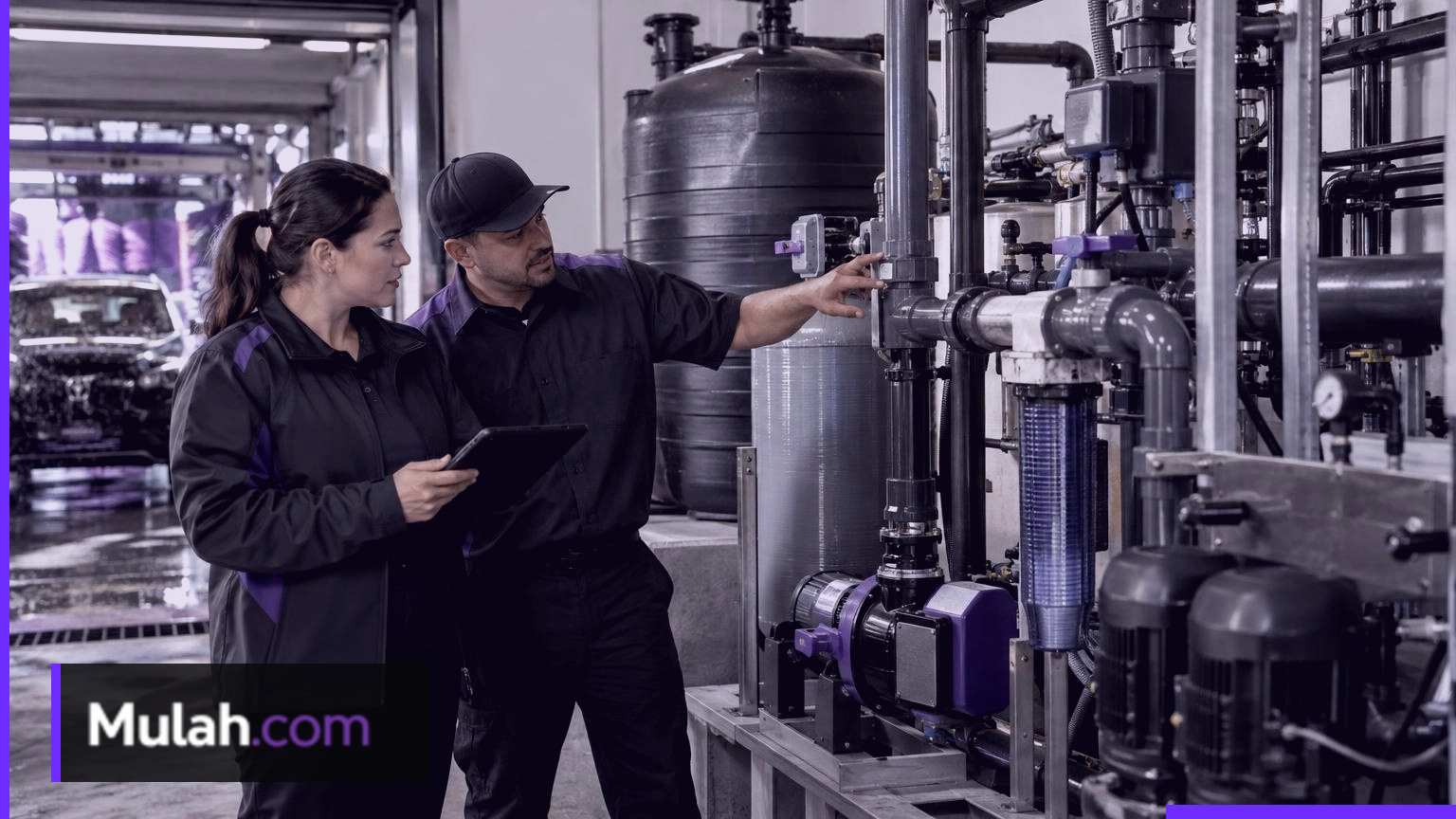
An equipment quote rarely covers everything. Your conveyor package might exclude concrete work, upgraded electrical service, or installation labor. A financing agreement may cover some of those costs, but not all. Get a written breakdown before deciding that one equipment approval will fund the entire project.
Working capital is money for ordinary business expenses between collecting revenue and paying bills. If you need payroll coverage while a bay is offline, that is a separate need from buying the replacement equipment. Combining both needs in one request is reasonable, but the repayment schedule still has to fit each use.
Avoid treating new debt as a cure for an ongoing operating loss. If every month ends short before financing payments, investigate pricing, labor scheduling, chemical usage, equipment reliability, and membership economics. More capital buys time; it doesn't automatically repair an unprofitable location.
Use your own sales history rather than a statewide assumption about car-wash demand. These five checkpoints expose timing problems before you commit.
Look at weather-related closures, holidays, and local traffic changes. A strong annual total can hide several weeks when frequent financing withdrawals would leave too little cash for payroll.
Membership billing adds predictability, but customers can cancel and payments can fail. Track net collections, cancellations, and member usage. High enrollment alone doesn't tell you how much cash remains after serving those customers.
Ask when deposits, delivery balances, and contractor invoices are due. Find out when financing payments begin. You could owe money before the upgraded lane opens, especially if site work slips.
Set aside the amount your business needs for payroll, utilities, insurance, and essential maintenance. Don't count that reserve as available project equity simply because it appears in your bank balance.
Reduce expected sales and allow for a repair or installation delay. If that scenario requires another financing request to make the first payment, reduce the project or reconsider the structure.
Product names are useful, but the underlying deal matters more. Answer these questions before narrowing your funding request.
A temporary collection gap should have a clear end. Machinery should generate value well beyond the financing term. Don't use short repayment schedules for a major upgrade unless your existing cash flow comfortably supports them.
A defined installation usually calls for a fixed budget. Recurring maintenance surprises may justify revolving access. A line is only useful if the agreement allows the draws you need and your business remains eligible to use it.
Those transactions require different underwriting. Buying a business may involve goodwill, real estate, equipment, and inventory. Separate the purchase price into its components so a provider can assess the request accurately.
Faster access or lighter documentation can carry a higher cost. A lower payment can also hide a longer repayment period. Judge flexibility against the actual business benefit, not the convenience of receiving funds.
Related Mulah resources include working capital funding, business lines of credit, equipment financing and leasing, term funding, SBA loans, revenue-based financing, startup funding, accounts receivable financing, and the business funding calculator.
Before accepting financing, translate the contract into actual cash leaving your business.
Add scheduled payments and required fees, then account for any amount withheld from proceeds. A factor rate expresses a repayment multiple, not an interest rate. Don't treat it as an APR or assume products with different terms cost the same.
Include current debt, leases, and the proposed financing. Daily or weekly withdrawals affect liquidity differently from monthly payments. Use the business funding calculator for planning, then rely on the actual offer for contractual costs.
Read guarantee and lien provisions, default triggers, early-payoff rules, and restrictions on additional financing. Ask for unclear terms in writing. A smaller payment isn't automatically a better deal if the agreement creates problems for your next equipment purchase.
The amount that looks attractive on an offer is not always the amount that makes sense to take. Tie the request to a real expense, a realistic payoff period, and the cash the business can still live on if a customer pays late or a strong month comes in softer than expected.
Mulah is a marketplace, not a promise that one product fits every wash. You can use it to understand funding paths and prepare a request around your actual purpose, business history, and cash flow. Be specific about what you need to purchase and which expenses fall outside the equipment quote.
Keep the decision grounded in written terms. Ask who provides the financing, what information is required, and how the proposed payments work. The small business funding guide provides broader context if you're still sorting out the differences between products.
Your next step is to turn the project into a clear funding request. You don't need a polished pitch deck to explain a practical business need.
List the expense, timing, cash contribution, and reserve you need to retain. Separate a required replacement from an optional expansion so you can adjust the request intelligently.
Use actual collections and expenses, including everything you already owe. Decide what you can afford in a weaker month before considering the largest amount offered.
Use the Mulah application to provide your business information. Keep supporting records ready, answer follow-up questions accurately, and read the final agreement before accepting any offer.
Provide the business and financial information needed for a funding review.
Start with a shorter path when you want to discuss the business need before completing the full application.
Review official SBA information about federal small-business loan programs and lender participation.
Official guidance on financial management, cash flow, bookkeeping, and business planning.
Use the official source for current program, regulatory, or business guidance related to this topic.
Use the official source for current program, regulatory, or business guidance related to this topic.
Potentially. The provider may examine your remaining lease term, renewal rights, and landlord consent. Permanent improvements can raise additional questions about ownership and removal. Have the lease available before committing to a project.
Equipment financing is a logical option to assess because the asset supports the transaction. A term loan may offer a different scope of covered costs. Choose based on the installed project cost, useful life, payment, and ownership terms.
Some agreements cover eligible installation and related costs; others limit what they finance. Submit an itemized quote and ask specifically about freight, taxes, electrical work, and contractor labor. Don't assume approval of the machine includes everything needed to operate it.
An eligible acquisition may qualify for conventional or SBA financing, depending on the transaction and provider. Expect questions about the seller's financial records, your experience, your contribution, equipment condition, and any real estate included in the purchase.
Documented recurring collections can make revenue easier to understand. Providers may still examine cancellations, failed charges, discounts, and service costs. Membership count is less useful than the cash those memberships consistently contribute.
It may, subject to equipment and project eligibility. Get a complete installed quote and determine which approvals apply to your site. Include ongoing maintenance when deciding whether expected savings justify the payment.
Requirements vary. Equipment may secure its own financing, and other products may involve business liens or personal guarantees. Read both provisions carefully; a guarantee can create personal liability even though the financing is for your business.
Some providers consider cash flow and business history alongside credit, but eligibility and cost vary. Disclose known issues accurately. Be cautious about accepting expensive financing merely because it is available, especially if payments would strain ordinary expenses.
Not necessarily. Some arrangements purchase future receivables. Your agreement determines the structure and obligations. Examine how collections are calculated, what adjustment rights exist, and what you must do if revenue drops.
Don't assume so. A loan may have fixed scheduled payments. A revenue-based agreement may require a reconciliation request rather than automatically changing withdrawals. Ask for a clear explanation of the actual contract.
Possibly, but a pre-opening project is different from an established business. Your equity, experience, site control, construction budget, and projections become especially important. Products requiring operating revenue generally won't fit a wash that hasn't begun collecting sales.
Timing depends on the product, complete documentation, underwriting, and closing requirements. Equipment purchases, acquisitions, and real estate transactions can involve additional steps. Don't schedule an irreversible purchase around an estimated funding date.
Check the agreement. Some products reduce future interest when paid early; others have prepayment charges or limited savings. Request an early-payoff illustration instead of assuming that fewer months always means a proportionately lower cost.
Disclose the balance, payment, and lien. New financing may require a payoff, lien release, or another arrangement acceptable to the providers involved. Refinancing also deserves a fresh total-cost calculation, including fees and any extended repayment period.
Start with the need, the amount, and the timing. Mulah can help you review possible business funding options before you decide whether to move forward.
Call 877-816-8524