Documented revenue
Bank statements, processor reports, and bookkeeping should tell a consistent story. Explain transfers and cash deposits rather than treating every deposit as sales.
Your chairs can stay busy while your bank balance feels tight. Card deposits arrive after expenses, a plumbing repair interrupts appointments, or a new location needs money before its first haircut. Funding for your Alabama barbershop should solve a specific business problem without taking too much from next week's receipts. Here's how to judge small business loans and other financing against the way your shop actually earns money.

A barbershop usually collects payment when the service is finished. That's an advantage, but it doesn't eliminate cash gaps. Rent arrives on schedule even when bookings soften. Payroll may come due before card receipts settle, and an equipment failure can remove a chair from service immediately. The right financing addresses that timing problem rather than disguising a continuing loss.
Before requesting money, write down the expense, when it must be paid, and what changes after you pay it. Replacing a broken chair preserves existing sales. Adding a station only creates more sales if you have someone to work it and enough customer demand. Those are different financing decisions, even if the equipment costs the same.
Mulah is a business-funding marketplace where you can assess funding options against your business needs. Its small business funding guide offers a broader view of available structures. For your shop, the useful question is narrower: which payment schedule leaves enough cash to keep serving customers?
An established neighborhood shop and a new storefront near offices can have very different booking patterns. Use your own appointment history, walk-in traffic, cancellations, and repeat visits. If football weekends, school schedules, or nearby employers affect your business, show the effect in your records instead of assuming every Alabama shop follows the same cycle.
Your premises matter, too. A second-generation shop may already have suitable plumbing and electrical capacity. A retail shell may need extensive work before a barber can serve anyone. Ask contractors to separate equipment, site work, installation, and contingency costs. Find out who pays for improvements and what remains with the building when your lease ends.
Before financing a move or expansion, check the current licensing and shop requirements with the Alabama Board of Cosmetology and Barbering. Also verify applicable local permits and inspection requirements. Don't assume an existing shop license covers a new address, added services, or every proposed alteration. Build the required approvals into your opening schedule.
When you evaluate small business loans, distinguish the purpose of the money from the legal structure of the financing. Working capital describes a use; it can be funded through a loan or another arrangement. Some revenue-based products are purchases of future receivables rather than conventional loans.
| Option | Often considered for | How to think about it |
|---|---|---|
| Term loans | A defined renovation, acquisition, or other project with a credible budget. | A lump sum repaid over a set term. Payment frequency, interest, fees, collateral, and guarantees depend on the offer. |
| Working capital funding | A measurable gap involving payroll, supplies, rent, or other operating expenses. | May take the form of a short-term loan or another financing product. Match the repayment schedule to the cash gap being solved. |
| Business line of credit | Recurring but uneven needs, such as repairs or supply purchases between stronger sales weeks. | Draw against an approved limit under the agreement's rules. Check draw fees, interest, repayment periods, and whether availability can change. |
| Equipment financing or leasing | Eligible barber chairs, wash stations, and other identifiable business equipment. | Equipment generally supports the transaction. A loan and a lease can differ in ownership, end-of-term choices, and total cost. |
| SBA financing | Eligible acquisitions, substantial improvements, equipment, or working capital with room for a more involved application. | Participating lenders make loans supported by an SBA guarantee. Eligibility, documentation, equity requirements, and loan terms vary by program and transaction. |
| Revenue-based financing | An established shop evaluating repayment tied to sales or a short-duration funding need. | Some arrangements purchase future receipts. Understand remittances, reconciliation rights, total repayment, and the consequences of weaker sales. |
For a broken station, calculate the cost of downtime alongside the replacement price. For an additional station, first answer who will use it and where the appointments will come from. Equipment financing makes more sense when the equipment has a clear business purpose, not simply because there's room for another chair.
Ask for an itemized vendor quote showing model, condition, warranty, delivery, and installation. A wash station may require plumbing work that isn't included in equipment financing. Used equipment can cost less upfront, but ask about service history and repair availability. Make sure your cash budget covers anything the financing excludes.
With equipment financing and leasing, read the ownership terms carefully. Ask about deposits, insurance, maintenance duties, end-of-lease purchases, and removal costs. If you lease your premises, check the remaining lease term before accepting a long equipment commitment. A movable chair and a permanently installed fixture create different exit problems.
A temporary closure for repairs can interrupt sales while rent and payroll continue. That's a defined working capital problem if the reopening date and expected receipts are credible. Repeatedly borrowing to cover the same monthly shortfall is different. It calls for a pricing, staffing, occupancy, or expense decision before another payment is added.
Build a weekly forecast through the recovery period. Include realistic service sales, booth rent you expect to collect, supplies, payroll, and existing financing payments. Mark the lowest projected bank balance. That gives you a more useful funding target than adding a general cushion to last month's expenses without explaining it.
If you're considering revenue-based financing, ask exactly how remittances respond to lower receipts. Don't assume a product's name means every withdrawal automatically falls when sales do. Understand any reconciliation process, required documentation, fees, and default triggers. A fixed total payback also isn't the same thing as an annual interest rate.
A second shop adds more than rent and chairs. Budget for deposits, construction, licensing, hiring, opening supplies, and the period before customer traffic supports ordinary expenses. Keep those startup costs separate from the cash your existing shop needs. Otherwise, an expansion can leave both locations short of money.
For an acquisition, examine the seller's financial records, lease terms, equipment condition, and customer-retention risks. Customers may follow a particular barber rather than the business name. Don't assume every appointment or booth renter transfers with the sale. Your forecast should explain what happens if some of that business doesn't stay.
SBA financing may be worth considering for an eligible acquisition or substantial expansion. The SBA guarantee protects the lender; it doesn't remove your repayment responsibility. Expect a detailed use-of-funds budget and potentially an equity contribution. Ask about eligible costs, guarantees, and required documents before making nonrefundable commitments.
There isn't one universal credit score, sales threshold, or operating history for every product. Your request is stronger when the records explain how your business earns money and what you can afford.
Bank statements, processor reports, and bookkeeping should tell a consistent story. Explain transfers and cash deposits rather than treating every deposit as sales.
An established shop can show performance through slower periods. A new shop has less history and may need stronger projections, owner investment, or other support.
Business and personal credit may both matter. Be ready to explain material issues and recent changes without assuming every provider uses the same criteria.
List loans, advances, equipment agreements, and credit lines with balances and payment schedules. Frequent withdrawals can limit what your cash flow can support.
Show service revenue, booth rent, retail income, staffing costs, and occupancy expenses clearly. A lender needs to understand what remains after your normal bills.
Keep entity information, ownership, lease documents, insurance, and applicable licenses current. Unresolved inconsistencies can interrupt an otherwise well-prepared request.
Requirements vary, but these records answer many early questions. Send current, complete copies through the requested secure channel. Don't send customer payment-card information or unnecessary employee personal data.
Be specific about what the money will buy. These common situations have different risks, timelines, and sources of repayment.
Include delivery, installation, and disposal costs. Decide whether replacing stations in stages would preserve cash without creating excessive disruption.
Get a diagnosis and written estimate. Include the possible loss of appointments during repairs, but don't assume insurance will reimburse costs before coverage is determined.
Budget recruiting, training, wages, and related employment costs before the new schedule fills. Test whether existing demand supports the added hours.
Separate essential work from cosmetic upgrades. A better-looking waiting area doesn't automatically produce enough extra sales to cover a financing payment.
Use actual sell-through for products your customers buy. Avoid financing a large order just to obtain a discount if the stock could sit for months.
Budget the purchase and transition separately. Legal costs, deposits, repairs, and working capital can remain after you've paid the seller.
These are planning examples, not customer stories or predictions. Use the same reasoning with your own records and quotes.
You have bookings but one unusable station. Price repair against replacement and check the delivery schedule. Equipment financing may fit a replacement, while a smaller repair might be better paid from reserves or an available credit line. Borrowing more won't solve a long equipment lead time.
Your rent expense stays the same while booth income drops. Estimate how long finding a replacement could take using your own experience. Short-term funding only makes sense alongside a realistic plan to refill the station or reduce costs. Another financing payment won't make an overpriced booth easier to rent.
You add employee hours to serve more customers, and payroll falls before several card settlements. Check whether this is a settlement-timing issue or a weak margin. If the gap is recurring and temporary, a credit line may fit better than repeatedly taking new lump-sum financing.
The contractor's quote covers construction, not necessarily your lost receipts. Add rent, payroll commitments, reopening supplies, and a realistic delay allowance to the budget. Schedule work around your actual quieter periods, and keep a reserve for reopening rather than spending every dollar on finishes.
An attractive lease can still be a poor expansion. Forecast the new location separately and test a slower opening. If its payments require your first shop to outperform its normal results, reduce the project or wait. Access to financing isn't evidence that the location will work.
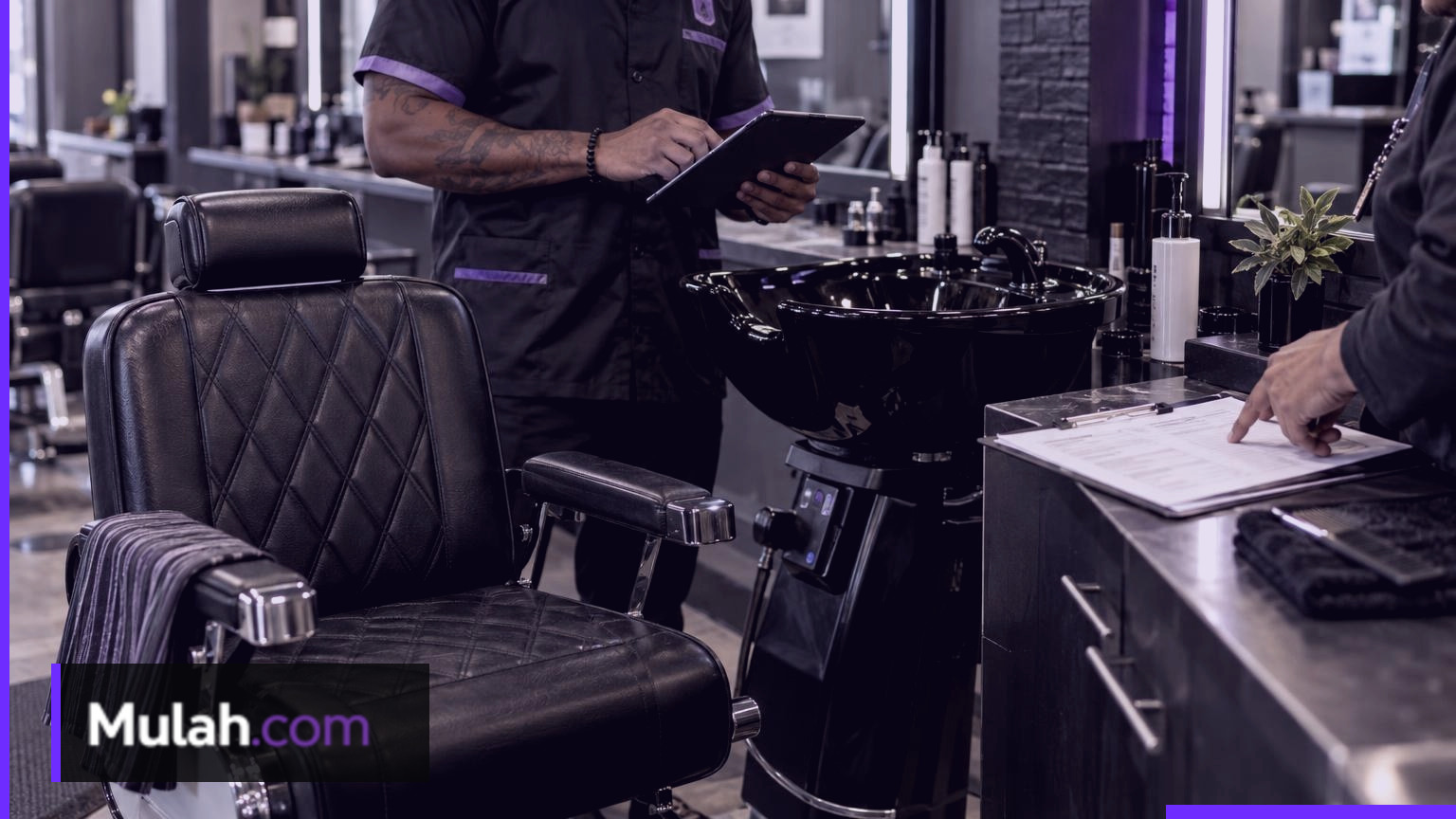
If you employ barbers, service revenue may flow through your business account while wages, payroll taxes, and other employment costs flow out. A lender needs to understand both sides. Gross card sales alone don't show what you can afford after the people doing the work have been paid.
If independent barbers rent stations, your business revenue may primarily be booth rent rather than the full value of every haircut performed inside the shop. Explain any centralized payment collection and transfers. Don't present money owed to another barber as cash your business can freely use to repay financing.
A mixed model takes more explanation, not less. Keep booth-rental receipts separate from employee-generated service sales and retail sales. Financing doesn't settle worker-classification questions. Have your accountant or employment adviser address those based on how the relationships actually work, rather than relying on the label in a rental agreement.
Your booking calendar shows demand. Your bank account shows when you can pay bills. Trace the difference before deciding how much financing you need.
A full calendar isn't collected revenue. Track cancellations, no-shows, discounts, and actual ticket amounts so your forecast doesn't treat every reserved slot as money in the bank.
Record cash sales consistently and match processor settlements to service dates. Explain differences caused by fees, refunds, tips, or settlement timing rather than leaving unexplained gaps.
Set aside payroll-related amounts and tips owed to staff. A high account balance can be misleading when part of it must soon be paid to someone else.
Put rent, insurance, utilities, debt payments, and software charges on one calendar. Several withdrawals in the same week can create pressure even during a profitable month.
Add financing payments after normal expenses and necessary reserves. If the plan only works when every chair stays occupied, the proposed amount is probably too aggressive.
A product name won't tell you whether the financing fits. Answer these questions before getting attached to an offer.
A renovation may produce benefits for years. A payroll gap should have a nearer-term explanation and recovery point. Term loan financing and working capital funding address different needs, even when both deliver a lump sum.
If expenses arrive in stages, borrowing everything immediately may add unnecessary cost. A business line of credit gives you a different way to manage draws, subject to its availability and repayment rules.
Monthly, weekly, and daily payments create different pressure. Put the proposed withdrawals beside payroll and rent. A payment that looks manageable as a monthly total may still create a shortage during a slow week.
Financing still has to be addressed if a new barber leaves or bookings grow slowly. Read default provisions, guarantees, liens, and early-payoff terms before signing. Don't treat projected new sales as assured repayment money.
Related Mulah resources include working capital funding, business lines of credit, equipment financing and leasing, term funding, SBA loans, revenue-based financing, startup funding, accounts receivable financing, and the business funding calculator.
The headline amount is only useful after you understand the cash received, payment burden, and contractual commitments.
Subtract withheld fees and any required payoff of current financing from the approved amount. The remaining cash must still cover your project. A larger headline offer can deliver less usable money than you expect.
Request a written payment schedule and all disclosed costs. Use the business funding calculator for planning, but rely on the actual agreement for charges and payment terms. Different pricing methods aren't interchangeable.
Ask how early payoff works, whether additional financing requires consent, and what property secures the agreement. A personal guarantee can expose you personally for business debt, even though this is business financing, not a personal loan.
The amount that looks attractive on an offer is not always the amount that makes sense to take. Tie the request to a real expense, a realistic payoff period, and the cash the business can still live on if a customer pays late or a strong month comes in softer than expected.

Mulah gives you a marketplace path to pursue business funding without treating every shop expense as the same kind of request. Prepare a clear amount, purpose, and timing, then explain your revenue model and what you already owe. That context makes the discussion more useful than simply asking for the largest available amount.
Use Mulah to understand potential options and the information needed to move forward. Any offer still deserves its own cost and contract assessment. Before proceeding, make sure the net proceeds cover your need and the payment fits a conservative forecast. Marketplace access doesn't guarantee an offer, approval, or particular terms.
Your next step is a focused request, not a bigger stack of optimistic projections. A short explanation backed by clean records gives the process a firmer starting point.
Write a line-item budget and separate essential expenses from optional upgrades. Include costs you'll pay yourself and any reserve you need to keep available.
Use ordinary weekly receipts and include what you already owe. Test weaker sales and a project delay before deciding what payment you can reasonably accept.
Use the Mulah application with accurate business information. Have supporting records ready, ask questions about any proposed terms, and don't sign until you understand the obligation.
Provide the business and financial information needed for a funding review.
Start with a shorter path when you want to discuss the business need before completing the full application.
Review official SBA information about federal small-business loan programs and lender participation.
Official guidance on financial management, cash flow, bookkeeping, and business planning.
Use the official source for current program, regulatory, or business guidance related to this topic.
Use the official source for current program, regulatory, or business guidance related to this topic.
Potentially. Providers assess factors such as revenue, operating history, credit, current debt, and the funding purpose. Being a licensed shop doesn't by itself establish financing eligibility.
Equipment financing or leasing is worth evaluating when the chairs qualify and the purchase is large enough to justify the transaction costs. Include freight and installation, and check ownership terms.
Some working capital products allow those expenses. Check the agreement's rules and explain how future receipts will cover both normal bills and the new payment.
Documented booth rental income may be considered. Keep rental agreements and payment records. Don't count an independent barber's service sales as your revenue simply because the services happen inside your shop.
Startup financing can be harder without operating history. Your experience, investment, credit, lease, equipment, and business plan may matter. Some products require established revenue and won't fit a pre-opening shop.
An eligible barbershop may qualify through a participating SBA lender. The lender evaluates the transaction and ability to repay. Program rules, required equity, documentation, and available uses depend on the loan.
Not necessarily. Some agreements purchase future receivables; others have different legal structures. Read how payments are calculated, what happens when sales fall, and whether reconciliation requires a request.
Possibly. Requirements vary by product and provider. A personal guarantee makes you personally responsible under its terms, so understand its scope before signing a business financing agreement.
Certain products can fund eligible improvements. Obtain contractor estimates, address landlord permissions, and budget for downtime. Check whether the financing covers construction costs as well as equipment.
Request the amount supported by your budget and cash flow. Include documented project costs and a reasonable contingency, then subtract cash you can contribute without draining necessary operating reserves.
They can be relevant when properly documented. Consistent sales records, deposits, bookkeeping, and tax reporting make cash revenue easier to assess than handwritten estimates unsupported by other records.
Potential options include term loans and eligible SBA financing. Expect scrutiny of the purchase agreement, seller financials, lease, business value, transition plan, and your investment in the deal.
Ask for a written payoff calculation first. Early payment doesn't always reduce the cost proportionally, particularly with fixed-fee structures. Check fees, discounts, and the cash you'll have left afterward.
Usually not when customers pay at the appointment. Invoice financing generally depends on eligible unpaid business invoices. Card settlements and future appointments aren't the same as outstanding commercial invoices.
Start with the need, the amount, and the timing. Mulah can help you review possible business funding options before you decide whether to move forward.
Call 877-816-8524