Operating history
Time in business shows how your shop performs through slower periods. If you recently bought an existing shop, distinguish its history from the history of your legal business.
A full appointment book doesn't always leave enough cash for a replacement lift, a large parts order, or Friday's payroll. If you're looking at small business loans for your Illinois auto repair shop, the first question is what the money needs to accomplish. The next is whether the payments still work when customers delay repairs or a productive bay goes down.

Auto Repair Shops Business Funding in Illinois covers several different decisions. You might need a replacement alignment rack, cash to carry an unusually expensive repair, or financing to take over another shop. Treating all three as the same borrowing problem can leave you with the wrong payment schedule.
Your revenue mix matters. A shop paid by retail customers at pickup has a different cash cycle from one that gives commercial fleets payment terms. Collision work adds its own considerations, including insurer payments and supplements. Separate those patterns before deciding how much to request.
Mulah is a business-funding marketplace. It gives you a place to pursue funding options and organize your request, but the useful work begins with your numbers: the cost of the project, cash you can contribute, and the payment your shop can actually carry.
Your location affects the budget through the expenses you actually pay, not through a generic statewide funding formula. Use your lease, utility bills, insurance renewals, and wage costs. A leased neighborhood shop and an owner-occupied multi-bay facility can require very different amounts of cash even at similar sales levels.
Use your own seasonal history, too. Winter weather can affect appointments, towing-related work, and staffing, but it doesn't create the same sales pattern for every Illinois shop. Pull monthly results rather than assuming a busy winter or summer will repeat. Note unusual closures or large fleet jobs that distorted prior periods.
Keep tax collections and business revenue distinct in your records. Illinois tax treatment can depend on what you sell and how a transaction is structured. Ask your accountant about your specific parts-and-labor billing practices. Money reserved for taxes shouldn't be treated as spare cash available for a financing payment.
When you shop for small business loans, include alternatives without assuming they work like conventional loans. The six structures below solve different problems. Pricing, guarantees, and eligibility depend on the provider and your business.
| Option | Often considered for | How to think about it |
|---|---|---|
| Term loans | A defined purchase, shop improvements, or another project with a known budget. | You receive a lump sum and repay it over a set term. Check payment frequency, interest or fee structure, and prepayment terms. See term loan options. |
| Working capital funding | A temporary operating cash gap with a credible repayment source. | Working capital describes the purpose, not one universal product. It may be funded through a loan or another structure. Check the agreement behind the working capital offer. |
| Business line of credit | Recurring parts purchases or uneven collections when you don't need the entire limit at once. | You draw available funds as needed, subject to the agreement. Interest, draw fees, maintenance fees, and renewal rules vary. Learn about a business line of credit. |
| Equipment financing or leasing | Lifts, alignment equipment, diagnostic systems, and other qualifying shop assets. | The equipment generally supports the financing. Loans and leases differ in ownership, buyout provisions, and end-of-term duties. Read about equipment financing and leasing. |
| SBA financing | Eligible acquisitions, improvements, equipment, or working capital when the program fits. | Participating lenders make loans backed in part by an SBA guarantee. Documentation and program rules apply. See SBA financing. |
| Revenue-based financing | A defined business need where the cost and collection schedule fit your cash flow. | Some agreements purchase future receivables rather than make a loan. Fixed withdrawals and reconciliation rights require close attention. Learn about revenue-based financing. |
Get a written quote that separates the equipment from delivery, installation, electrical work, and other site requirements. Ask which costs the financing will cover and which you must pay yourself. For used equipment, check condition, service support, and any restrictions the provider places on age or seller.
Estimate added gross profit rather than added sales alone. If an alignment machine lets you keep work you currently refer out, subtract technician time, supplies, maintenance, and software costs from the expected revenue. Then test the payment against a conservative number of completed jobs.
For a lease, read the end-of-term language before focusing on the periodic payment. Find out whether you return the equipment, renew, or buy it, and how the buyout is determined. For a loan, check the lien and insurance requirements. Have your accountant assess tax treatment rather than assuming a particular deduction.
Map the weeks between paying suppliers and receiving customer payments. Include payroll that falls inside that interval. That calculation gives you a more useful working-capital target than a round number based on annual sales. It also shows when you expect to pay a draw down.
Keep fleet invoices separated by age and customer. If one account is responsible for most outstanding receivables, a late payment can affect the whole shop. Accounts-receivable financing may fit qualifying business invoices, but eligibility, verification, fees, and responsibility for unpaid invoices vary. It generally isn't relevant to ordinary retail tickets paid at pickup.
If the line stays fully drawn month after month, investigate why. You may be carrying overdue receivables, underpricing labor, or financing a permanent expense with short-term credit. Borrowing more without correcting the cause can leave you with both the original shortage and another payment.
A shop acquisition or substantial renovation needs a complete sources-and-uses budget: where the money comes from and exactly where it goes. Include professional fees, deposits, equipment repairs, and operating cash after closing. For an acquisition, separate the value of real estate, equipment, and the business itself.
SBA financing can be worth considering for an eligible project, but the guarantee protects the lender in part, not you from repayment. Expect a close look at cash flow, management experience, your investment, and the transaction. Lender requirements and the applicable SBA program determine the details.
Before committing to a property or buildout, investigate zoning, occupancy, environmental questions, and site suitability with the appropriate professionals. Repair-related uses and a property's history can affect due diligence. Your financing timeline should account for those checks rather than assuming every delay is a funding issue.
There isn't one minimum credit score or revenue threshold for every product. Your file needs to explain how your shop earns cash and how the proposed payment fits.
Time in business shows how your shop performs through slower periods. If you recently bought an existing shop, distinguish its history from the history of your legal business.
Bank deposits, card settlements, and financial statements should tell a consistent story. Explain transfers, owner contributions, or loan proceeds that could otherwise look like customer revenue.
Strong sales don't guarantee room for debt. Providers may examine wages, parts costs, rent, taxes, and owner compensation to assess what you can afford.
Business and personal credit may matter, depending on the product. Be ready to explain recent delinquencies or overdrafts without assuming one issue automatically determines the outcome.
List loans, credit lines, leases, advances, and payment arrangements. Existing liens and frequent withdrawals can affect both eligibility and the cash available for another payment.
A vendor quote, acquisition agreement, or specific operating budget makes the request easier to assess. Explain who will do the work and what happens if expected sales arrive late.
Requirements vary, but gathering these records early reduces back-and-forth. Send sensitive documents only through the designated secure process.
Each use should have its own budget and a practical explanation of how you'll repay the funding.
Budget for removal, installation, and lost production during the changeover. Check whether repairing the existing lift is safe and economical before committing to replacement.
Tie the amount to actual repair orders and expected collections. Customer deposits or better supplier terms may reduce how much you need to finance.
Include subscriptions, updates, training, and technician time. A tool's purchase price can understate the continuing cost of offering the service.
Use invoice history to estimate the shortfall. Verify that the invoices are collectible rather than borrowing against disputed work or repeatedly late accounts without a plan.
Price concrete, electrical work, ventilation, and any required approvals. Sequence construction so the remaining bays can support expenses while work is underway.
Allow for recruiting, onboarding, and a realistic ramp-up in billed hours. Financing payroll makes more sense when demand already exists than when you're hoping a hire creates it.
These are decision examples, not customer stories or approval predictions.
Get a replacement quote and an installation date first. Equipment financing may suit the asset, but calculate how you'll cover work sent elsewhere while the bay is down. Don't size the request solely from the advertised equipment price.
More tickets increase parts and payroll spending before invoices are paid. A line of credit may fit if collections reliably clear the balance. Tighten billing and pursue overdue invoices at the same time; financing shouldn't replace collection work.
Estimate demand using jobs you've actually declined or outsourced. Include training and software in the budget. If technician availability is the constraint, buying another scanner alone won't produce the revenue needed for payments.
Gather financial statements, equipment lists, lease terms, and a proposed purchase agreement. An acquisition lender will need to evaluate the business and your ability to run it. Leave enough cash after closing for ordinary repairs and operating expenses.
Determine whether the shortage comes from timing or continuing losses. If sales no longer cover normal expenses, another short-term obligation may deepen the problem. Rework pricing, staffing, collections, and spending before treating debt as the answer.
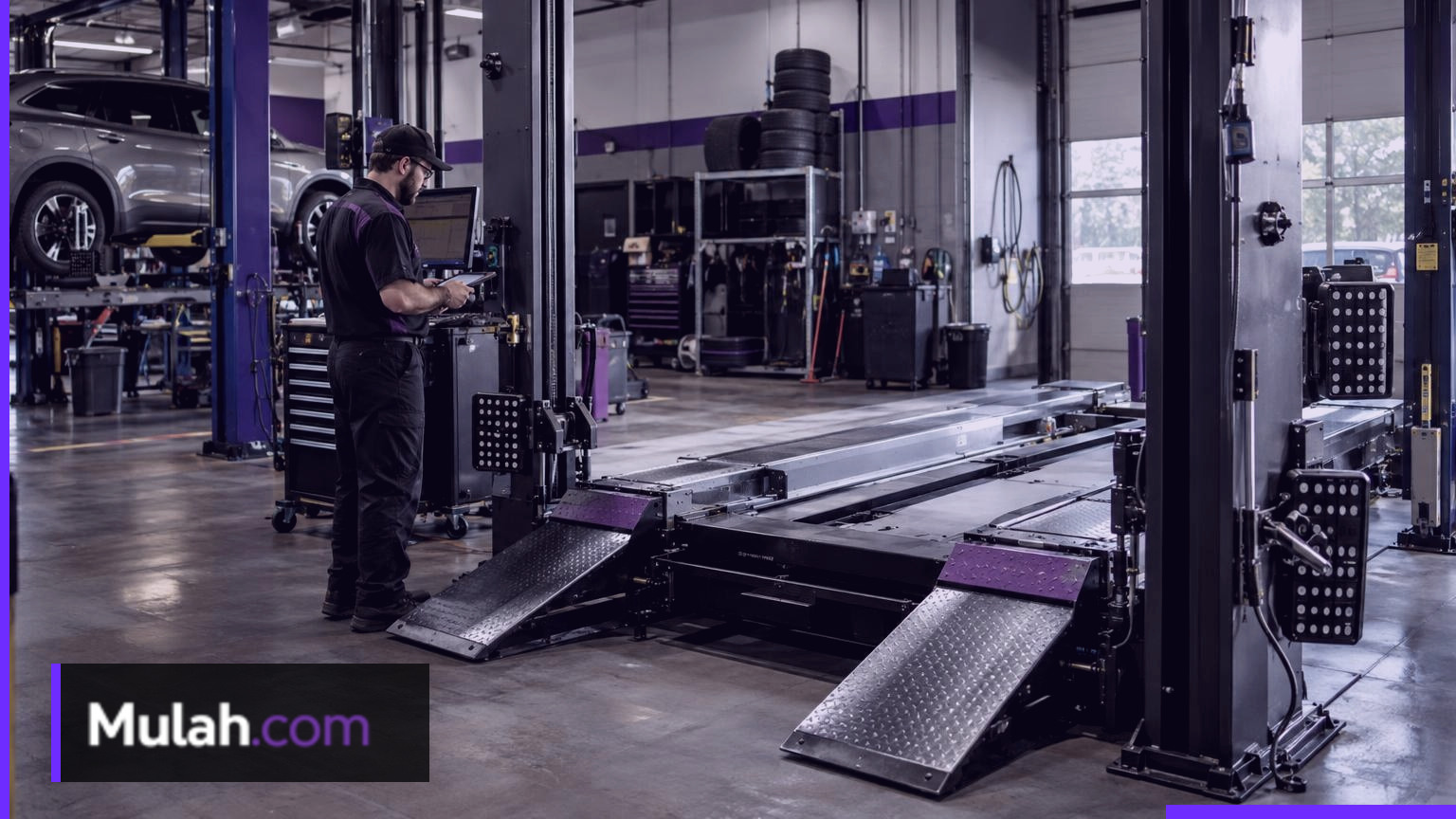
A new piece of equipment should produce value beyond the next few weeks. Financing it over a suitable term can preserve cash for daily expenses. Using very short-term funding for a long-lived asset can create a steep payment before the equipment has earned enough to support it.
Working capital is money for ordinary operating needs. It can cover parts, wages, and other expenses while you wait to collect sales. It isn't a lasting solution if your labor rate, billed hours, or parts margins consistently leave you short.
Some projects contain both needs. Adding an alignment service may require equipment financing plus cash for training and the first months of operating costs. Itemize those expenses separately so you don't assume an equipment agreement will cover everything.
The point where cash gets tied up often tells you which funding structure deserves a closer look.
Build your request around approved work rather than every estimate on the schedule. Financing parts for repairs that customers haven't authorized adds avoidable risk.
If you pay for parts before customers pay you, measure how many days that cash is unavailable. Credits for returned cores and unused parts also affect the balance.
An extra lift won't increase sales if you don't have a technician to use it. Allow for staffing, workflow, and service-advisor capacity before financing expansion.
Separate payment at pickup from invoices due later. A busy fleet account can increase reported sales while leaving less cash available for this week's bills.
Put the proposed payment on your actual cash calendar. A manageable monthly total can still cause trouble when daily withdrawals coincide with payroll and supplier payments.
Product names don't tell the whole story. These decisions narrow the search before you spend time on applications.
A parts gap lasting several weeks is different from a buildout that takes years to pay for itself. Match the financing term to the expense and its expected benefit.
A quoted equipment purchase has a defined price. Recurring parts purchases are less predictable. A revolving line can suit repeated needs better than taking a new lump sum each time.
Include rent, wages, and existing payments during installation or construction. Don't base affordability on a new bay generating revenue from the first day.
Urgent equipment failure may justify a different trade-off from an optional upgrade. If waiting preserves cash without disrupting service, you have more room to pursue a longer application process.
Related Mulah resources include working capital funding, business lines of credit, equipment financing and leasing, term funding, SBA loans, revenue-based financing, startup funding, accounts receivable financing, and the business funding calculator.
Two offers for the same amount can place very different demands on your shop.
Ask how much reaches your account after fees and what you must repay in total. A factor rate is a repayment multiplier, not an annual interest rate. Don't treat the two as interchangeable.
Put daily, weekly, or monthly payments beside payroll and supplier due dates. For receivables-based funding, understand how payments are calculated and whether an adjustment process applies when sales change.
Read personal guarantees, liens, default provisions, and limits on additional financing. Ask for the payoff calculation in writing. Paying early doesn't necessarily eliminate every remaining fee or financing charge.
The amount that looks attractive on an offer is not always the amount that makes sense to take. Tie the request to a real expense, a realistic payoff period, and the cash the business can still live on if a customer pays late or a strong month comes in softer than expected.
Mulah connects your search to a business-funding marketplace rather than asking you to treat every need as the same loan. Use the small-business funding guide to understand the broader choices, then build your request around the product and payment structure that suit your shop.
Before moving forward, use the business funding calculator to test payment assumptions against your budget. A calculator is a planning tool, not an offer. The actual agreement determines pricing, payment dates, guarantees, and any other conditions.
Your next step is to turn the need into a clear funding request. You don't need an elaborate presentation, but your amount, purpose, and financial records should agree.
Separate quoted expenses from estimates. Note your own cash contribution, the requested amount, and how you'll manage if the project takes longer or produces less revenue than expected.
Run a slower-month cash forecast that includes what you already owe. Keep a reasonable operating cushion instead of committing every available dollar to a new obligation.
Use the Mulah application to begin your request. Read any offer in full and ask about unclear terms before signing. An application doesn't guarantee approval or a particular funding timeline.
Provide the business and financial information needed for a funding review.
Start with a shorter path when you want to discuss the business need before completing the full application.
Review official SBA information about federal small-business loan programs and lender participation.
Official guidance on financial management, cash flow, bookkeeping, and business planning.
Use the official source for current program, regulatory, or business guidance related to this topic.
Use the official source for current program, regulatory, or business guidance related to this topic.
It depends on the expense and your cash cycle. Equipment financing may fit a lift, while a credit line may fit recurring parts purchases. A larger acquisition may call for term or SBA financing. Choose around the need, not just availability.
Many working-capital products allow ordinary business expenses, but the agreement controls what the money can be used for. Explain your intended use and check any restrictions before accepting.
Some providers finance used equipment. Age, condition, useful life, seller, and available documentation can affect eligibility. Get the specific equipment accepted before making a nonrefundable commitment.
Not necessarily. Many repair businesses operate in leased space. A provider may still need your lease, landlord consent for certain equipment, or evidence that you can remain at the location long enough.
A personal guarantee is common in small-business financing, though requirements vary. It can make you personally responsible if your business doesn't pay. Read its scope rather than assuming a business entity eliminates that obligation.
Startup financing is generally more dependent on your experience, credit, cash investment, and business plan because there is little operating history. Some products require established revenue. Don't assume an existing-shop funding option also accepts startups.
It provides context, but booked work isn't collected cash. Providers will still consider actual deposits, margins, expenses, and debt payments. An appointment book alone doesn't show whether you can afford financing.
Potentially. Qualifying business invoices may support accounts-receivable financing. The customer's credit, invoice age, disputes, and contract terms matter. Understand who collects payments and what happens if your customer doesn't pay.
Not always. Some products are purchases of future receivables. Read how collections work, how sales changes are handled, and what creates a default. The marketing label doesn't replace the contract.
Use documented costs and a cash forecast. Include necessary installation or project expenses, subtract cash you can safely contribute, and leave room for normal operations. The largest available offer isn't necessarily the right amount.
Possibly, depending on the product and provider. Check payoff balances, fees, liens, and the full cost of the replacement. A lower payment can come from a longer term and may increase total cost.
No. Your location doesn't create automatic eligibility. SBA programs have requirements, and participating lenders evaluate your business and proposed use. Consult current program guidance for the transaction you're considering.
Address the tax issue with your accountant or qualified adviser first. Delinquencies and tax liens can affect financing options. Don't assume borrowed money solves the underlying problem or that every product allows the intended use.
Ask for net proceeds, total repayment, payment frequency, fees, guarantees, and early-payoff terms. Speed doesn't make an unaffordable payment safer. Leave enough time to understand the agreement before committing.
Start with the need, the amount, and the timing. Mulah can help you review possible business funding options before you decide whether to move forward.
Call 877-816-8524