Operating History
Your time in business shows how much performance history is available. If you're newer, relevant trade experience and a grounded project plan become especially important.
Your next excavator, work truck, or lift should earn its place in the budget, not just fit the monthly payment. Residential construction equipment financing and leasing can spread an acquisition cost across future work, while small business loans can cover other business needs. Mulah helps you sort those needs before you commit cash that payroll, materials, and the next job may require.
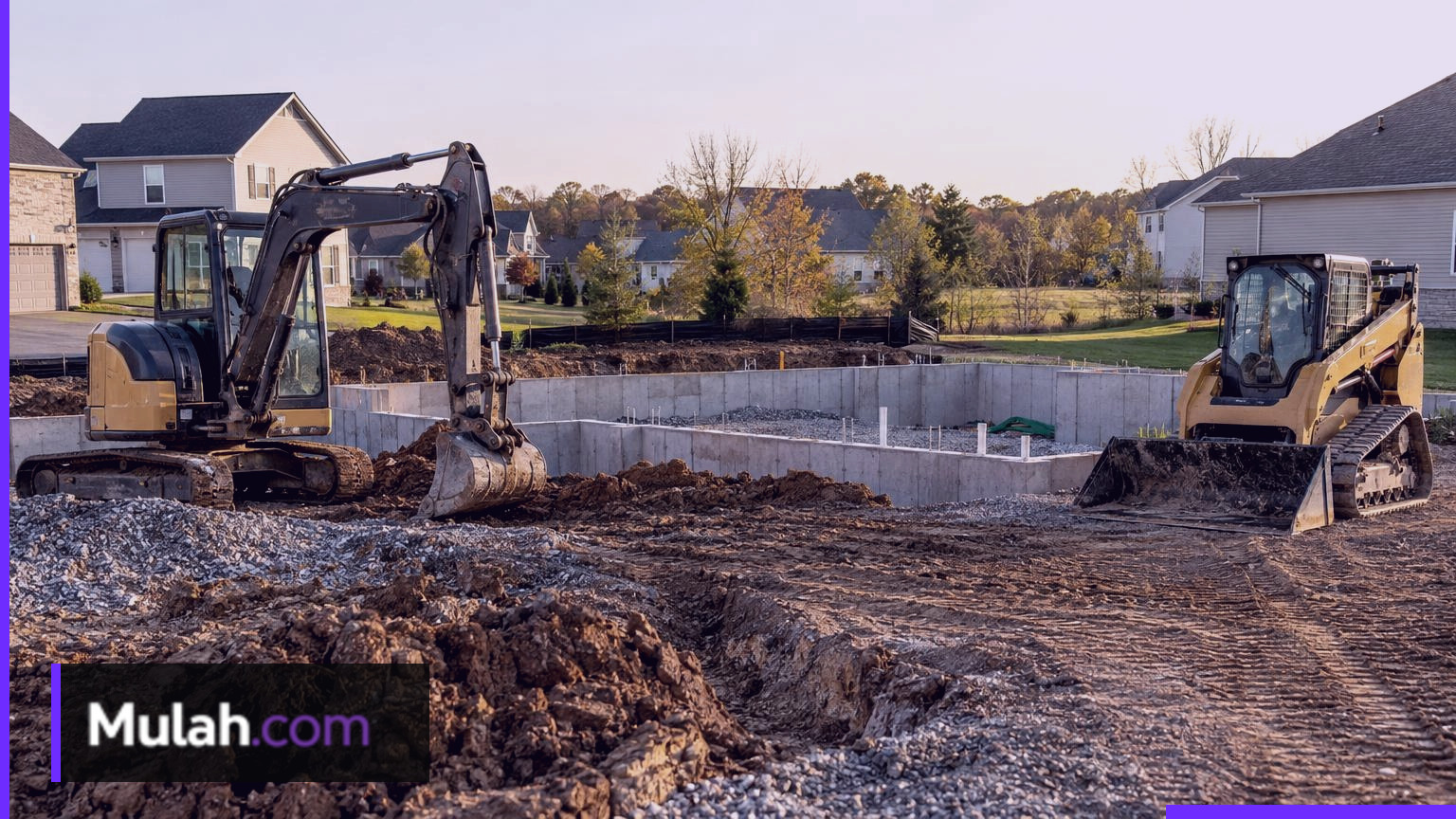
The strongest reason to acquire equipment is a recurring operating problem you can measure. Rental availability might be holding up foundation work. Your crew might lose hours waiting for material handling. Or subcontracting a familiar scope might cost more than doing it yourself with the right machine.
Put a number on that problem before choosing a funding amount. Use actual rental invoices, crew hours, transport charges, and subcontractor bills where possible. Equipment doesn't have to generate a separate invoice to be worthwhile, but its contribution should be more specific than making work easier.
Not every contractor needs the same fleet. An excavation business may keep a compact track loader busy across several developments. A remodeler may get more value from portable tools and an enclosed trailer. A general contractor should be especially careful about buying machinery that subcontractors already supply.
Sitework businesses often need compact excavators, skid steers, compact track loaders, trenchers, and grading attachments. Their value comes from repeat use across utilities, foundations, drainage, and cleanup. Underused attachments still carry acquisition, storage, and maintenance costs.
For framing, roofing, masonry, and other structural trades, material handling can be the bigger constraint. Telehandlers, lifts, forklifts, and trailers need to fit actual loads and site conditions. HVAC, electrical, plumbing, and finish contractors may instead need vehicles, generators, compressors, dust extraction, or installation equipment.
Residential sites add practical limits. Tight access, occupied homes, neighboring property, overhead obstructions, and changing ground conditions affect machine choice. Local climate and soil also influence productive days. Price the equipment for the sites you work on, not just the specifications that look attractive at the dealership.
Small business loans aren't interchangeable with leases, revolving credit, or revenue-based funding. Choose the structure around what the money buys and how your business will repay it. Product availability and terms vary by provider and business; this is a planning comparison, not a list of promised offers.
| Option | Often considered for | How to think about it |
|---|---|---|
| Term Loans | A defined business expense with benefits that extend beyond the next billing cycle. | An upfront amount repaid over an agreed period. Consider a [term loan](https://mulah.com/term-loan/) when the repayment schedule fits the useful life of the expense. |
| Working Capital | Payroll, mobilization, insurance, repairs, and gaps between completing work and collecting payment. | Business funding intended for operating needs. The agreement determines repayment timing and cost; don't assume it follows your customer draws. |
| Business Line Of Credit | Recurring short-term needs whose amounts and timing change from job to job. | A revolving facility lets you draw within an approved limit under its terms. A [business line of credit](https://mulah.com/business-line-of-credit/) requires attention to draw fees, repayment rules, and renewal conditions. |
| Equipment Financing Or Leasing | Identifiable machinery, vehicles, trailers, or eligible attachments used across multiple projects. | [Equipment financing and leasing](https://mulah.com/equipment-financing-and-leasing/) ties the agreement to specific assets. Ownership, liens, purchase options, and return obligations differ by contract. |
| SBA Loans | Eligible businesses seeking financing for equipment or broader business purposes and prepared for the required documentation. | [SBA financing](https://mulah.com/sba-loans-by-mulah/) is provided through participating lenders under program rules. An SBA guaranty supports the lender; it doesn't remove your repayment obligation. |
| Revenue-Based Financing | Businesses considering funding supported by revenue when the payment burden fits their collections. | [Revenue-based financing](https://mulah.com/revenue-based-financing/) can use structures different from conventional loans. Read how payments are calculated, whether adjustments are available, and the total contractual cost. |
New equipment may offer warranty coverage, current safety features, and more predictable early maintenance. Those benefits have value when a breakdown would stop multiple crews. They still need to justify the higher price against the work you expect.
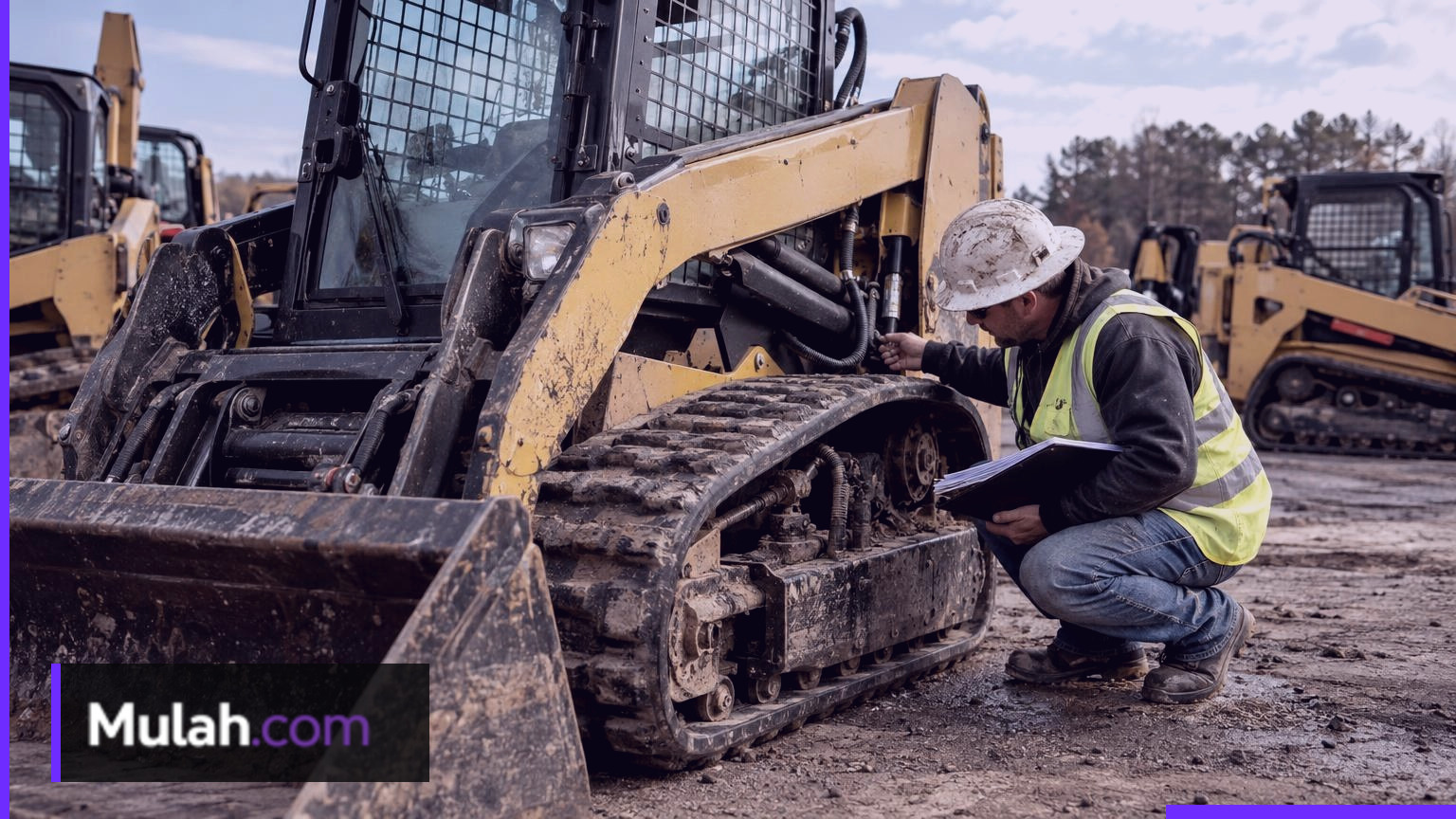
For used equipment, examine hours, maintenance history, inspection findings, attachments, and remaining useful life. The hour meter alone isn't enough. Check seller information, serial numbers, and title or lien status where applicable before committing a deposit.
Get a written quote that separates the base machine, taxes, freight, attachments, warranty, and other charges. For a private-party purchase, find out early what documentation the funding provider will accept. Don't assume a machine is financeable simply because the seller is ready to close.
A second loader won't solve a scheduling problem if both crews share one trailer or one qualified operator. Work through loading, transport, setup, fueling, and daily checks before assigning new production to the purchase.
Attachments belong in the original plan. Forks, buckets, augers, breakers, and grading systems need to suit the base machine and intended work. The wrong combination can leave an expensive asset unable to perform the scope you bought it for.
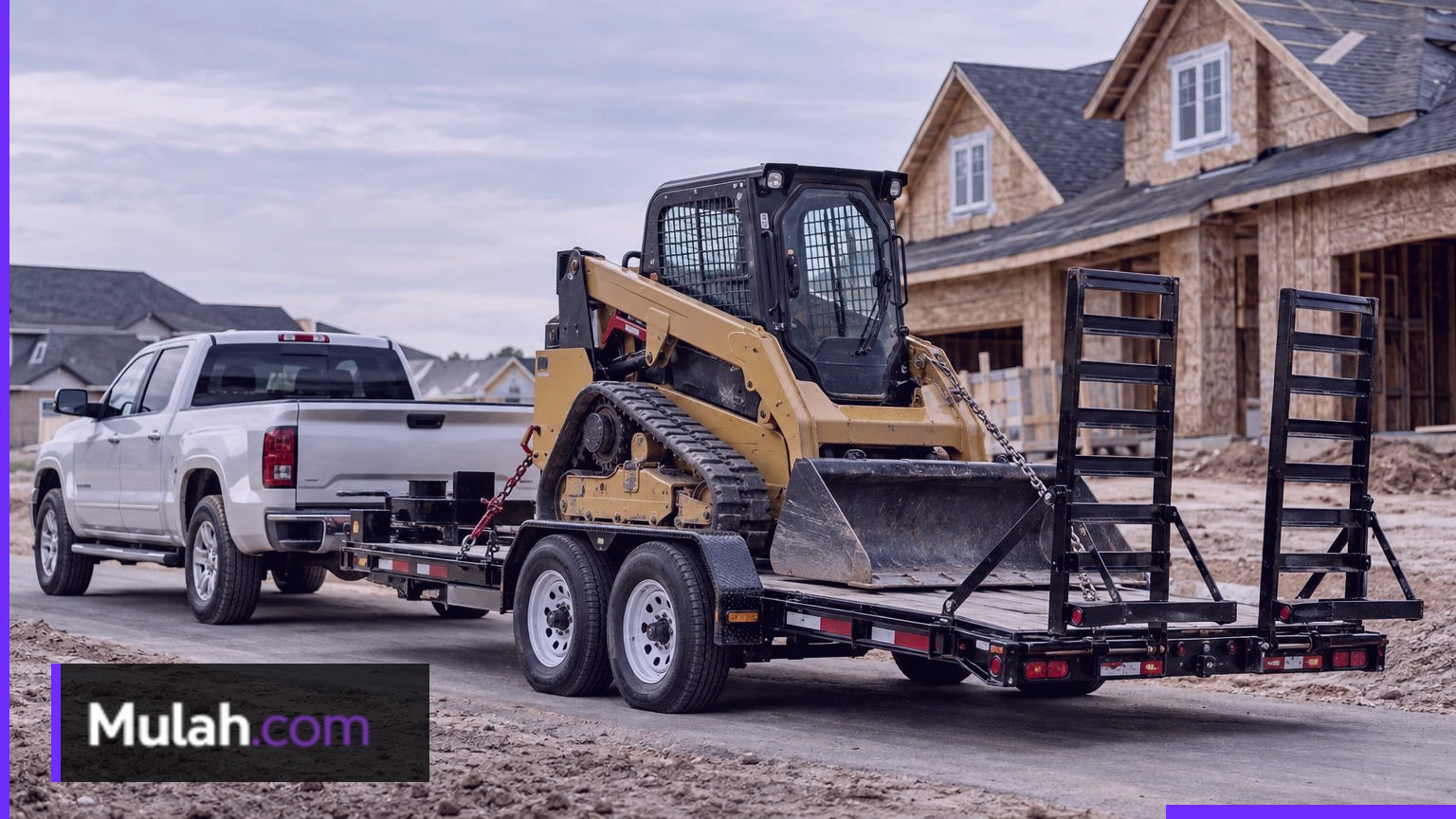
Check towing ratings, trailer capacity, driver requirements, tie-down procedures, and secure storage. Operator training and site safety are operating costs, not optional extras. OSHA's construction resources, linked below, provide an official starting point for applicable workplace safety guidance.
Request the amount financed, upfront charges, payment count, payment frequency, and total expected outlay. For a lease, include any purchase option or return expense. Find out who pays for maintenance, insurance, damage, and transportation at the end.
Read the collateral and personal-guarantee provisions. Check whether paying early reduces the cost, whether fees remain due, and what happens after a missed payment. Don't assume an equipment transaction affects only the machine being purchased.
Daily or weekly payments can strain a business paid through uneven progress draws. Use the [business funding calculator](https://mulah.com/business-funding-calculator/) for an initial estimate, then replace assumptions with the actual offer. Discuss accounting and tax treatment with qualified advisers before relying on a deduction or ownership classification.
No application guarantees approval, a particular amount, rate, or funding date. Requirements differ, but these six areas usually explain the central business questions without relying on a universal credit-score cutoff.
Your time in business shows how much performance history is available. If you're newer, relevant trade experience and a grounded project plan become especially important.
Show what your business earns and when customers actually pay. A signed contract and cash in the bank answer different questions.
Business and personal credit information may be considered. Be ready to explain material payment problems accurately rather than assuming they won't come up.
List loans, leases, credit lines, and other payment commitments. Include their payment frequency so the new obligation can be assessed alongside them.
Age, condition, useful life, price, and seller documentation affect the asset's acceptability. Used machines often require more supporting detail than new dealer inventory.
Account for any required deposit or down payment and the reserves left afterward. Using every available dollar at closing leaves little protection against delays.
Gather these before you submit. Exact requirements come from the provider, but an organized file reduces avoidable follow-up.
These expenses can arise around an equipment purchase. Listing them doesn't make every item eligible for the same financing agreement.
Include the machine, sales tax, dealer charges, freight, inspections, and initial registration where applicable. Obtain written amounts rather than leaving a broad allowance.
Budget for the attachments needed on the first jobs, along with suitable trailers and loading equipment. A base machine without them may not be ready to earn.
Allow for insurance deposits, theft prevention, secure storage, operator training, and initial maintenance supplies. These costs often arrive before the first productive hour.
Fuel, crew wages, site protection, temporary rentals, and delivery coordination can create an operating cash need separate from the asset purchase.
Major hydraulic work, engines, tires, tracks, and replacement attachments deserve their own estimate. Include substitute equipment when an active job cannot wait.
Adding a crew or buying another contractor can require inspections, lien resolution, insurance changes, repairs, and cash to keep inherited projects moving.
These are planning situations, not customer stories or promised outcomes. Use the one closest to your business to sharpen the request.
Total the rental charges, delivery fees, and documented delays over a representative period. Set them beside ownership costs and realistic annual use. Buying deserves consideration when repeat demand is durable, not just unusually strong this month.
Get a repair estimate and a realistic return-to-service date. Price temporary rental separately. Replacing the machine could solve a recurring reliability problem, but a rushed purchase can leave you paying for more capacity than the business needs.
Check whether equipment is truly the bottleneck. The new crew also needs an operator, transportation, supervision, and enough work. Borrowing for another machine won't fix missing labor or an unproven pipeline.
Bring evidence of relevant experience, owner investment, licenses, insurance, and credible work. The [startup funding guide](https://mulah.com/startup-business-loans/) covers considerations for newer businesses. Keep projections conservative and leave room for an uneven first operating cycle.
Don't turn a collection problem into an unnecessary equipment purchase. Eligible business receivables might support [accounts-receivable financing](https://mulah.com/accounts-receivable-financing/), although customer type, retainage, disputes, and contract terms matter. Otherwise, address the cash gap directly.
A dealer invoice gives you a purchase price. It doesn't tell you how much cash your business will need while the machine goes to work. You could owe a deposit, delivery charge, insurance premium, and payroll before the first related progress payment arrives.
Prepare two budgets: one for acquiring and deploying the asset, and another for keeping current jobs moving. Some acquisition costs can be included in an equipment agreement; others may need cash or separate funding. Itemizing them avoids borrowing an unexplained lump sum.
That distinction also protects your repayment plan. A machine expected to serve several years shouldn't be funded solely around one optimistic draw date. A short collection gap, meanwhile, shouldn't automatically become a long-term debt. The [working capital guide](https://mulah.com/working-capital-loans/) addresses those shorter operating needs.
Residential projects create several different cash demands. Map the equipment payment against the stages when you actually receive money.
Deposits, insurance, transport, and site preparation can consume cash before your crew starts billable work. Keep this opening expense separate from the machine's advertised price.
Fuel, payroll, and routine maintenance don't wait for a billing milestone. Your reserve needs to carry those costs while the equipment supports work that hasn't been paid for yet.
An inspection delay can push back the next phase and its payment. Test a financing payment against that interruption rather than assuming every draw arrives on its planned date.
A breakdown may require both a repair and a substitute machine. Budget for that overlap, particularly when one loader or excavator supports several crews.
Punch-list work, disputed changes, and retainage can leave money outstanding after major production ends. Don't count that balance as available cash until collection is reasonably supported.
Ownership isn't automatically the best outcome. The right choice turns on repeat demand, available cash, and who carries the equipment's long-term risk.
Financing toward ownership suits equipment you expect to use for years. Understand the down payment, security interest, payment schedule, and total cost. Check what must happen before the asset is yours free of the financing lien.
A lease can suit planned replacement cycles or a preference to preserve upfront cash. Read the return conditions, usage limits, fees, and purchase-option language. A low payment doesn't tell you what keeping the machine will ultimately cost.
Renting makes sense for a specialized attachment, an unfamiliar machine, or a short project. Include delivery and pickup charges. Repeated rentals deserve a fresh calculation, but they aren't proof that buying will be cheaper.
A cash purchase avoids financing charges, but the cash stops being available for your business. Judge any purchase discount against the payroll, material orders, and contingencies that same money would otherwise cover.
Related Mulah resources include working capital funding, business lines of credit, equipment financing and leasing, term funding, SBA loans, revenue-based financing, startup funding, accounts receivable financing, and the business funding calculator.
An affordable payment is necessary. It isn't enough.
Count confirmed work first, then treat probable jobs cautiously. Allow for travel, weather, inspections, maintenance, and operator availability. Your busiest stretch is a poor stand-in for a full year.
Add fuel, insurance, storage, transport, licensing, wear parts, servicing, and repairs. Track these separately from financing so you can see whether the equipment itself delivers the expected savings.
Reduce expected use and move a customer payment back several weeks. If payroll becomes difficult immediately, lower the purchase budget, contribute more cash only if reserves allow, or reconsider renting.
The amount that looks attractive on an offer is not always the amount that makes sense to take. Tie the request to a real expense, a realistic payoff period, and the cash the business can still live on if a customer pays late or a strong month comes in softer than expected.
Mulah helps you consider potential funding paths without treating a machine invoice and a payroll shortage as the same problem. Bring the quote, the work it will support, what you already owe, and a realistic view of your collections. That gives the conversation a useful starting point.
A marketplace and a bank work differently: a bank evaluates requests within its own products and policies, while Mulah can match supplied business information with potential products and providers. Neither route replaces careful reading of the terms. You can [check your funding options](https://mulah.com/get-fast-business-funding-from-mulah/) before completing the full application.
A useful application connects the equipment quote to how your business earns and collects money. These three steps make the request easier to assess.
State what you're buying, who is selling it, the quoted price, and when you need it. Explain the recurring cost or production constraint it addresses, using current jobs or rental history.
Supply accurate business details, recent financial records, and what you already owe. Separate the requested equipment amount from any operating cash you also need.
Look at payment frequency, total repayment, collateral, personal guarantees, prepayment terms, and any lease-end requirements. Use the [full application](https://mulah.com/application/) when your records are ready.
Provide the business and financial information needed for a funding review.
Start with a shorter path when you want to discuss the business need before completing the full application.
Review official SBA information about federal small-business loan programs and lender participation.
Official guidance on financial management, cash flow, bookkeeping, and business planning.
Use the official source for current program, regulatory, or business guidance related to this topic.
Use the official source for current program, regulatory, or business guidance related to this topic.
Potential assets include excavators, skid steers, compact track loaders, lifts, telehandlers, trailers, work vehicles, generators, and specialized trade equipment. Give the provider an itemized list. Vehicles, titled trailers, heavy machinery, and small tool packages aren't necessarily evaluated the same way.
Some providers consider private-party purchases. Get the seller's details, a written price, serial numbers, and available service records. Find out what inspection and lien documentation is required before you pay a nonrefundable deposit.
Leasing can fit a planned replacement cycle; financing toward ownership can suit equipment you'll keep productive for years. Judge both on total cost and what happens at the end, including buyout terms, return requirements, usage limits, and resale value.
Use an itemized acquisition budget, then subtract the cash contribution you can make without weakening reserves. Keep separate operating needs visible. The amount offered isn't necessarily the amount your business should accept.
Some agreements include eligible related acquisition costs; others cover less. Submit each charge separately so you know what will be financed and what you'll pay out of pocket. Don't assume training, setup, or insurance is included.
A down payment can be required based on the agreement, your business, and the asset. Get the exact amount and timing in writing. Include any deposit already paid, and calculate the cash you'll have left after closing.
Some providers consider newer businesses, though limited history can narrow choices or change terms. Your trade experience, owner investment, equipment choice, and realistic project pipeline matter. Avoid buying a full fleet before the workload supports it.
No. Backlog supports a demand forecast, but it doesn't show when you'll collect cash or what each job will cost. Build a cash forecast using billing milestones, expected expenses, and reasonable delays.
Use expected annual hours, actual rental prices, transport costs, maintenance, insurance, storage, and resale assumptions. Renting often fits uncertain or occasional work. Ownership needs repeat use or measurable scheduling benefits that justify its full cost.
Business funding may cover repairs even when asset-purchase financing isn't appropriate. Obtain a written repair estimate, assess the machine's remaining useful life, and account for temporary rental. Repeated major repairs can change the economics.
SBA programs can support eligible equipment purchases and certain broader business uses through participating lenders. Program rules, lender underwriting, and documentation still apply. Consult the official SBA 7(a) resource linked below for program information.
Equipment agreements commonly involve a security interest in the asset, but the contract may include other collateral or guarantees. Read the actual provisions and ask for a plain explanation of what property and personal obligations are involved.
Request a written payoff amount. Check whether early payment reduces charges, whether fees remain due, and how lien releases are handled. A remaining payment balance isn't always the same as the contractual payoff.
Gather your quote, recent bank and financial records, current debt payments, and a short explanation of intended use. Decide how much cash you need to preserve. Then submit accurate information and judge any available offer against your own conservative cash forecast.
Start with the need, the amount, and the timing. Mulah can help you review possible business funding options before you decide whether to move forward.
Call 877-816-8524