Operating History
Show how long you've been treating patients under the current ownership. A new location within an existing business needs different context from a newly formed practice.
A new treatment table might replace an unreliable one. A gait-training system might support an entirely new program. Either way, the payment has to fit alongside payroll, rent, and insurance collections. Mulah helps you consider physical therapy equipment financing and leasing alongside small business loans, with attention to the full project cost and what your clinic can realistically afford.
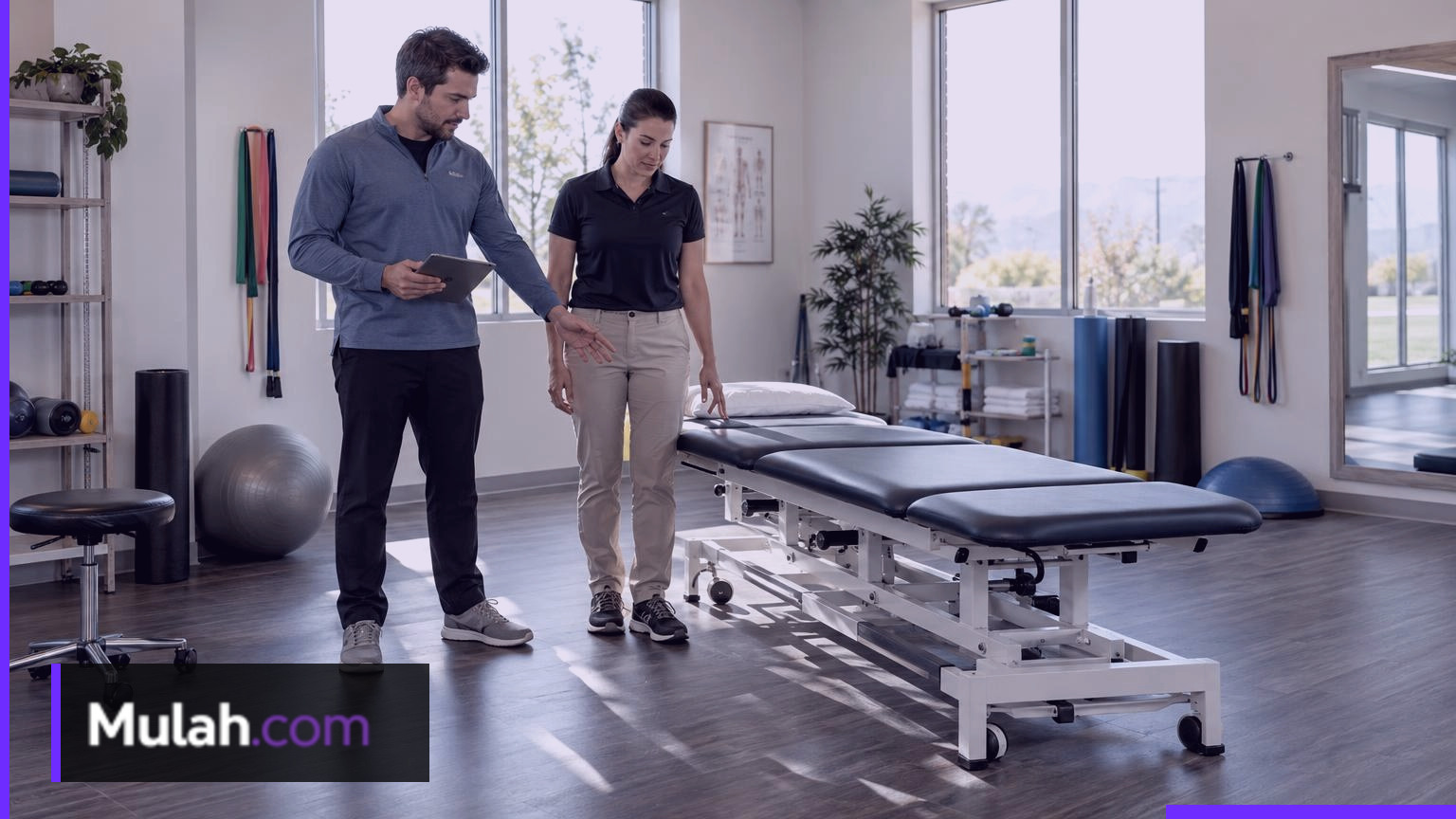
The first question isn't how much equipment you can finance. It's what the purchase changes for your business. Replacing a table that repeatedly takes a room out of service has a different business case from adding a testing platform that requires new referrals.
Write down the current problem, the equipment's expected working life, and the cost of continuing without it. Include repairs, interrupted appointments, staff workarounds, and any limits on patient access. A modest replacement can deserve priority over a more impressive device.
Mulah's equipment funding discussion begins with that business context. Eligibility, available products, costs, and terms vary by applicant and provider; an inquiry is not an approval or funding commitment. Your decision should rest on the actual agreement and a payment your cash flow can support.
A vendor's demonstration shows what a device can do. It doesn't show how often your patients need it or how much cash it will produce. Ground the forecast in your current patient mix, referral relationships, therapist availability, and treatment schedules. More capacity has little financial value if staffing is already the constraint.
Distinguish clinical improvement from additional billable revenue. A force plate might improve assessment and documentation without creating a separate reimbursable charge. A lift might reduce transfer difficulty and improve access. Those benefits matter, but they belong in the forecast as specific workflow or capacity improvements, not assumed new fees.
Use conservative, expected, and stronger-use cases. Include cancellations, authorization limits, maintenance, and delayed collections. For Medicare-related assumptions, consult the [CMS physician fee schedule resources](https://www.cms.gov/medicare/payment/fee-schedules/physician) and applicable coverage rules. A device's capabilities alone don't establish coverage or reimbursement.
When researching small business loans, you'll also encounter leases, credit lines, and revenue-based arrangements. These aren't interchangeable. Match the structure to what the money will pay for, how long you'll need it, and the cash available for repayment.
| Option | Often considered for | How to think about it |
|---|---|---|
| Term Funding or Term Loans | A defined expansion, renovation, or equipment package with a documented budget. | An agreed amount repaid on a set schedule. Examine interest or other financing charges, payment frequency, collateral, guarantees, and prepayment terms. |
| Working Capital | Payroll, rent, launch expenses, and a measured operating cushion during installation. | A funding purpose rather than one uniform product. [Working capital loans](https://mulah.com/working-capital-loans/) have repayment terms that must fit your collections, not just the project's opening date. |
| Business Line of Credit | Variable repair costs, smaller purchases, or recurring timing gaps with a credible repayment source. | Draws against an approved limit, subject to the agreement. Interest, draw charges, minimum payments, and renewal rules affect the cost of keeping credit available. |
| Equipment Financing or Leasing | Eligible rehabilitation equipment with a useful life and purchase or use plan you can explain. | Financing generally supports acquisition; leasing provides use under contract. Ownership rights, security interests, maintenance duties, and end-of-term costs require separate attention. |
| SBA Financing or SBA Loans | Qualifying equipment purchases or broader clinic projects when the program and lender requirements fit. | Participating lenders make loans supported by an SBA guarantee. [SBA financing](https://mulah.com/sba-loans-by-mulah/) involves eligibility rules, documentation, and lender underwriting; it isn't a grant or automatic approval. |
| Revenue-Based Financing | A defined business need where the collection structure remains affordable through slower periods. | [Revenue-based financing](https://mulah.com/revenue-based-financing/) can use a repayment or remittance arrangement tied to revenue. Read the actual contract for collection frequency, reconciliation rights, total cost, and guarantees. |
For treatment and mobility equipment, consider patient weight limits, transfer access, adjustability, and room circulation. Hi-low tables, parallel bars, standing frames, patient lifts, and gait-training systems occupy different amounts of working space. Floor plans should account for the clinician and patient, not just the equipment footprint.
Strength and assessment purchases need the same discipline. Cable systems, functional trainers, cardio machines, balance tools, dynamometers, force plates, and motion-analysis platforms should match your programs. Get clear pricing for software licenses, reporting tools, accessories, and service access before deciding that two quotes cover equivalent equipment.
Specialty systems raise additional questions. Therapy pools and underwater treadmills can require substantial site work. Vestibular, pelvic health, hand therapy, pediatric, and neurological programs have their own layout and training needs. For modalities such as electrical stimulation, ultrasound, traction, compression, or laser devices, verify appropriate clinical use, applicable requirements, staff competency, and maintenance support.
If you expect to keep a treatment table through many years of service, calculate the cost of owning it under each proposal. Include any purchase payment due after the scheduled lease payments. A lease with a purchase option and a lease intended for equipment return can produce very different economics.
For a technology-heavy platform, replacement flexibility may be valuable. But an upgrade is only available on the terms the contract provides. Find out who pays for removal, shipping, damage beyond allowed wear, and installation of the replacement. Check whether software and patient data remain accessible after the hardware leaves.
Maintenance deserves its own reading. A lease payment doesn't necessarily include repairs, calibration, consumables, or downtime support. Have your accountant address tax and accounting treatment before treating either structure as preferable. Don't let an assumed deduction justify a purchase that doesn't work on operating cash flow.
Use collected revenue rather than charges submitted. Subtract payroll, occupancy, supplies, taxes, current debt payments, and necessary owner distributions. Then allow for repairs and ordinary fluctuations. What's left is a more useful payment benchmark than a forecast built on perfect attendance and prompt reimbursement.
Run payment scenarios with the [business funding calculator](https://mulah.com/business-funding-calculator/), then reconcile the result to the proposed contract. A calculator is a planning tool, not an offer, and it may not capture every fee or payment structure. Daily or weekly collections require a different cash calendar from a monthly obligation.
Test a delayed installation, slower referrals, and a major repair elsewhere in the clinic. Decide how much cash you'll retain after the down payment and launch costs. If the project only works when every assumption goes right, reduce the purchase, stage the rollout, or wait.
There isn't one universal credit score or revenue threshold across these products. A useful request explains your clinic's finances and why the proposed purchase is manageable.
Show how long you've been treating patients under the current ownership. A new location within an existing business needs different context from a newly formed practice.
Explain monthly collections, payer mix, seasonality, and unusual deposits. Strong billed revenue doesn't carry the same weight as cash arriving consistently.
Business and owner credit can affect available terms. Be ready to explain recent issues accurately rather than assuming one number determines every outcome.
List loans, leases, credit lines, and other funding arrangements. The new payment has to fit alongside what you already owe.
Provide the vendor, model, age, condition, and price. Understand any equipment lien, broader collateral requirement, or personal guarantee before proceeding.
For a new clinic or service line, owner experience, cash contribution, opening costs, and supported projections become especially important. Explain the source of early operating cash.
Requirements differ by product, but these records make the request easier to evaluate. Keep estimates clearly labeled and explain gaps instead of filling them with optimistic assumptions.
Not every expense fits inside an equipment transaction. Separating the categories makes it easier to see whether you need one funding structure or more than one.
New or eligible used equipment, necessary accessories, and replacement of unreliable assets. Account for any unpaid balance on equipment you're trading in.
Freight, rigging, assembly, calibration, and acceptance testing. Specialized equipment can cost substantially more to place in service than to ship to the building.
Treatment rooms, flooring, electrical circuits, plumbing, accessibility work, and storage. Resolve landlord responsibilities and required permissions before borrowing for the work.
Computers, secure networking, telehealth stations, practice-management hardware, software implementation, and data migration. Separate recurring subscriptions from one-time costs.
Vendor instruction, clinician training time, documentation setup, and measured outreach to referral sources. Avoid assuming a new service will arrive fully booked.
Payroll, rent, supplies, laundry needs, temporary equipment, and major repairs. These costs need a funding source even when they aren't eligible under the equipment agreement.
These are planning situations, not customer results. Each calls for a different test before you take on a payment.
Rank failures by their effect on appointments and safety. A staged replacement could preserve cash, while a single purchase might simplify installation. Weigh both against repair costs and the disruption of repeated deliveries.
Keep the buildout budget separate from the opening reserve. Include credentialing and referral development in the timing plan so the new site's payment doesn't rely on immediate full utilization.
Connect the equipment to actual clinician schedules and referral demand. Clarify how testing fits within your services and collections before counting projected testing revenue toward the payment.
Inventory usable equipment before replacing everything. Prioritize inconsistent or unreliable assets, check existing liens and leases, and distinguish essential upgrades from cosmetic preferences.
Portability, battery life, sanitation, storage, and connectivity may matter more than maximum features. Check insurance and equipment-use restrictions for transport and off-site care before signing.

A clinic can be busy and still run short of cash. Payroll arrives on schedule; payer reimbursements don't always do the same. Using operating cash for equipment can turn an ordinary reimbursement delay into a scramble to cover rent.
But a long equipment loan isn't a cure for recurring losses or unresolved billing problems. Separate a temporary gap in collections from a persistent shortfall between revenue and expenses. Otherwise, the purchase adds another payment without addressing the reason cash is tight.
For eligible business receivables, [accounts-receivable financing](https://mulah.com/accounts-receivable-financing/) is a separate conversation from equipment funding. Healthcare receivables require particular attention to payer contracts, assignment restrictions, patient information, collection controls, and fees. Don't assume an outstanding insurance claim is eligible collateral.
Delivery is one milestone, not the finish line. Build your schedule and cash needs around the work that must happen before patients can use the equipment.
Get an itemized quote, including accessories and freight. Price the room changes separately so a low equipment quote doesn't conceal an expensive installation.
Check door clearances, floor loading, power, plumbing, and landlord approvals. A delivery delay is costly when contractors and clinicians have already reserved time.
Document damage, missing parts, calibration, and successful setup. Understand what signing an acceptance certificate means for payment and your ability to resolve vendor problems.
Training pulls clinicians away from appointments. Budget that time and decide who will handle scheduling, documentation templates, cleaning procedures, and routine troubleshooting.
Measure utilization, downtime, supplies, and collections. If referrals build slowly, adjust the operating plan early rather than assuming next month's volume will close the gap.
Ownership, replacement plans, and the size of the surrounding project matter more than the name on the financing product.
A durable treatment table or strength system can remain useful for years. [Equipment financing and leasing](https://mulah.com/equipment-financing-and-leasing/) deserves a close look when you have a defined purchase and a clear service plan. For financing, examine the down payment, lien, repayment schedule, and conditions for releasing the lender's interest after payoff.
A lease gives you contractual use of equipment, but it doesn't automatically give you inexpensive upgrades. Read the purchase option, renewal notice deadline, return conditions, and early-termination terms. A lower payment can come with a substantial buyout or a return obligation that disrupts patient care.
A second location involves more than machines. A [term loan](https://mulah.com/term-loan/) may suit a defined buildout budget with a planned repayment period. Keep the equipment, construction, and operating portions visible so you don't overlook costs that a particular product won't cover.
A [business line of credit](https://mulah.com/business-line-of-credit/) is worth considering for intermittent repairs, supplies, or timing gaps. It isn't permanent cash. Understand draw fees, interest, repayment requirements, and renewal conditions before relying on unused availability as your only reserve.
Related Mulah resources include working capital funding, business lines of credit, equipment financing and leasing, term funding, SBA loans, revenue-based financing, startup funding, accounts receivable financing, and the business funding calculator.
An affordable-looking payment can still be the wrong obligation. Give these questions as much attention as the quoted rate.
Use a realistic service life, including heavy daily use and software support. Avoid paying for obsolete equipment long after it has stopped contributing to care.
Add the deposit, scheduled payments, fees, required insurance, and any buyout. Separate financing costs from maintenance and subscriptions so competing proposals are easier to understand.
Read the rules for early payoff, relocation, sale, return, and termination. A clinic closure or service-line change doesn't necessarily end a financing or lease obligation.
The amount that looks attractive on an offer is not always the amount that makes sense to take. Tie the request to a real expense, a realistic payoff period, and the cash the business can still live on if a customer pays late or a strong month comes in softer than expected.

Mulah gives you a place to describe the equipment purchase alongside installation and operating needs. That matters when a vendor invoice represents only part of the cash required. Explain what must happen now, what could wait, and how much cash you want to keep in the business.
Use the short funding-options form if you're still shaping the request, or the full application when your records are ready. Before accepting any offer, resolve questions about cost, payment timing, guarantees, and ownership. The goal is equipment you can use effectively without leaving the rest of the clinic short.
Have a quote and a rough budget? [Check your funding options](https://mulah.com/get-fast-business-funding-from-mulah/) to describe the purchase, or use the [full application](https://mulah.com/application/) when your business information is ready. You don't need a polished presentation, but the numbers should tell a consistent story.
Explain what you're replacing or adding, which clinicians will use it, and when it needs to be operational. Separate essential equipment from items you could postpone.
Provide vendor quotes, estimated installation costs, and the operating cash you need through launch. Explain what you'll contribute and what you already owe.
Read the payment schedule, total cost, collateral, guarantees, default provisions, and end-of-term obligations. Coordinate funding conditions with the vendor before committing to delivery.
Provide the business and financial information needed for a funding review.
Start with a shorter path when you want to discuss the business need before completing the full application.
Review official SBA information about federal small-business loan programs and lender participation.
Official guidance on financial management, cash flow, bookkeeping, and business planning.
Use the official source for current program, regulatory, or business guidance related to this topic.
Use the official source for current program, regulatory, or business guidance related to this topic.
Eligible purchases can include treatment tables, exercise systems, gait-training tools, assessment technology, therapeutic modalities, and clinic hardware. Accessories and installation costs aren't automatically included. Get a written breakdown of covered expenses before committing to the vendor.
No. Financing generally supports acquiring equipment, often with the asset securing repayment. Leasing provides use under a contract. Your ownership rights, maintenance responsibilities, and choices at the end come from the agreement, not the product's marketing label.
For a durable table you expect to keep, ownership deserves serious consideration. Calculate the full financing cost against the lease payments and any purchase option. Include service coverage and the cash you'd retain under each choice.
A startup can be considered, but it won't have the same operating record as an existing clinic. Owner experience, credit, cash contribution, vendor quotes, and supported projections become important. Budget for the opening period, not just the equipment delivery.
Some programs consider it. Age, condition, remaining useful life, vendor, and valuation matter. Obtain service records, inspection information, and warranty details. A cheaper device isn't a bargain if repairs or unavailable parts keep it out of service.
Some structures accommodate documented installation or project costs; others focus on the equipment itself. Separate freight, construction, permits, calibration, and training in your budget. Any excluded expenses still need a payment source.
Not necessarily. Coverage and payment follow applicable payer rules and the services provided, not simply the device used. Build the financial case around supported collections and measurable operating benefits rather than assumed new billing opportunities.
A qualifying clinic can consider SBA-backed financing for eligible business purposes, including certain equipment and broader projects. Program rules and lender underwriting apply. The SBA's official 7(a) guidance explains eligible uses and general requirements.
Reconcile the request to the equipment quote, installed costs, and a justified operating reserve, then subtract your planned cash contribution. Don't borrow solely because a larger amount is offered. Test the resulting payment against a slower month.
Either can be required. Equipment financing commonly involves a security interest in the asset, and some agreements reach additional business assets. Read the collateral and guarantee provisions to understand what you and your business are committing.
Read the payoff provisions before signing. Paying early doesn't always eliminate all remaining charges, and ending a lease early isn't necessarily equivalent to paying off a loan. Request a clear explanation of how a payoff would be calculated.
The contract controls. You might return the equipment, renew, or exercise a purchase option. Calendar notice deadlines and budget for shipping, removal, condition requirements, or a buyout so the end date doesn't interrupt treatment.
Gather vendor quotes, bank statements, financial statements or tax returns, ownership details, and a list of current debt payments. Add a project budget explaining installation and operating needs. New clinics should also prepare realistic opening projections.
No. An application allows a funding review; it doesn't guarantee approval, an amount, a rate, or a closing date. Wait for the written terms and funding conditions before making commitments that require financing to close.
Start with the need, the amount, and the timing. Mulah can help you review possible business funding options before you decide whether to move forward.
Call 877-816-8524