Business Cash Flow
Recent deposits and expenses show how your business would carry another payment. Explain seasonal swings, unusual withdrawals or a temporary interruption instead of leaving the numbers without context.
A faster inserter won't solve a mailroom problem if the folder can't keep up or postage drains your operating cash. Mail equipment financing and leasing should fit the whole job, from installation to steady production. If you're considering small business loans alongside equipment-specific options, Mulah helps you frame the request around what your business needs and what it can afford.
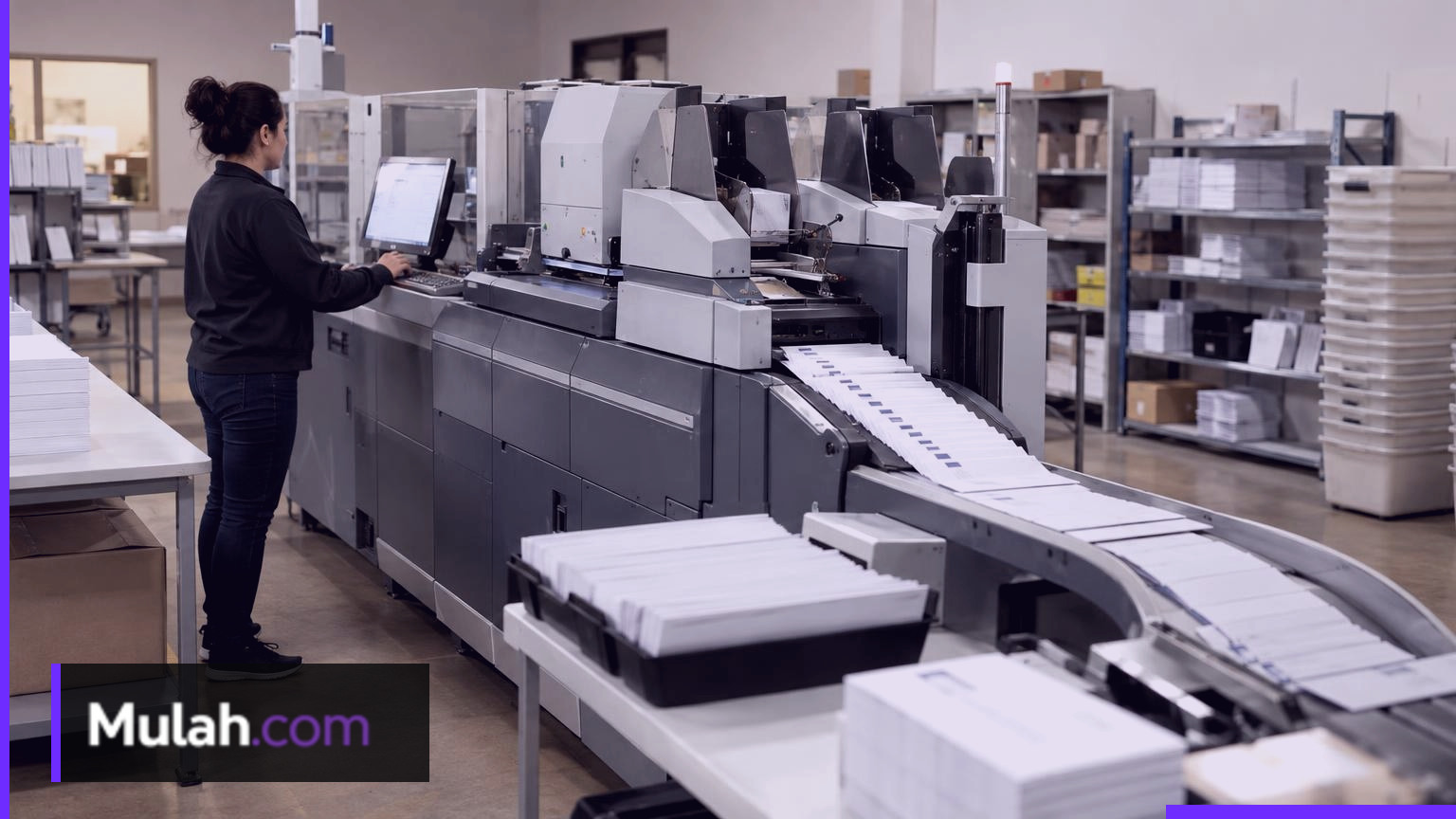
The strongest reason to finance equipment is a measurable operating need. Your staff may be hand-stuffing statements after hours, a worn sealer may be causing rework, or parcel orders may be missing the carrier pickup. Those problems have costs. Put them on paper before deciding how much machine to buy.
A new customer contract can justify added capacity, but only if the work leaves enough margin after labor, supplies, service and financing payments. An occasional mailing spike may call for temporary outsourcing instead. Don't commit to a long payment schedule solely to avoid a few difficult production days.
Replacement has a different calculation. If a dependable machine is becoming expensive to maintain, weigh the remaining repair exposure against replacement cost and disruption. A planned change gives you time to arrange testing and training without making a purchase under pressure.
Mailrooms serve very different businesses. A law office handling certified correspondence doesn't need the same line as a print-and-mail provider producing personalized statements. Healthcare groups, nonprofits and property managers also have different deadlines, records and job sizes. Your equipment list should follow the work rather than a standard package.
Look upstream and downstream from the proposed purchase. A high-speed inserter still waits for printed documents, properly folded stock and accurate files. A faster label printer won't clear a parcel backlog if packing benches are full. Sometimes modest spending on staging, scanners or an additional workstation removes the constraint.
Capacity also includes reliability. A second, smaller machine can provide backup for critical dates while handling short runs that interrupt the main line. That approach deserves consideration alongside a single larger system, especially when changeovers consume much of the day.
Small business loans are one part of the funding discussion, not a label for every available structure. Use the expense, repayment schedule and ownership terms to narrow the field. A bank relationship may be worth pursuing when its process and requirements fit your timetable.
| Option | Often considered for | How to think about it |
|---|---|---|
| Term Funding or Term Loans | A defined upgrade with costs that extend beyond one machine. | A lump sum repaid over an agreed schedule. Payment frequency, fees, security and early-payoff treatment deserve attention. See term loan options. |
| Working Capital | Payroll, postage, materials and other transition expenses. | Funding for operating needs rather than just the asset. Calculate the cash gap and how it will close; avoid using a short repayment period for benefits that arrive much later. |
| Business Line of Credit | Recurring but uneven supply purchases, repairs and short cash gaps. | An approved borrowing limit with draws under the agreement's terms. Check draw costs, repayment requirements and conditions affecting continued access. |
| Equipment Financing or Leasing | An identifiable machine or integrated equipment package. | Funding linked to specified equipment. Ownership, collateral, deposits and end-of-term choices vary by agreement; the lease label alone doesn't explain the economics. |
| SBA Financing | Eligible businesses planning a larger investment with time for documentation. | Participating lenders provide SBA-backed loans under program rules. SBA financing can be relevant to equipment and eligible working-capital needs, but requires lender underwriting. |
| Revenue-Based Financing | Businesses evaluating repayment tied to revenue under the offered agreement. | Some arrangements use a revenue percentage; others collect scheduled payments with adjustment provisions. Examine the actual collection terms and total cost. See revenue-based financing. |
If you expect to keep an inserter for years, ownership economics deserve more weight than the smallest initial payment. Add deposits, fees, service charges and any final purchase amount. For a lease, calculate the cost of returning the machine as well as keeping it.
End-of-term language can create avoidable expense. Note the notice window, automatic-renewal provisions, return location and required condition. Find out who pays for packing, removal and freight. An upgrade offer isn't necessarily a release from the old agreement.
Service bundled into a payment can be convenient, but get an itemized description. Labor, travel, parts and preventive maintenance aren't always covered on the same basis. Have your accountant assess accounting and tax treatment from the actual agreement, not a vendor's general description.
For a used system, obtain the serial number, age, production history and maintenance records where available. Inspect wear points and test representative jobs. A demonstration with easy materials won't tell you how the machine handles your thicker inserts or difficult envelopes.
Software can change the economics quickly. Check transfer rights, activation costs, supported operating systems and access to required updates. Proprietary controllers or unavailable parts can turn an inexpensive machine into a stranded purchase.
Service coverage is local in a practical sense: someone must reach your facility with the right parts. Get response expectations in writing and understand what happens when repairs take longer. For critical mail dates, retain a backup processing plan rather than treating a service promise as guaranteed uptime.
Personalized mail may require barcode matching, camera verification, exception handling and retained production records. Define those needs before selecting the configuration. An integrity module added later can require new software, hardware and workflow changes.
Address quality, media specifications and mail preparation affect processing and postage. Use the USPS Postal Explorer for official mailing standards, then have the vendor demonstrate the relevant job requirements. A machine's feature list isn't proof that your finished pieces qualify for a particular mailing treatment.
Connected systems also handle customer information. Involve IT in access controls, secure file transfer, backups and data removal at lease return or disposal. Include required computers, network work and software in the project budget rather than treating them as incidental office costs.
Your request needs to make sense both as an equipment purchase and as a payment obligation. These are the areas to prepare; there isn't a single score or revenue threshold that applies across every product.
Recent deposits and expenses show how your business would carry another payment. Explain seasonal swings, unusual withdrawals or a temporary interruption instead of leaving the numbers without context.
Operating history gives reviewers evidence of demand and cash management. If you're opening a new mail service, projected volume isn't the same as completed, paid work.
Business and owner credit can affect available terms. Be ready to explain material credit issues and understand any personal guarantee before accepting an offer.
Include loans, leases and other funding payments. Existing liens or restrictions can affect how a new purchase is financed and how much additional payment your business can afford.
The machine's condition, useful life, price and service support matter. A detailed vendor quote is stronger than a general request for mailroom equipment.
Tie the amount to a replacement, contract or documented workload. Explain when the equipment must be installed and when you expect the financial benefit to begin.
A clean file reduces back-and-forth. Keep the equipment agreement separate from your funding paperwork so you can see what each party is promising.
Itemize the full project first. Then determine which costs fit the available equipment structure and which belong in a separate operating budget.
Mailing systems, parcel scales, weighing modules and department accounting tools. Distinguish purchased hardware from rented meters, postage balances and subscription charges.
Folders, cutters, collators, inserters, sealers and output conveyors. Include feeders and control modules needed for the actual paper sizes and insert counts you process.
Address printers, labelers, tabbers, scanners and barcode controls. Data preparation and software integration belong in the estimate when the equipment relies on them.
Thermal printers, dimensioners, scales, packing benches and returns stations. Account for connections to order-management systems and the space needed for parcels awaiting pickup.
Delivery, rigging, electrical work, network access, workstations, carts and staging racks. Small supporting items can determine whether the main equipment reaches useful output.
Training, testing, temporary labor, maintenance deposits, supplies and postage. Keep these amounts visible so the purchase doesn't leave your business short of cash during ramp-up.
These are planning situations, not customer results. Each points to a different question to settle before choosing equipment or funding.
Price immediate repairs and backup processing alongside replacement. If a purchase is justified, preserve enough cash to keep statements moving while delivery and testing take place. The production deadline matters, but it shouldn't replace contract diligence.
Use the customer's job specifications and expected payment timing in your forecast. Capacity is only part of the requirement; materials, labor and postage may need to be paid before your customer pays you.
Consider outsourcing or rented capacity before committing to a long-lived machine. Owning peak capacity makes more sense when you can put it to work throughout the rest of the year.
Observe where orders wait. Added scanners and packing space may do more than a faster printer. Include system integration so labels, tracking numbers and order records remain connected.
Budget for transport, department accounting, staffing and carrier arrangements, not just centralized equipment. Keep a fallback plan while locations change their routines and the central team takes on unfamiliar work.
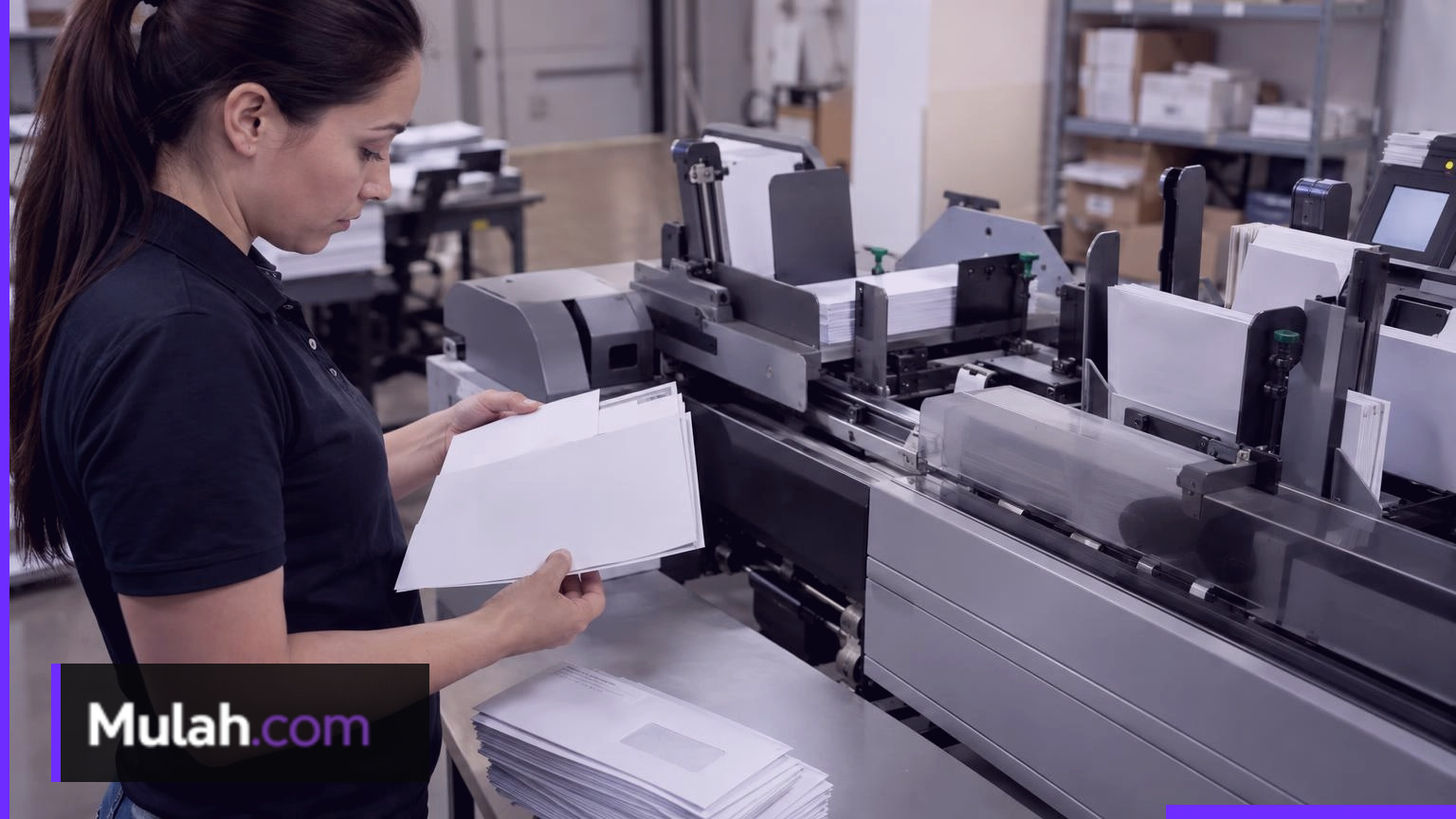
A quote for an inserter or addressing line often leaves work for someone else. Delivery access, electrical service, network connections, software integration and operator training can add real expense. Assign responsibility for each item so installation doesn't stall over something neither vendor included.
Keep recurring costs in a separate column. Postage deposits, envelopes, labels, ink, maintenance and payroll continue after the equipment arrives. Your business needs enough cash to carry those expenses while operators learn the system and production settles into a routine.
Also distinguish the equipment you can purchase from components supplied under rental or license agreements. Postage meters commonly involve rental arrangements, and connected software may require ongoing subscriptions. Don't assume every item in a mailing-system proposal becomes an asset you own.
The payment schedule and installation date should work with your mailing cycle. A machine that arrives during the busiest week can create more disruption than capacity.
Record a representative week of completed pieces, operator hours, stoppages and rework. Include campaign peaks. These records give you a defensible starting point for the purchase decision.
Budget for access, power, network work and space for incoming materials and finished mail. Check that equipment can reach the room through available doors, elevators and loading areas.
Arrange backup processing or temporary labor for time-sensitive statements and notices. An overlap period may cost money, but losing an entire production day can cost more.
Training, material adjustments and data cleanup take time. Don't budget as though the new line will deliver its full expected output immediately after installation.
Measure completed work, overtime, service calls and missed cutoffs against your baseline. Use the results to improve scheduling and decide whether the next bottleneck warrants another investment.
Match the funding to the expense and how long it benefits your business. A durable machine and next month's postage balance don't necessarily belong in the same financing arrangement.
A defined machine or coordinated package is a natural starting point for equipment financing and leasing. The agreement should spell out ownership, security interests and any purchase or return obligations. Service coverage requires its own attention, even when it appears on the same proposal.
Installation can strain cash before the equipment produces a benefit. Working capital can address eligible operating costs such as payroll, production materials or postage around the transition. Size this portion from a cash-flow forecast rather than adding an arbitrary cushion.
Uneven spending on supplies, repairs or temporary labor may suit a business line of credit. Borrowing repeatedly to cover an unprofitable mailing contract is different. A credit line bridges timing gaps; it doesn't repair weak margins.
A project involving several locations or substantial facility work may warrant a broader request. The business funding overview provides context beyond equipment-only structures. Keep the cost breakdown intact so you can see what each funding option actually covers.
Related Mulah resources include working capital funding, business lines of credit, equipment financing and leasing, term funding, SBA loans, revenue-based financing, startup funding, accounts receivable financing, and the business funding calculator.
A manageable monthly payment isn't enough. The equipment must fit the workload, the agreement must fit your plans, and the business must carry the full cost.
Use your actual envelopes, labels and inserts in a demonstration. Watch setup, replenishment and jam recovery, not just the fastest stretch of uninterrupted production.
Add financing payments to service, software, consumables and expected repairs. Test a slower month as well as a busy one. Leave room for postage and payroll.
Know what happens if you outgrow the system, move locations or want to pay early. Return freight, notice deadlines and software restrictions can make a cheap-looking arrangement expensive.
The amount that looks attractive on an offer is not always the amount that makes sense to take. Tie the request to a real expense, a realistic payoff period, and the cash the business can still live on if a customer pays late or a strong month comes in softer than expected.
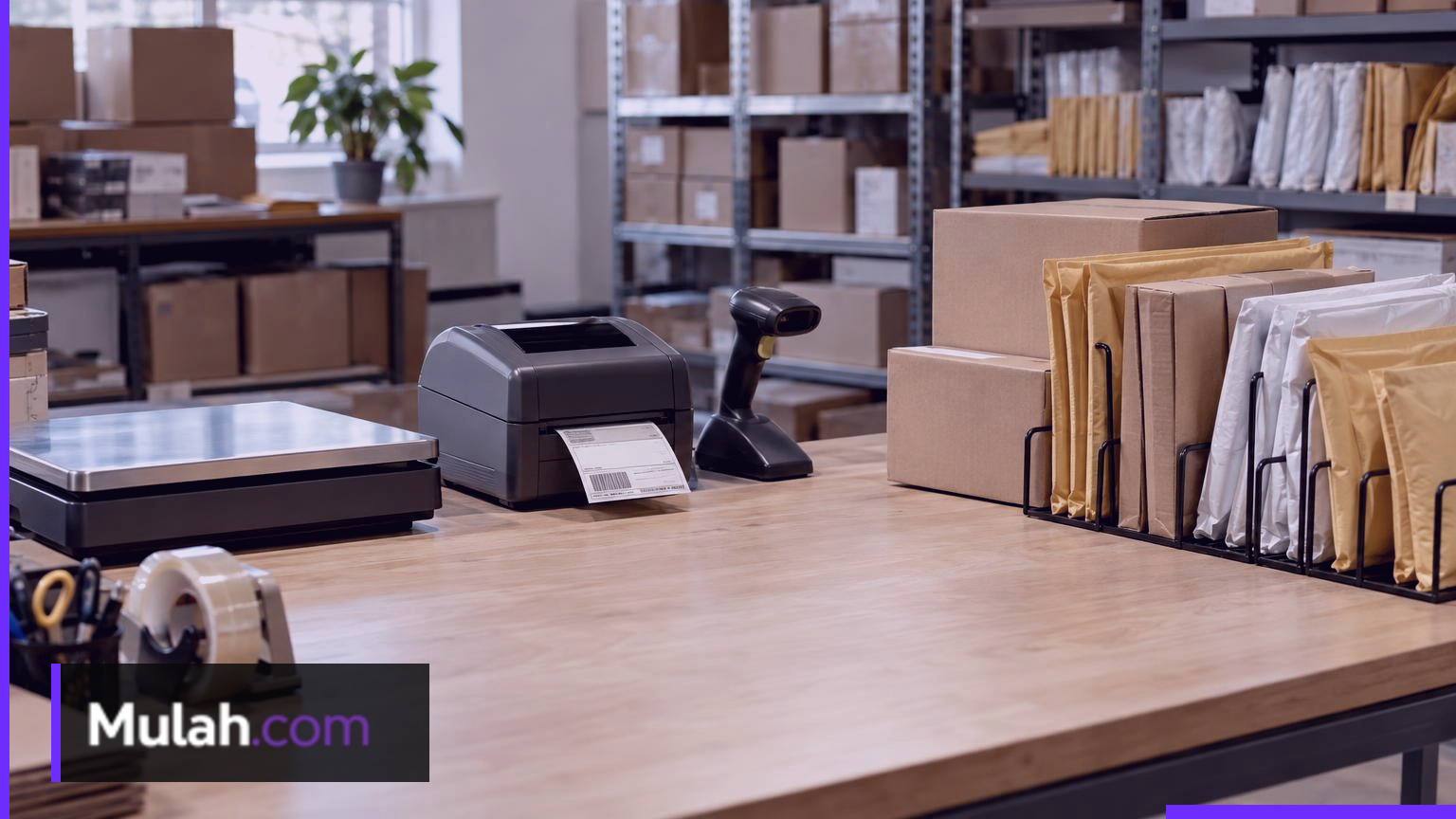
Mulah gives you a starting point for discussing the equipment, your business finances and the intended use of funds together. A request grounded in production records and an itemized quote is more useful than a machine name and an optimistic savings estimate.
Before applying, use the business funding calculator to test different amounts and terms. Treat the results as planning estimates. If the payment only works when every projected efficiency gain arrives immediately, revisit the purchase size or installation plan.
Bring Mulah a clear description of the project, not just a target monthly payment. A complete request makes it easier to distinguish the equipment cost from the cash your business needs around it.
Collect the vendor quote, supporting costs and installation schedule. Explain the replacement need or expected workload. Note any deposit deadline, quote expiration or existing lease that affects timing.
Use Check Your Funding Options for a preliminary inquiry, or proceed to the full application when your documents are ready. Include what you already owe and the payment your cash flow can reasonably support.
Read the payment schedule, total repayment, fees, guarantees and security provisions alongside the equipment agreement. Understand funding conditions before making a nonrefundable commitment to the vendor.
Provide the business and financial information needed for a funding review.
Start with a shorter path when you want to discuss the business need before completing the full application.
Review official SBA information about federal small-business loan programs and lender participation.
Official guidance on financial management, cash flow, bookkeeping, and business planning.
Use the official source for current program, regulatory, or business guidance related to this topic.
Use the official source for current program, regulatory, or business guidance related to this topic.
Requests can include inserters, folders, sealers, address printers, tabbers, parcel scales, scanners, conveyors and related technology. For postage systems, distinguish equipment purchases from meter rentals and postage accounts so the proposed structure matches what you're actually acquiring.
Used equipment is worth considering when its condition and remaining service life support the purchase. Supply a detailed quote and check parts availability, software transfer rights and technician access. The lowest purchase price isn't always the lowest ownership cost.
Include them in your request when they're necessary to put the system into production. Itemize each cost. Financing treatment can differ between hardware, installation services, licensed software and recurring subscriptions.
Leasing deserves attention when refresh flexibility matters; financing a purchase may suit equipment you intend to keep. Neither is automatically cheaper. Work through total payments, ownership rights, service costs and end-of-term obligations using the written proposals.
Postage is an operating expense, not a durable asset. Show it separately in the budget. Working capital or a business line of credit may be more appropriate for that cash need than an equipment-only arrangement.
Use the itemized equipment and installation cost, then calculate the cash needed through ramp-up. Subtract funds you're comfortable contributing without weakening payroll, postage or other essential payments. Avoid borrowing for optional features without a clear business use.
Begin with the vendor quote, recent bank statements, ownership information and a list of current funding payments. Add an installation schedule and a short explanation of the operating need. Production records are useful when the request relies on expected efficiency gains.
Those requirements vary by product and offer. Equipment-related funding often involves rights in the equipment, and a personal guarantee may also be required. Read the security and guarantee provisions rather than relying on a product label.
A new business has less operating history to support the request, so owner experience, available capital and credible demand become especially important. Don't build the plan around projected contracts alone. Keep the initial equipment scope proportionate to work you can reasonably support.
Run representative jobs using your paper, envelopes and insert combinations. Measure setup, stoppages, replenishment and completed output over a meaningful period. A brief demonstration at rated speed doesn't show what your team will finish before pickup.
Look for response expectations and coverage for labor, travel, parts and preventive maintenance. Find out how consumables and software support are handled, and what options exist during a long repair. Put critical promises in writing.
An eligible equipment project can fit within SBA lending purposes, and eligible working capital may also be relevant. The lender still underwrites the request. Allow time for documentation and consult the official program guidance rather than assuming every project qualifies.
Read the payoff and equipment-substitution terms before signing. Early payment doesn't always eliminate all remaining costs. For leases, an upgrade proposal may carry forward an unpaid balance or leave return obligations on the original machine.
No. An application begins a review; it doesn't reserve a rate, amount or monthly payment. Make your purchase decision from the final written terms and funding conditions, not a calculator estimate or preliminary discussion.
Start with the need, the amount, and the timing. Mulah can help you review possible business funding options before you decide whether to move forward.
Call 877-816-8524